
 Algeria
 Egypt
 Libya
 Morocco
 Sudan
 Tunisia
 Benin
 Burkina Faso
 Cabo Verde
 Côte d'Ivoire
 Guinea
 Guinea-Bissau
 Liberia
 Mali
 Mauritania
 Niger
 Nigeria
 Senegal
 Sierra Leone
 The Gambia
 Togo
 Cameroon
 Central African Republic
 Chad
 DR Congo
 Equatorial Guinea
 Gabon
 Republic of the Congo
 São Tomé and Príncipe
 Burundi
 Comoros
 Djibouti
 Eritrea
 Ethiopia
 Kenya
 Madagascar
 Malawi
 Mauritius
 Mozambique
 Rwanda
 Seychelles
 Somalia
 South Sudan
 Tanzania
 Uganda
 Angola
 Botswana
 Eswatini
 Lesotho
 Namibia
 South Africa
 Zambia
 Zimbabwe
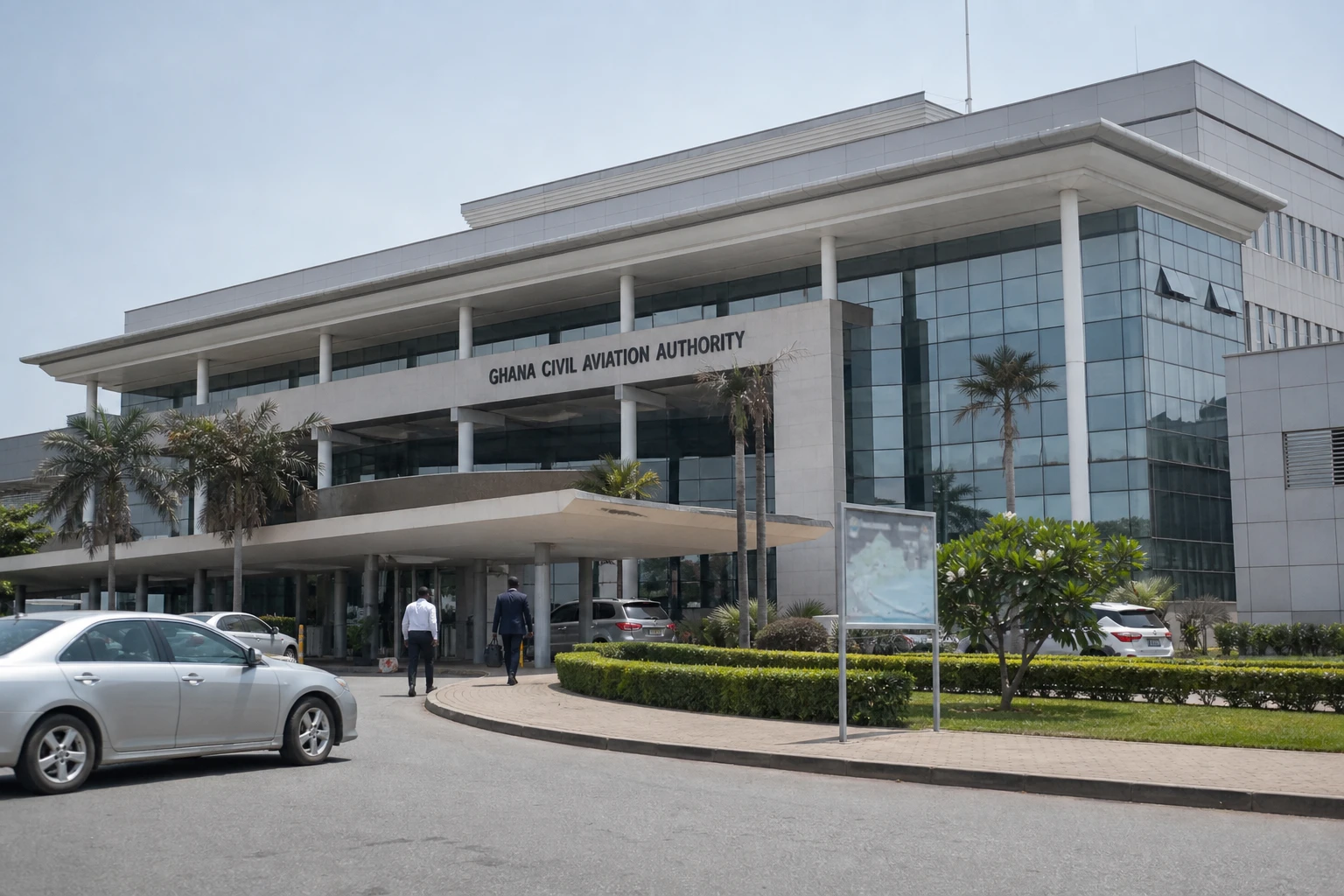
In Accra, land value is no longer measured only in square metres
Land around Accra International Airport has become a strategic asset. Ghana’s capital is no longer seeking simply to channel travellers through the city. It also wants to attract conferences, affluent residents, services and skilled jobs.
It was in this context that the Sentuo Airport Garden City project was launched on 15 September 2026, presented as a $1.3bn investment. The complex is to combine housing, hotels, healthcare, retail, leisure and conference facilities in the heart of Accra’s airport enclave. Ghanaian authorities see it as a means of modernising the city’s image and strengthening its role as a business capital in West Africa.
The choice of site is no coincidence. The airport area already concentrates some of the country’s most sensitive flows: travellers, diplomats, investors, logistics operators and service companies. In a country where the state-owned Ghana Airports Company Limited is mandated to develop and manage national airports, pressure on the land around Kotoka International Airport is now driving demand for more mixed and profitable uses.
A private project, but a public bet on Ghana’s image
The project was launched in Accra in the presence of President John Dramani Mahama. The head of state stressed the need for co-ordinated development of this gateway to the country, to improve the experience of residents, travellers and investors. He also called for strong involvement by Ghanaian businesses and workers in construction and project-related services.
The announced programme is ambitious. The complex is to include 582 high-end apartments, a 600-room hotel, a 2,500-seat conference centre, healthcare facilities, a shopping centre, landscaped areas and 503 parking spaces. The company behind the project has also cited more than 3,000 jobs, with priority reportedly given to Ghanaians and provisions for apprenticeships and skills transfer.
The central promise is clear: to turn a transit area into a productive district. For Accra, this means more than a new property development. It is about strengthening a local value chain around construction, hospitality, catering, transport, maintenance and business services. For the authorities, the stakes are also fiscal and urban: attracting capital and securing jobs while ensuring the airport area does not develop haphazardly through private ventures.
Why Accra airport is attracting so much investment
The Sentuo project is part of a broader trend. Property and service-facility announcements have proliferated in Accra’s airport area, suggesting operators expect demand to rise steadily. The Ghanaian government itself launched another seven-storey complex in the same area on 27 August 2026, with 2,030 parking spaces, two hotels, shops, restaurants and offices.
The concentration of investment is explained by rising passenger traffic. Statistics published by Ghana Airports Company Limited show that the airport handled 2,540,725 passengers in 2025, compared with 2,349,024 in 2024. The first half of 2026 has already seen 1,415,245 passengers, confirming strong activity and growing demand for accommodation, urban transport and business services around the site.
In a capital such as Accra, these figures have a direct effect on the city. Hotels near the airport benefit from the traffic, as do transport companies, restaurants and service providers. Conversely, pressure on land, traffic congestion and construction costs can shut out small local businesses if market-access rules are not sufficiently clear. That is why the debate over local content is not a secondary one. It will determine whether the wealth created stays in the Ghanaian economy.
Accra aims to move upmarket without losing local benefits
Official rhetoric links the project to a broader ambition: making Accra a modern, competitive African capital, capable of hosting major conferences and better serving international visitors. This aligns with the long-standing strategy of Ghana Airports Company Limited, which aims to position Ghana as West Africa’s aviation hub.
But the issue is not merely symbolic. For the Ghanaian state, the value of this kind of investment depends on its ability to benefit the real economy. If Ghanaian engineers, architects, artisans, technicians, suppliers and service companies play a significant role in the project, the knock-on effects will be broader. If, on the other hand, it operates mainly as an upscale enclave, the gains will be more concentrated and less visible across the rest of the city.
The decision to establish a mixed-use development in the airport enclave also reflects the evolution of West Africa’s urban market. The region’s major cities are now seeking to combine transport, property, hospitality and conference services in locations well connected to air networks. Accra has an advantage in this contest: institutional stability, strong regional visibility and growing business travel.
A signal to watch for West Africa
At the regional level, the deal extends beyond Ghana. ECOWAS remains dependent on a handful of capitals able to host conferences, corporate headquarters and investment flows. If Accra expands its capacity to accommodate them, Ghana will strengthen its position in West Africa’s services landscape.
This kind of project is also a test for the continent’s urban industrialisation policies. It shows how a capital can seek to capture more value around an airport instead of allowing that value to flow to dispersed operators or imported services. For Ghana, the next challenge will therefore be less about the announcement than delivery: the timetable, actual jobs, the share going to local businesses, and the ability to prevent rising prestige from becoming a mere property bubble.
In short, the Sentuo project says something important about Accra. Ghana’s capital no longer wants to be just a gateway. It wants to become a centre for value creation, services and regional visibility. It remains to be seen whether this ambition will benefit the neighbourhood as much as it does Ghanaians as a whole.



