Algeria
 Egypt
 Libya
 Morocco
 Sudan
 Tunisia
 Benin
 Burkina Faso
 Cabo Verde
 Ghana
 Guinea
 Guinea-Bissau
 Liberia
 Mali
 Mauritania
 Niger
 Nigeria
 Senegal
 Sierra Leone
 The Gambia
 Togo
 Cameroon
 Central African Republic
 Chad
 DR Congo
 Equatorial Guinea
 Gabon
 Republic of the Congo
 São Tomé and Príncipe
 Burundi
 Comoros
 Djibouti
 Eritrea
 Ethiopia
 Kenya
 Madagascar
 Malawi
 Mauritius
 Mozambique
 Rwanda
 Seychelles
 Somalia
 South Sudan
 Tanzania
 Uganda
 Angola
 Botswana
 Eswatini
 Lesotho
 Namibia
 South Africa
 Zambia
 Zimbabwe
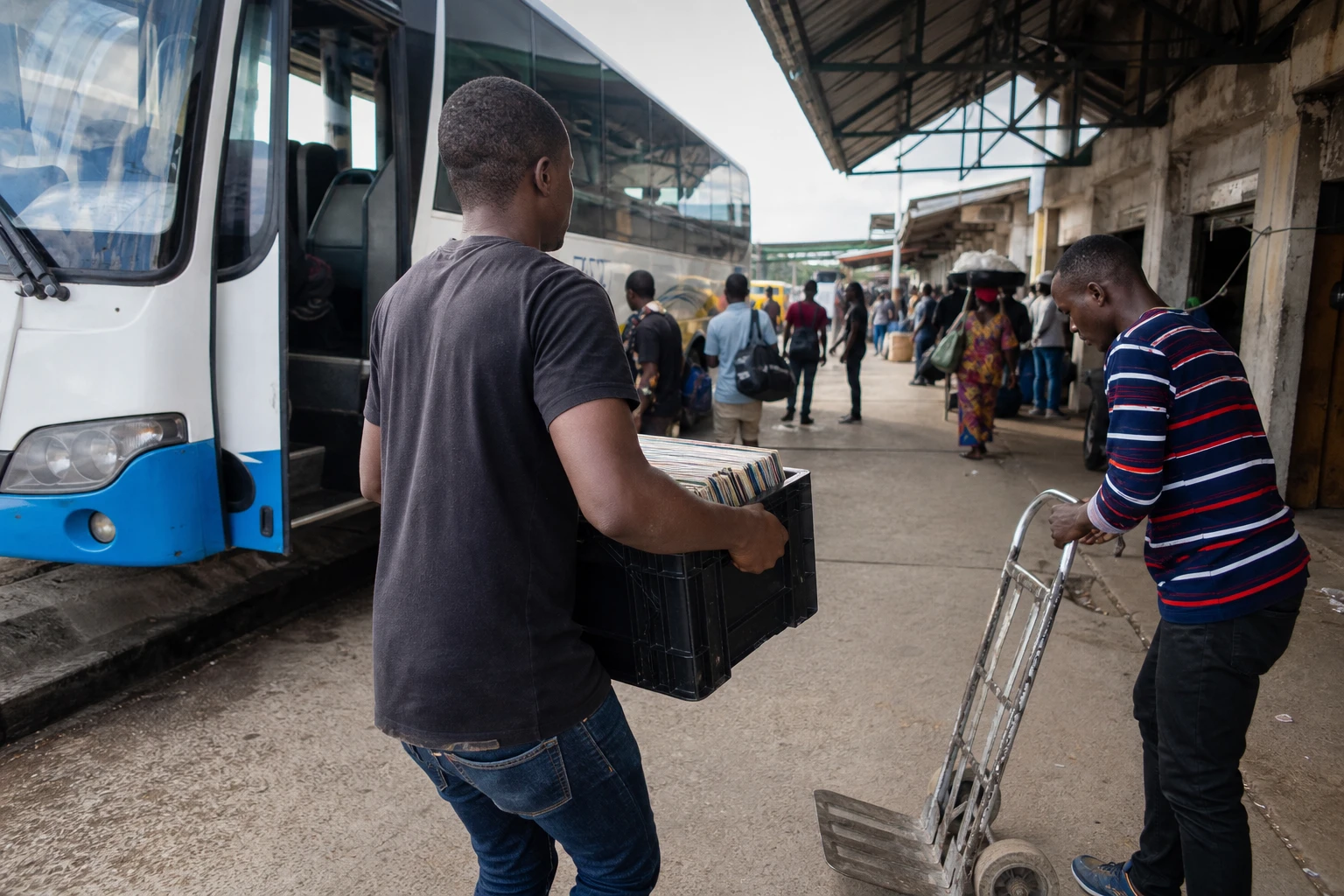
In Abidjan, saving an old record is about more than preserving a fragile object. It also means preventing part of Côte d’Ivoire’s and the continent’s sound heritage from disappearing along with family collections, old shops and neglected media.
A young Ivorian music lover has taken on this mission. He searches for African music on vinyl, retrieves records, cleans them, restores them where possible, then preserves them so they can be heard again. His work is part of a broader return to musical archives, driven by collectors, DJs and cultural spaces in Abidjan.
Abidjan, a historic crossroads for African music
Côte d’Ivoire’s economic capital has long played a central role in the circulation of West African music. Artists from Côte d’Ivoire, Senegal, Mali, Guinea, Ghana, Nigeria and Central Africa have recorded, performed or found an audience there.
From the 1960s to the 1980s, orchestras, studios, record companies and dance halls helped make Abidjan a regional meeting point. Highlife, funk, afrobeat, rumba, jazz, disco and Mandingue music circulated there on records, cassettes and magnetic tapes.
This history therefore extends beyond Côte d’Ivoire’s borders. It tells of exchanges between West African music scenes and those of Congo, Cameroon and East Africa. It also shows how musicians adapted international influences to create sounds rooted in their societies.
Yet much of this heritage remains scattered. Private collections are sometimes sold after their owner dies. Sleeves deteriorate in damp homes. Some recordings can no longer be played because turntables or suitable equipment are unavailable.
From discovery to preservation
The Abidjan collector first acts as a field researcher. He tracks down records from individuals, in old stocks or through word of mouth. Each vinyl record can provide information about an artist, an orchestra, a label, an era or a distribution network.
Restoration then requires time and precision. A dusty record must be cleaned without scratching its grooves. A damaged sleeve may need special protection. When a recording is digitised, noise must also be reduced without erasing the characteristics of the original sound.
This approach does not turn vinyl into a mere decorative object. It seeks to preserve a work in its context. The musician’s name, the label, the place of production and the details printed on the sleeve are all part of the archive.
From this perspective, an old record becomes a historical source. It can document the tastes of a generation, relationships between several African countries or the evolution of production techniques. It can also bring to light artists left out of the major official histories of music.
A memory brought back to life in cultural spaces
In Abidjan, this momentum now extends beyond individual collections. The Baoulécore Archive Center describes itself as a cultural space devoted to the music, images, objects and stories of African and diasporic scenes. Its stated collection includes more than 1,500 vinyl records and 1,000 cassettes.
The Vinyl Club in Côte d’Ivoire is also helping to build interest in the format. It offers records, accessories and activities related to listening and equipment maintenance. These initiatives create links between older media and new audiences.
This transmission can take several forms. A listening session can place a track in its era. An exhibition can showcase sleeves and labels. Digitisation can make a recording accessible to listeners who do not own a turntable. A meeting with a former musician can provide the oral history often missing from written archives.
The challenge, however, is to prevent this memory from leaving the continent altogether. Reissues of African music have helped rediscover rare works. But rights, master recordings and original copies are sometimes still held outside Africa. The issue is therefore not just making these tracks known. It is also about documenting their history and ensuring access to them in the countries where they were created.
A cultural and economic issue for Côte d’Ivoire
Preserving vinyl records directly affects artists, their families and rights holders. Any reissue or commercial distribution must comply with copyright and related rights rules. Heritage restoration cannot replace this requirement.
It can, however, create new opportunities. Well-documented archives can inform documentaries, exhibitions, educational programmes, contemporary works or compilations. They can also support jobs in conservation, music production and cultural outreach.
For young Ivorian listeners, vinyl also offers a different way to listen. The format demands more sustained attention. It invites people to discover an album as a whole, rather than an isolated track in a digital stream. This practice does not replace online platforms. It adds a material and historical relationship to music.
The movement is part of a wider trend among African archivists. In Kenya, collectors have helped document benga and other East African repertoires. In West Africa, labels and researchers have been reissuing recordings produced between the 1960s and 1980s for several years.
A race against forgetting, and against time
In Abidjan, the enthusiast’s work is a reminder of a simple reality: musical heritage does not preserve itself. The media must be found, the works identified, the objects protected and the accompanying information passed on.
Côte d’Ivoire has a musical history rich enough to inform generations of researchers, artists and listeners. The priority now is to link private initiatives with cultural institutions, artists’ families, the media and players in the music industry.
This effort concerns the whole West African region. Repertoires circulated between countries long before the digital age. Preserving them therefore requires cooperation that goes beyond the borders of the Economic Community of West African States, ECOWAS.
Each restored vinyl record brings back more than a song. It restores a voice, an era and links between African societies. In Abidjan, this memory is thus taking its place in the present, without being confined to nostalgia.