Algeria
 Egypt
 Libya
 Morocco
 Sudan
 Tunisia
 Benin
 Burkina Faso
 Cabo Verde
 Ghana
 Guinea
 Guinea-Bissau
 Liberia
 Mali
 Mauritania
 Niger
 Nigeria
 Senegal
 Sierra Leone
 The Gambia
 Togo
 Cameroon
 Central African Republic
 Chad
 DR Congo
 Equatorial Guinea
 Gabon
 Republic of the Congo
 São Tomé and Príncipe
 Burundi
 Comoros
 Djibouti
 Eritrea
 Ethiopia
 Kenya
 Madagascar
 Malawi
 Mauritius
 Mozambique
 Rwanda
 Seychelles
 Somalia
 South Sudan
 Tanzania
 Uganda
 Angola
 Botswana
 Eswatini
 Lesotho
 Namibia
 South Africa
 Zambia
 Zimbabwe
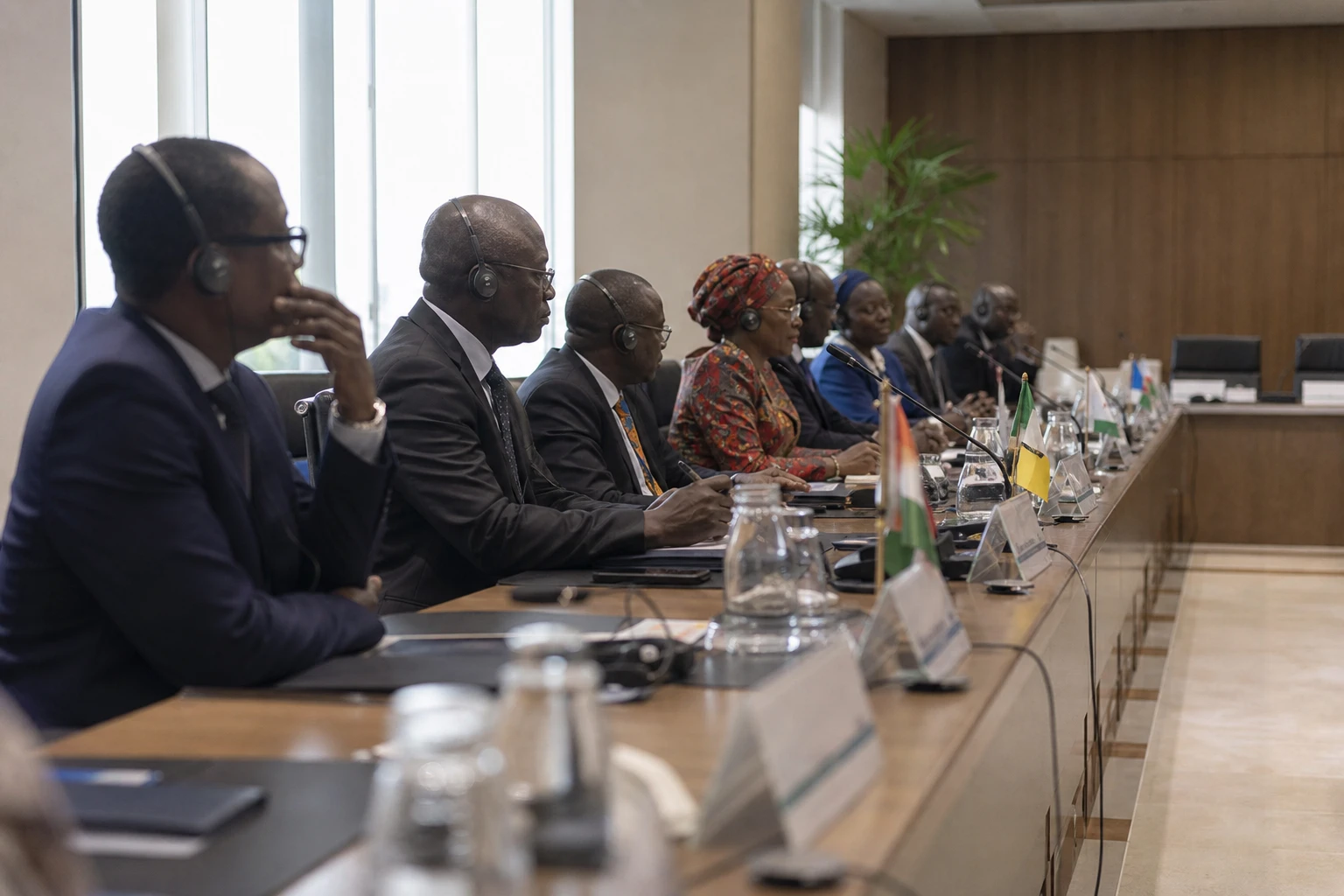
Abidjan, a hub for a sector that is no longer just about terminals
In Ivorian kitchens, the question is no longer simply whether liquefied petroleum gas, or LPG, is available. It is also about its cost and safety, and its place alongside wood and charcoal, which are still used in many households across West Africa. In Abidjan, this equation takes on particular importance: the city concentrates infrastructure, imports, distributors and some of the urban demand driving the regional market.
Against this backdrop, Côte d’Ivoire is preparing to host the 7th edition of the West Africa LPG Expo at the Parc des Expositions d’Abidjan on 2 and 3 September 2026. The event returns after making Abidjan a regional LPG showcase in 2023, a sign that some industry players see the country as a leading logistics and commercial base in West Africa.
An expo, but above all a test of Côte d’Ivoire’s clean-cooking strategy
Côte d’Ivoire’s Ministry of Mines, Petroleum and Energy is among the institutional supporters of this edition. Its minister, Mamadou Sangafowa-Coulibaly, is announced as guest of honour. In recent months, the ministry has highlighted the Integrated Policy on Mineral Resources and Energy, presented as a framework for the sector’s long-term transformation. At the same time, the administration has set out ambitious budget targets for 2026, confirming that energy remains a central lever of Ivorian economic policy.
The Abidjan event is more than a trade exhibition. The announced programme includes more than 30 speakers from across the LPG value chain, with sessions on investment, technology, safety and the transition to cleaner cooking solutions. A dedicated clean-cooking workshop is also to be held with the support of the World Liquid Gas Association, an international industry organisation, while PETROCI is to present its facilities to foreign delegates.
This combination matters. In Côte d’Ivoire, LPG is not just an energy product. It is also a public policy tool at the intersection of health, industry, storage, cylinder safety and urban supply. PETROCI notes on its public pages that it has cylinder-filling, storage and requalification facilities, all essential elements of a reliable distribution chain.
What the event says about the Ivorian market and regional expectations
Abidjan’s positioning is no coincidence. The reference work on regional energy prospects published by ECOWAS notes that the use of LPG for cooking is growing rapidly in cities, but that the challenge remains immense outside urban centres. The same document recalls that Abidjan has already served as a regional LPG showcase, with high penetration of the fuel in the economic capital, without erasing the continued reliance on more traditional fuels among some households.
The expo comes as the region seeks more practical clean-cooking solutions. The World Health Organization stresses the benefits of clean fuels, including LPG, in reducing exposure to household air pollution. It also notes that households often switch back to more polluting fuels when gas prices or access become unstable. For Ivorian cities, this means a more robust market could improve daily life. In rural areas, the challenge remains expanding networks and sales points, and increasing purchasing power.
The organisers are highlighting the participation of private-sector players such as PETROCI, SIMAM, Sigma Cylinders, Bharat Tanks and Vessels, Pétro Ivoire and RegO. This choice also points to the model being sought: a more industrialised sector in which imports, bottling, cylinders, regulators, distribution and technical inspection all need to advance together. In practice, this could encourage investment, but may also require stricter safety and traceability rules.
Beyond Abidjan, a signal for West Africa
The event’s reach extends beyond Côte d’Ivoire. According to the organiser, the West Africa LPG Expo brings together public-sector decision-makers, investors and industrial players from several countries. This regional approach reflects ECOWAS priorities, which view access to energy as an economic, health and industrial security issue. It also aligns with the African Union’s Agenda 2063, which identifies energy as one of the continent’s levers for structural transformation.
Côte d’Ivoire faces a twofold challenge. On the one hand, the country wants to consolidate its image as a sub-regional hub for household energy. On the other, it must meet a very practical social demand: affordable cylinders, safe networks, clearer prices and solutions that do not leave low-income households behind. An expo cannot solve this on its own. But it can speed up agreements, bring players together and confirm that Abidjan intends to play a role in the clean-cooking drive in West Africa.