Algeria
 Egypt
 Libya
 Morocco
 Sudan
 Tunisia
 Benin
 Burkina Faso
 Cabo Verde
 Ghana
 Guinea
 Guinea-Bissau
 Liberia
 Mali
 Mauritania
 Niger
 Nigeria
 Senegal
 Sierra Leone
 The Gambia
 Togo
 Cameroon
 Central African Republic
 Chad
 DR Congo
 Equatorial Guinea
 Gabon
 Republic of the Congo
 São Tomé and Príncipe
 Burundi
 Comoros
 Djibouti
 Eritrea
 Ethiopia
 Kenya
 Madagascar
 Malawi
 Mauritius
 Mozambique
 Rwanda
 Seychelles
 Somalia
 South Sudan
 Tanzania
 Uganda
 Angola
 Botswana
 Eswatini
 Lesotho
 Namibia
 South Africa
 Zambia
 Zimbabwe
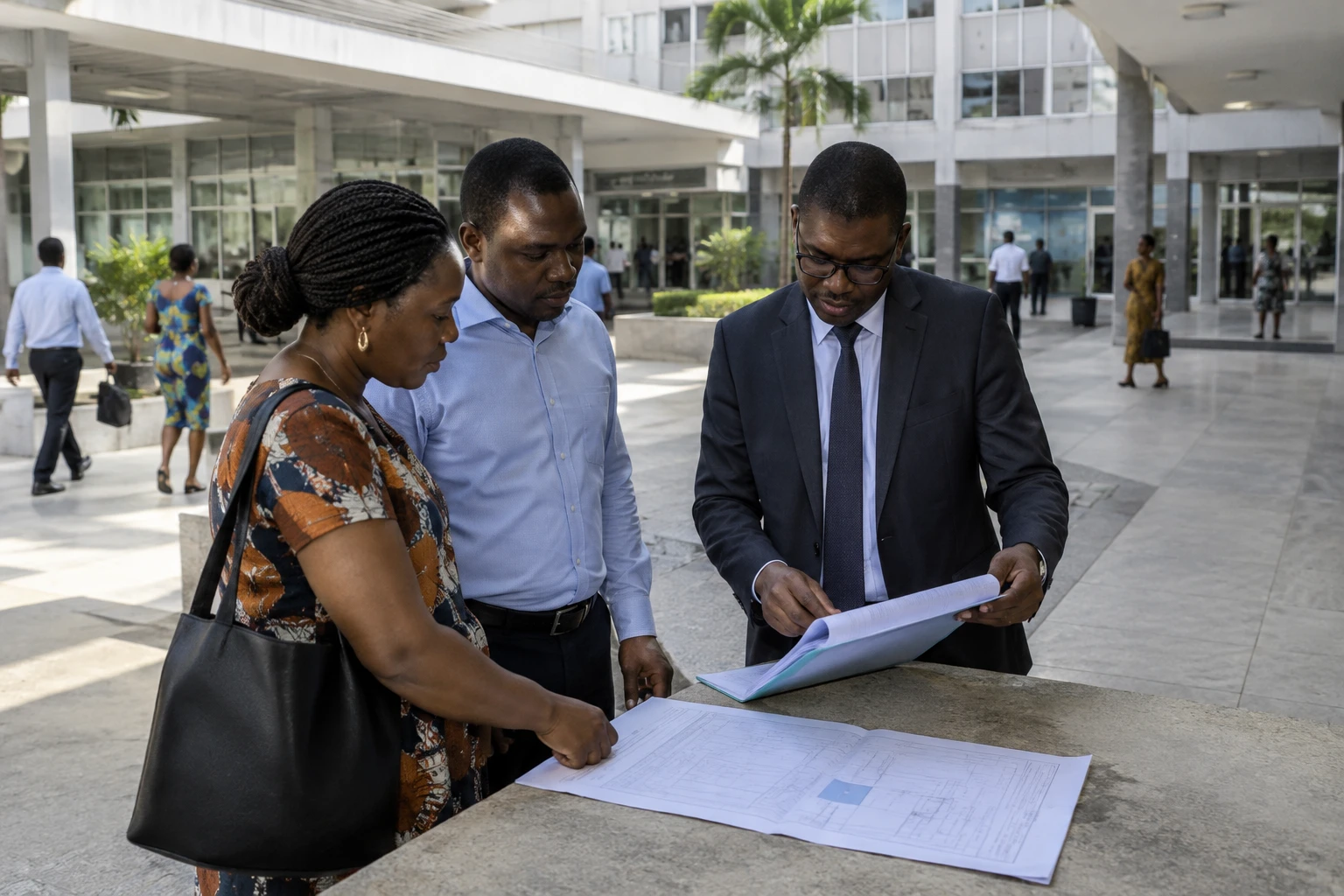
Buying land or a home in Abidjan can involve a family’s entire savings. But a visit, a receipt and documents that appear official are not always enough to establish who actually holds the rights to a plot. The risk goes beyond losing money: buyers can be left without land or a home, and caught up in a lengthy legal dispute.
A pressured market, with rights sometimes difficult to untangle
Demand for housing is heavily concentrated in Greater Abidjan, while home ownership remains beyond the reach of many households. In June 2025, a report citing the National Chamber of Accredited Developers and Builders estimated that the metropolitan area was short of nearly 600,000 homes. This is an industry estimate, not a comprehensive administrative count. The pressure encourages rushed purchases and makes promises of affordable plots particularly attractive.
The problem also stems from the coexistence of several stages and documents. In areas created through village subdivisions, customary rights and administrative procedures must be aligned. The Certificate of Customary Use Rights (ADU), introduced as a basic document for starting the procedure, is not the same as the final title. For urban land, the Ivorian government describes the Final Concession Order (ACD) as the instrument conferring full ownership.
This distinction matters: a certificate or allocation letter alone does not guarantee that every stage has been completed or that no other rights affect the plot. In December 2024, the administration said that more than 2,000 subdivisions had not been approved. This points to the scale of the regularisation effort, but does not mean that every unapproved case involves fraud.
Fake owners and disputed plots
A report broadcast on 12 October 2026 describes several methods: selling a plot that has already been transferred, concealing a dispute or claiming to own property that is not yours. In some rental scams reported in Abidjan in June, furnished homes rented temporarily were even said to have been used as a backdrop to convince prospective tenants. These situations are distinct, but exploit the same difficulty: verifying the seller’s identity and the reality of their rights before paying.
Recent cases show that the risk is not limited to documents that are obviously forged. In July 2026, the president of the Council of State warned that forged documents had allegedly been used to obtain genuine ACDs. In September, the African Press Agency reported allegations of forgery and fraud concerning a plot in Anyama; the person accused disputed the allegations and defended the legitimacy of their rights. These cases do not make it possible to measure how common fraud is, but they illustrate the complexity of some files.
For buyers, the first step is therefore not to confuse physical possession of a document with legal security. The Ivorian public service recommends checking the applicable procedure and the documents in the file with the relevant authorities. It is prudent to have the owner’s identity, the status of the plot and the authenticity of the documents checked by the relevant administrations, with support from an independent professional. Visiting the plot or using an intermediary does not replace these checks.
Reform must also protect households
The ADU and the gradual centralisation of land information are intended to better regulate access to titles and limit duplication. But reform will only have an effect if documents can be checked easily, disputes are handled within a reasonable time and users understand the significance of each document. The authorities’ disclosure that forged documents had led to genuine titles is a reminder that an administrative procedure is not enough if the checks upstream remain vulnerable.
The consequences are uneven. A household investing savings accumulated over many years may find it difficult to afford a second purchase or legal costs. Members of the diaspora, who cannot always follow every step in person, are more dependent on representatives and intermediaries. By contrast, professionals with legal advice and the resources to check several files may be better able to absorb delays and challenges.
Geography also plays a role. Housing pressures are particularly acute in Abidjan, but land disputes and unapproved subdivisions also affect the rest of the country. A shortage of affordable housing is no reason to relax verification rules; it makes secure transactions all the more important. A greater supply will protect buyers only if it is accompanied by clear and enforceable rights.
An Ivorian issue with West African implications
In Côte d’Ivoire, whose political capital is Yamoussoukro, land lies at the intersection of urbanisation, investment and trust in institutions. The issue also concerns ECOWAS, the Economic Community of West African States: regional mobility, investment and urban projects rely on transactions whose reliability matters beyond national borders. This does not mean that practices or rules are the same in every country.
What happens next will depend on the ability of Ivorian authorities to make checks accessible and complete the reform of land documentation, while handling challenges without presuming the guilt of those accused. For prospective buyers, the immediate issue remains concrete: before making any substantial payment, establish who holds the right, which plot it covers and what stage the procedure has reached.