
 Algeria
 Egypt
 Libya
 Morocco
 Sudan
 Tunisia
 Benin
 Burkina Faso
 Cabo Verde
 Ghana
 Guinea
 Guinea-Bissau
 Liberia
 Mali
 Mauritania
 Niger
 Nigeria
 Senegal
 Sierra Leone
 The Gambia
 Togo
 Cameroon
 Central African Republic
 Chad
 DR Congo
 Equatorial Guinea
 Gabon
 Republic of the Congo
 São Tomé and Príncipe
 Burundi
 Comoros
 Djibouti
 Eritrea
 Ethiopia
 Kenya
 Madagascar
 Malawi
 Mauritius
 Mozambique
 Rwanda
 Seychelles
 Somalia
 South Sudan
 Tanzania
 Uganda
 Angola
 Botswana
 Eswatini
 Lesotho
 Namibia
 South Africa
 Zambia
 Zimbabwe
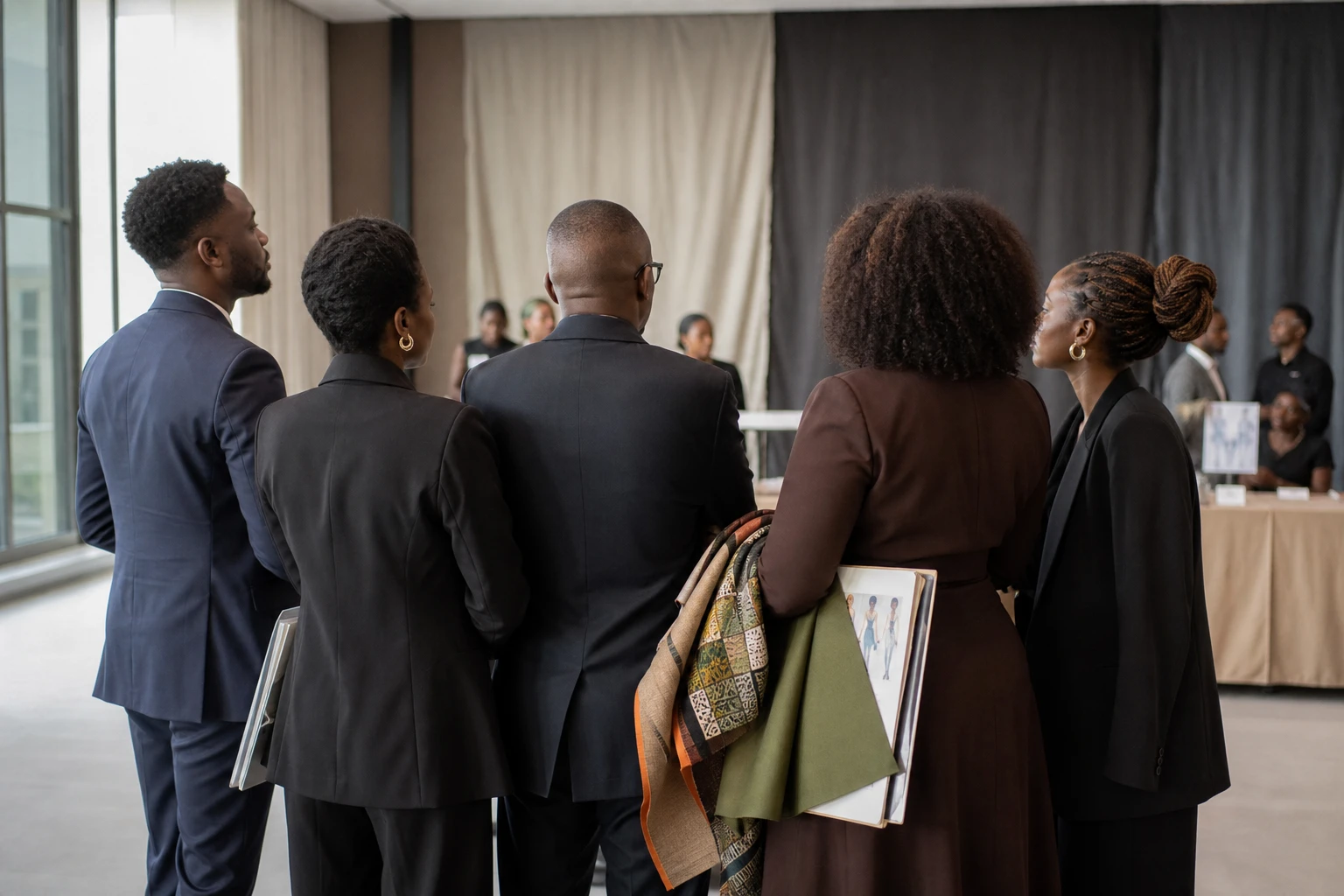
Abidjan, a showcase for luxury made here
In Abidjan, fashion is no longer just a sphere of consumption. It is also becoming a space for production, storytelling and value creation. For Côte d’Ivoire, this shift matters. It says something about a country that no longer wants merely to import trends, but also to create, transform and export them.
This movement is part of a broader trend in West Africa. The region’s rising cities are not only political capitals; they are also becoming cultural, commercial and digital platforms. Abidjan is joining Dakar, Lagos, Nairobi and Johannesburg as one of the creative hubs now attracting close attention from fashion professionals. UNESCO also estimates that global demand for African haute couture could increase by 42% over the next decade.
In this landscape, Côte d’Ivoire’s economic capital benefits from an already well-developed ecosystem. Fashion houses work with local artisans, workshops remain based in the city, and events such as Abidjan Fashion Week help provide a platform for the industry. The event’s organisers themselves describe Abidjan as an economic, cultural and fashion “hub”, with an edition scheduled for September 2026.
Designers keeping their workshops in Côte d’Ivoire
The new development is not just the international visibility of a handful of Ivorian designers. It is their deliberate choice to produce from Abidjan. Loza Maléombho, Elie Kuame and Ibrahim Fernandez all reject the offshoring often associated with a brand’s move upmarket. Instead, they seek to root their collections in the country’s materials and expertise.
Loza Maléombho embodies this path. Her name gained international recognition when Beyoncé wore one of her jackets in the Already sequence of the musical film Black Is King in 2020. Fashion sources and the designer’s website later confirmed that her pieces had also been worn by Kelly Rowland and Teyana Taylor. But the key point lies elsewhere: despite this global spotlight, the designer has kept her workshop in Abidjan.
Her work showcases local materials such as Baoulé cloth, kita cloth, made from silk and cotton, and jute fabric. This approach is far from incidental. It connects contemporary design with living heritage. UNESCO notes that the traditional skills associated with cloth weaving in Côte d’Ivoire rely on specific techniques and dyed cotton threads, passed down by several communities across the country.
Elie Kuame follows a similar approach. A fixture in Côte d’Ivoire’s fashion scene for two decades, he champions development centred on the country, even when showing his collections in Paris or New York. He highlights woven cloth, a craft inscribed by UNESCO on its Representative List of the Intangible Cultural Heritage of Humanity in 2023. For him, this textile is not merely a symbol of identity. It is also a potential industrial foundation.
Ibrahim Fernandez, meanwhile, emphasises the idea of “soft power”. In his case, fashion becomes a diplomatic and cultural language. This interpretation is consistent with the continental strategy pursued by the African Union for several years, which sees fashion, textiles and clothing as value chains capable of creating wealth and supporting African trade integration.
A promising sector, but still out of balance
Côte d’Ivoire is developing this industry amid a paradox familiar to African economies moving upmarket: creativity is advancing faster than productive capacity. The country remains heavily dependent on imports of ready-to-wear and second-hand clothing. This limits the local share of value added and hampers the development of a complete textile chain, from yarn to finished product.
The contrast is also a social one. Luxury creations sell for several hundred to several thousand euros. At the same time, the guaranteed national minimum wage was raised to 75,000 CFA francs on 1 January 2023, according to the International Labour Organization. The gap between these worlds says much about Côte d’Ivoire’s challenge: building a prestigious sector without isolating it from the rest of the economy.
But the impact is not limited to affluent consumers. A more extensive fashion industry can create skilled jobs in sewing, embroidery, dyeing, design, logistics and sales. It can also open up opportunities for artisans who often remain invisible in national statistics. In its work on traditional Ivorian textiles, UNESCO notes that this heritage can become a driver of local development, employment and the empowerment of young people and women.
This perspective matters for Côte d’Ivoire today. The country has a relatively dynamic economy and is seeking to diversify its productive base beyond agricultural commodities. In this context, fashion is not simply a cultural sector. It is part of a broader strategy to move upmarket, manufacture locally and promote the national image.
Ivorian, West African and continental reach
What is happening in Abidjan goes beyond the elegance of the catwalk. Ivorian fashion is testing a very practical question: can a country turn its textile heritage into a competitive industry without losing its cultural roots? The answer will depend on the ability to produce locally, train technicians, organise supply chains and protect designs from simple value extraction abroad.
At the regional level, the stakes are even clearer. ECOWAS and the AfCFTA, the African Continental Free Trade Area, are intended to facilitate intra-African trade. Fashion, textiles and accessories are among the sectors that could immediately benefit from the freer movement of goods, skills and access to markets. This is also why Ivorian players are seeking a presence in Paris, New York and on social media without leaving Abidjan: they want to reach a global market while consolidating a local base.
In the coming months, the ability of Ivorian fashion houses to turn this visibility into sustainable production capacity will need to be watched. The challenge is no longer simply to put Abidjan in the spotlight. It is to make the city a place where African fashion is designed, made and valued over the long term, while embracing its codes, artisans and market.



