
 Algeria
 Egypt
 Libya
 Morocco
 Sudan
 Tunisia
 Benin
 Burkina Faso
 Cabo Verde
 Ghana
 Guinea
 Guinea-Bissau
 Liberia
 Mali
 Mauritania
 Niger
 Nigeria
 Senegal
 Sierra Leone
 The Gambia
 Togo
 Cameroon
 Central African Republic
 Chad
 DR Congo
 Equatorial Guinea
 Gabon
 Republic of the Congo
 São Tomé and Príncipe
 Burundi
 Comoros
 Djibouti
 Eritrea
 Ethiopia
 Kenya
 Madagascar
 Malawi
 Mauritius
 Mozambique
 Rwanda
 Seychelles
 Somalia
 South Sudan
 Tanzania
 Uganda
 Angola
 Botswana
 Eswatini
 Lesotho
 Namibia
 South Africa
 Zambia
 Zimbabwe
In Abidjan, technology is no longer limited to mobile apps or digital services. It is becoming a lever for financing, industrialisation and employment. It is in this context that Côte d’Ivoire is preparing the second edition of the Ivoire Tech Forum, scheduled for 11 to 13 November 2026 at the Sofitel Abidjan Hôtel Ivoire.
The stakes, however, go beyond organising a professional event. For Ivorian startups, the real challenge remains access to capital, skills and markets. For the state, the task is now to turn an ecosystem still concentrated in Abidjan into a broader capacity for innovation, able to make its mark across West Africa.
Abidjan seeks to establish a regional technology event
The 2026 edition was officially launched in Abidjan on Tuesday 22 September. The Minister for Digital Transition and Technological Innovation, Djibril Ouattara, presented the forum as a tool designed to bring project founders, investors, major companies and international partners closer together.
The chosen theme is “Innovate to transform, accelerate growth through emerging technologies”. The programme is expected to address artificial intelligence, robotics, quantum computing, immersive technologies, green technologies and new energy.
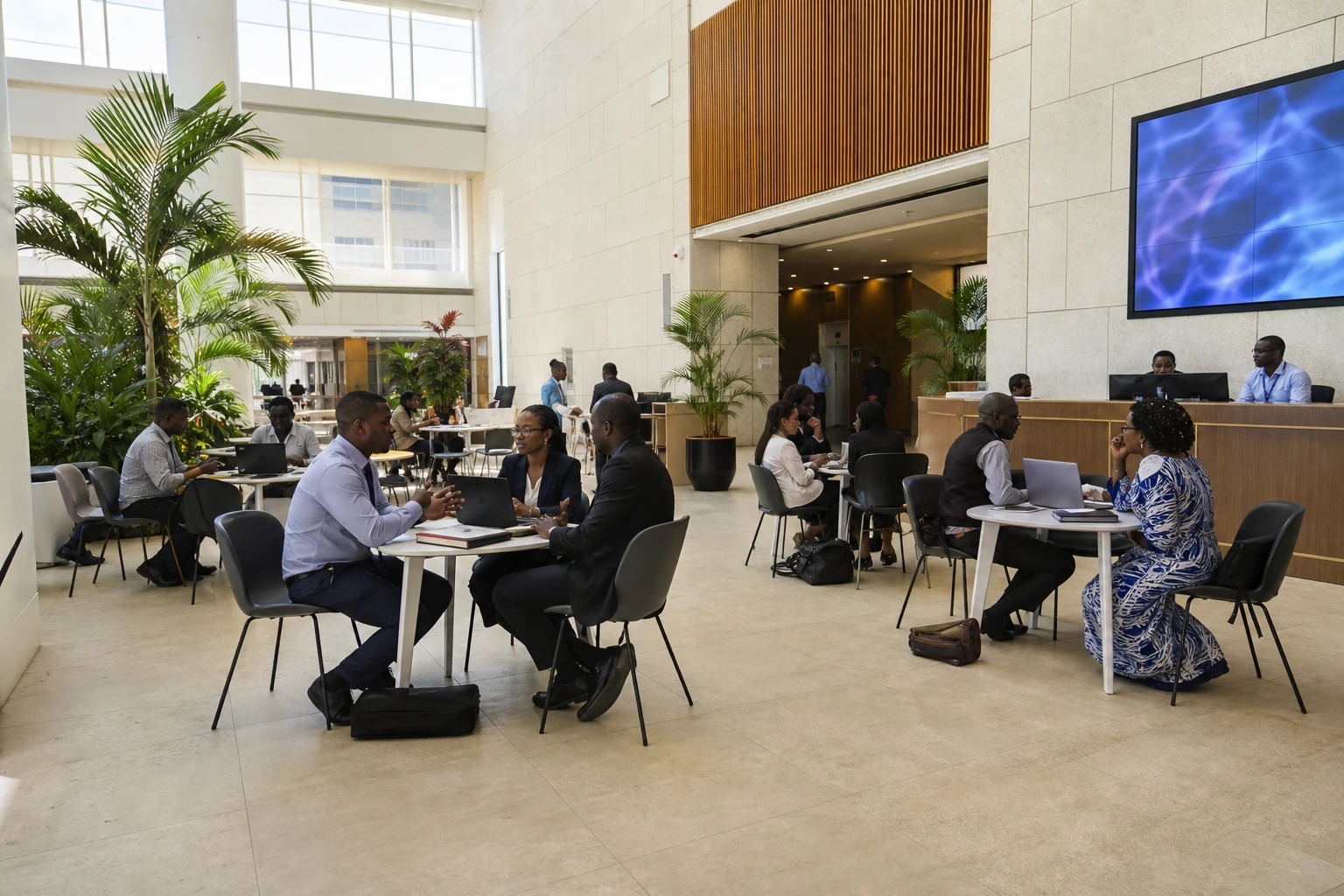
The ministry also announced a Deal Room, a space dedicated to structured meetings between startups and funders. Business-to-business sessions, an Innovation Village, a hackathon, a project-pitch competition, masterclasses and panels are also planned.
An “Ivoire Tech Week” is to complement the forum. This expanded programme aims to keep exchanges going throughout the week, rather than concentrating contacts over three days. It is expected to bring together entrepreneurs, researchers, public officials, technology companies, investors, venture capital funds and members of the diaspora.
This ambition was confirmed by the Ivorian Ministry for Digital Transition. It was also reported by the African Press Agency, which confirmed the forum dates and its regional focus.
A second edition after strong turnout
The first edition was held in Abidjan in July 2025. It had initially been designed to welcome about 500 people. At its close, however, organisers announced that 3,212 people had attended over three days.
The figure was released by the Government Information and Communications Centre and then reported by Abidjan.net. It is therefore documented by several Ivorian institutional and media sources.
This turnout gave the government grounds to expand the format. The new edition aims not merely to showcase innovations, but to facilitate transactions, business partnerships and fundraising.
The forum is therefore conceived as more than a trade fair. A startup can present a solution there, but should also be able to meet a client, negotiate with an investor or identify a partner to help it scale up.
Financing remains the decisive test
Holding more events is not enough to build a strong technology ecosystem. The critical issue remains financing companies after their launch. Many startups manage to develop a prototype, but then struggle to fund their growth, regulatory compliance or regional expansion.
The Ivorian government aims to address this challenge through several initiatives. The Startup Act, a legal framework intended to provide better support for innovative young companies, is one of the main instruments announced.
Ivorian Law No. 2023-901 already provides the basis for putting this scheme into operation. In July 2026, the ministry launched the Ivoire Tech Next 15 and Ivoire Tech Scale Up programmes. The first targets developing digital startups. The second supports established small and medium-sized technology companies.
According to the Ministry for Digital Transition and Technological Innovation, 30 companies are to receive support over 24 months. The scheme provides for assistance with governance, the integration of artificial intelligence tools, introductions to businesses and funders, and access to the markets of the West African Economic and Monetary Union and the Economic Community of West African States.
The creation of a platform to certify Ivorian startups has also been announced. A public label can help investors identify well-structured companies. It can also facilitate access to certain tax benefits or support programmes. Its effectiveness will, however, depend on transparent criteria, predictable timelines and access for companies based outside Abidjan.
An ecosystem still concentrated in the economic capital
The regional challenge is significant. Abidjan is home to corporate headquarters, investors, major companies, specialist schools and most professional events. This concentration makes meetings easier, but also creates a gap with entrepreneurs based in Bouaké, Korhogo, San Pedro and other Ivorian cities.
The ministry is therefore planning a national network of innovation infrastructure. Its stated aim is to give entrepreneurs better access to equipment, skills and funding, including outside Abidjan.
For young companies, this local presence can reduce travel costs and bring innovation closer to the needs of local communities. The sectors concerned are numerous: agriculture, logistics, health, education, commerce, energy and public services.
The issue is also social. A digital strategy will produce sustainable jobs only if it develops skills. It must therefore involve universities, training centres, businesses and local authorities. It must also do more to include women, young people and members of the diaspora.
West African reach will be closely watched
Côte d’Ivoire operates in a regional space where startups already move between several markets. WAEMU provides a shared monetary and economic framework for eight countries. ECOWAS, which brings together 15 West African states, remains the region’s broadest political and commercial bloc, despite recent institutional tensions.
Against this backdrop, Abidjan is seeking to strengthen its role as a Francophone hub. The forum’s success will depend less on the number of participants than on what happens after the meetings: contracts signed, funding secured, partnerships concluded and companies able to export their solutions.
The 2026 edition will also provide a way to assess the consistency between public announcements and their implementation. Observers will pay particular attention to how the Startup Act works in practice, the rollout of the certification scheme and startups’ access to support outside the economic capital.
The November event will also indicate whether Côte d’Ivoire can move from a strategy of attracting investment to one of producing technology. For Abidjan, the goal is clear: attract capital and talent. For Ivorian entrepreneurs, the desired outcome is more concrete: secure the means to grow, create jobs and sell their solutions in African markets.



