Algeria
 Egypt
 Libya
 Morocco
 Sudan
 Tunisia
 Benin
 Burkina Faso
 Cabo Verde
 Ghana
 Guinea
 Guinea-Bissau
 Liberia
 Mali
 Mauritania
 Niger
 Nigeria
 Senegal
 Sierra Leone
 The Gambia
 Togo
 Cameroon
 Central African Republic
 Chad
 DR Congo
 Equatorial Guinea
 Gabon
 Republic of the Congo
 São Tomé and Príncipe
 Burundi
 Comoros
 Djibouti
 Eritrea
 Ethiopia
 Kenya
 Madagascar
 Malawi
 Mauritius
 Mozambique
 Rwanda
 Seychelles
 Somalia
 South Sudan
 Tanzania
 Uganda
 Angola
 Botswana
 Eswatini
 Lesotho
 Namibia
 South Africa
 Zambia
 Zimbabwe
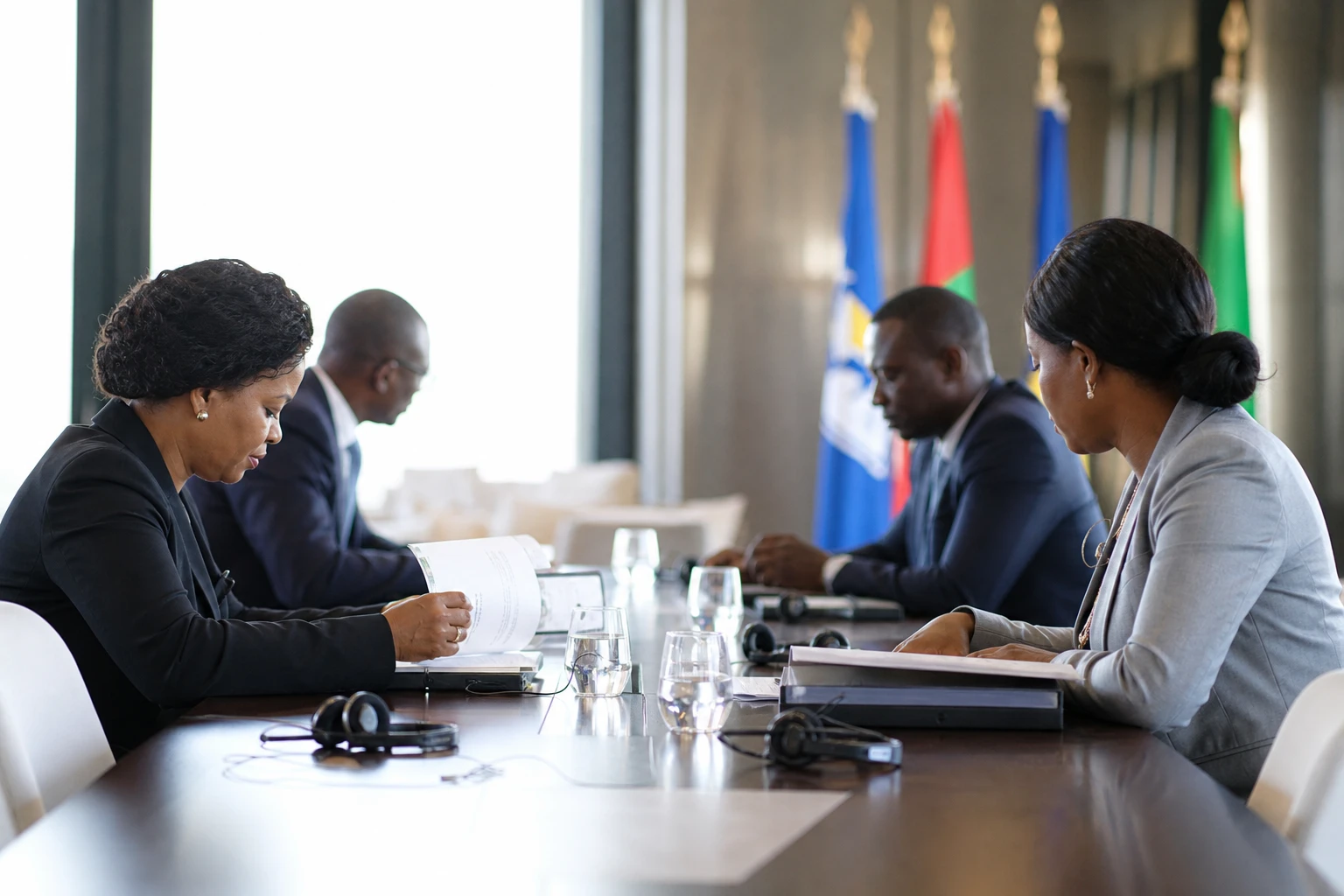
When women’s leadership moves beyond symbolism to deliver results
In Abidjan, women are not short of ideas or initiatives. The real question lies elsewhere: how to move from an activity that supports a family to a business able to invest, hire and export. In Côte d’Ivoire, this transition is still held back by access to capital, markets and equipment.
The debate comes at an important moment for the Ivorian economy. The country remains one of West Africa’s business hubs, at the heart of the West African Economic and Monetary Union (WAEMU) and the Economic Community of West African States (ECOWAS), two frameworks in which market integration and financing for small businesses have become priorities. The question is therefore not just a social one. It affects competitiveness, job creation and the country’s ability to process more of its wealth locally.
Many women entrepreneurs, but unequal access to resources
Available data confirm this tension. A study by the Alliance for Financial Inclusion published in 2025 indicates that more than a third of Ivorian SMEs are led by women. The same document also notes that women are concentrated mainly in trade, services and agro-industry, three essential sectors that are often vulnerable when they remain undercapitalised.
The World Bank offers another perspective. According to its Gender Data Portal, 22.5% of businesses in Côte d’Ivoire had at least one woman among their owners in 2023. The same dataset also shows that in 2023, only 11.6% of businesses had a woman as their chief executive. In other words, women are indeed present, but access to formal ownership and decision-making positions remains limited.
This reality is reflected in public policies and financial tools. The country has strengthened financial inclusion in recent years, but the barriers remain familiar: insufficient collateral, distance from banking networks, limited access to market information and a lack of suitable equipment. The picture is all the clearer because women account for a significant share of trade and informal activity, a vital part of the economy that remains poorly protected.
FILF 2026 aims to link financing, production and markets
It is in this context that the 7th edition of the International Women’s Leadership Forum will take place on 10 and 11 December 2026 in Abidjan. The forum was officially launched on 29 July 2026 in Côte d’Ivoire’s economic capital. Its theme, “Builders of Economies”, aptly sums up its chosen direction: less talk of representation and more focus on productive capacity.
The stated ambition is to bring women entrepreneurs together with banks, investors, public institutions and technical partners. The forum aims to address several barriers at once: financing, market access, local processing, innovation and competitiveness. This choice is not incidental. In West African economies, a woman-owned business does not grow on a good idea alone. It grows when it can buy machinery, secure supplies, organise its accounts and reach buyers beyond its neighbourhood or city.
The announced programme also gives an important place to women in production and processing. The stated goal is to support 1,000 women in these activities, with an ambition to create 12,000 jobs in Côte d’Ivoire and Senegal. If these figures materialise, the impact would not be limited to individuals. It would extend to subcontractors, transporters, raw-material sellers and local markets, where women’s spending already supports part of the real economy.
A useful signal for banks, WAEMU and ECOWAS
The issue also comes amid a changing financial landscape. In March 2025, Ecobank Côte d’Ivoire launched WAEMU’s first gender bond, an instrument designed to mobilise financing for women entrepreneurs. The bank later said the issuance was expected to help finance nearly 1,200 SMEs owned or led by women. In 2026, the group also said the initiative had helped increase lending to women-led businesses across Africa.
This type of instrument matters because it changes the usual approach. Instead of treating women entrepreneurs as a social group in need of support, it treats them as an economic market in their own right. This is precisely the direction taken by several regional initiatives. In July 2026, ECOWAS launched a youth and women’s entrepreneurship programme to strengthen skills, mentoring, access to networks and financing mechanisms. The regional organisation is now more clearly linking women’s entrepreneurship with innovation and economic integration.
For Côte d’Ivoire, the challenge is twofold. On the one hand, the country wants to consolidate its role as a financial and commercial hub in West Africa. On the other, it must ensure that women are not confined to low-margin activities. Local processing, the digitisation of sales and access to regional markets can take women-owned businesses to a larger scale, provided that credit, training and logistics keep pace.
What to watch in Abidjan and beyond
FILF 2026 could therefore become a useful test. Not of the quality of a speech, but of whether announced commitments lead to concrete instruments: credit lines, orders, industrial partnerships, digital access and technical support. In West Africa, these connections often matter more than a grand slogan.
The event’s significance extends beyond Côte d’Ivoire. At continental level, the question of women’s leadership is linked to the AfCFTA, the African Continental Free Trade Area. Without strong businesses, intra-African trade benefits mainly the major operators. With better-financed women-owned SMEs more closely connected to markets, a different economy becomes possible: more local, more formal and more resilient. The Abidjan gathering will show whether this promise is beginning to take shape.