Algeria
 Egypt
 Libya
 Morocco
 Sudan
 Tunisia
 Benin
 Burkina Faso
 Cabo Verde
 Ghana
 Guinea
 Guinea-Bissau
 Liberia
 Mali
 Mauritania
 Niger
 Nigeria
 Senegal
 Sierra Leone
 The Gambia
 Togo
 Cameroon
 Central African Republic
 Chad
 DR Congo
 Equatorial Guinea
 Gabon
 Republic of the Congo
 São Tomé and Príncipe
 Burundi
 Comoros
 Djibouti
 Eritrea
 Ethiopia
 Kenya
 Madagascar
 Malawi
 Mauritius
 Mozambique
 Rwanda
 Seychelles
 Somalia
 South Sudan
 Tanzania
 Uganda
 Angola
 Botswana
 Eswatini
 Lesotho
 Namibia
 South Africa
 Zambia
 Zimbabwe
When a fake image is enough to inflame public debate
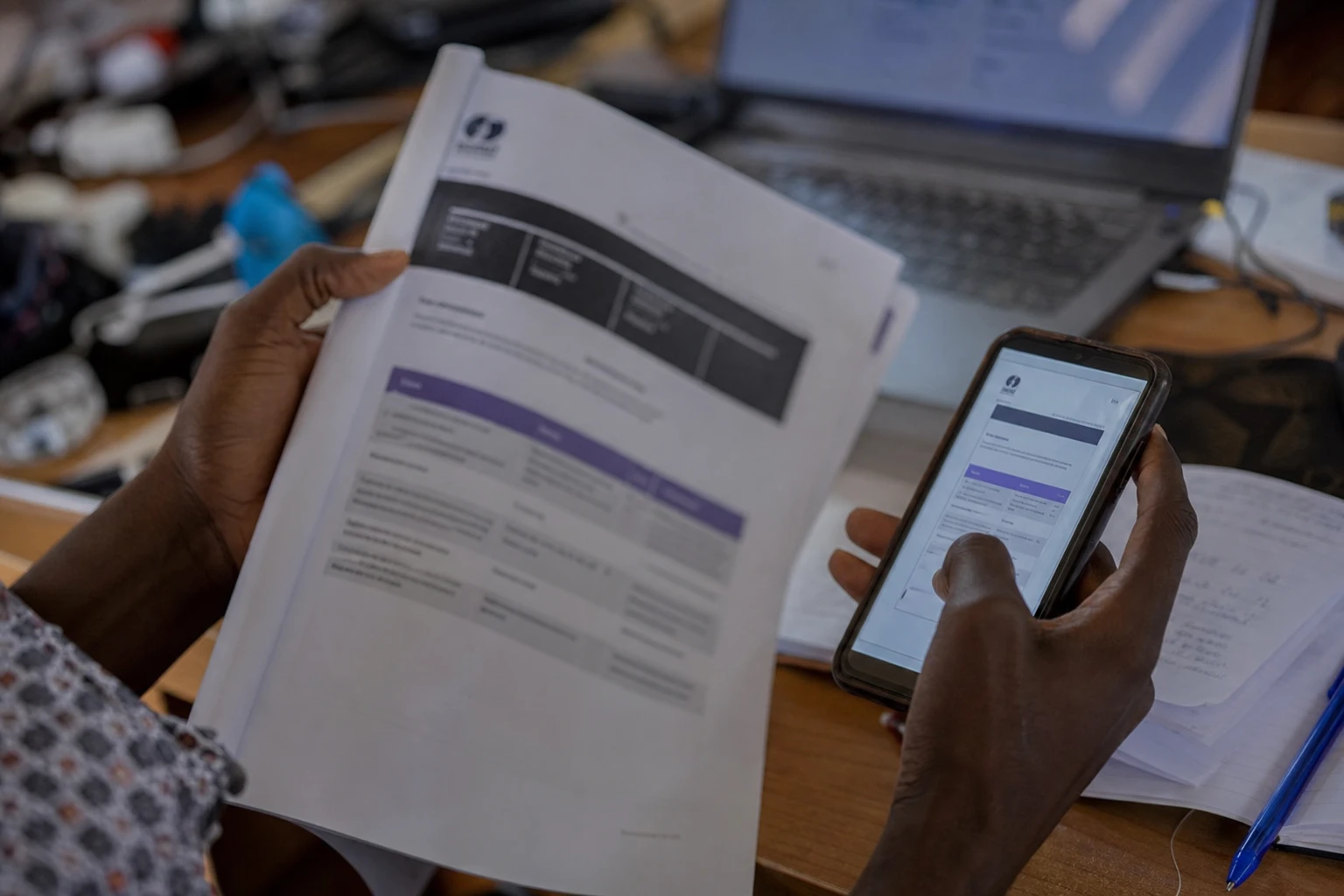
In Côte d’Ivoire, rumours no longer circulate only as text. They now arrive with crisp images, cobbled-together logos and a veneer of proof that can quickly deceive. That is exactly what happened with purported donations of sanitary pads and then condoms attributed to France. Within days, a visual manipulation sought to turn a fictitious diplomatic gesture into a political insult. Yet fact-checks show that these scenes never took place. The images in circulation were generated by artificial intelligence, and the French Embassy in Abidjan formally denied making any such donation.
The issue goes beyond a simple digital faux pas. It touches on how public debate in Côte d’Ivoire, as in many West African countries, is exposed to viral content manufactured to humiliate, polarise or discredit. Côte d’Ivoire, a coastal West African country and a key member of ECOWAS, faces a constant flow of partisan messages, doctored images and imported or recycled narratives. In such an environment, a fake photograph is no trivial matter: it can pass as “proof” before an official denial has time to reach the same audience.
The facts: two fakes, one aim
The first fake shows a man presented as a French diplomat handing boxes of sanitary pads to someone purported to be an Ivorian counterpart. The second claims to show a donation of condoms being handed to Côte d’Ivoire’s health minister. In both cases, the context does not hold up. The faces do not match the people named, the graphic design contains inconsistencies, and no official post on the embassy’s or health ministry’s channels confirms that these ceremonies took place.
One technical point matters. Available fact-checks indicate that the visuals bear signs of AI generation. SynthID is not an OpenAI tool, as some messages suggest, but a Google DeepMind technology designed to add a digital watermark to content generated by its tools and make it easier to identify. Google says SynthID is intended to flag AI-created content, including images. This does not, on its own, prove the origin of each image, but it helps explain why the tool is being used in recent fact-checks.
On the substance, the French Embassy in Côte d’Ivoire denied organising a donation of sanitary pads. It also rejected the claim that condoms had been donated to the Ministry of Health, Public Hygiene and Universal Health Coverage. For its part, the Ivorian ministry has published no record of any such handover. In short, there is no institutional event behind these images. There is only a viral fabrication, designed to look credible at first glance.
Why this disinformation gains traction in Côte d’Ivoire
This episode says something about the information battle running through the sub-region. Disinformation campaigns often play on very simple themes: supposed humiliation, foreign interference, or a portrayal of unequal relations between Europe and Africa. Here, the implicit message is clear: to make people believe in aid that is paternalistic, inappropriate or even insulting, in order to provoke anger and fuel a political reading of Franco-Ivorian ties. The tactic is aimed less at truth than at reaction.
This kind of content finds fertile ground in a context where public discourse is fragmented. Social media make it possible to bypass traditional media, but also editorial fact-checking. AI-generated images make the problem worse, giving the illusion of an authentic document without any obvious sign of manipulation. The public is then confronted with a hybrid object: neither a news photograph nor a simple illustration, but an artefact designed to persuade before it is debunked.
Such vigilance is all the more necessary in Côte d’Ivoire because public health issues are sensitive. For several years, the ministry has been pursuing visible reforms, particularly around universal health coverage and the modernisation of the health system. Against this backdrop, circulating fake donations linked to reproductive health diverts attention from the real issues: access to care, prevention, service quality and the funding of facilities. Women and low-income households do not need a staged gesture. They need a reliable, transparent and respected system.
An Ivorian issue, but also a West African one
The case goes beyond the bilateral relationship between Abidjan and Paris. In West Africa, digital manipulation campaigns spread quickly from one country to another and from one activist group to another, sometimes borrowing the same visual conventions. A fake created for Côte d’Ivoire can thus be reused elsewhere, translated, remixed or presented as further proof of an imaginary foreign domination. This is one of the most tangible effects of regional disinformation: it travels better than the denial.
ECOWAS, which brings together West African states, is confronting this accelerated spread of political and anti-institutional narratives. Crises of confidence, political transitions and diplomatic tensions create fertile ground for fake documents and doctored images. In this landscape, the response cannot be purely defensive. It also requires more responsive institutions, identifiable spokespeople and a culture of fact-checking that can communicate quickly, without sounding preachy.
For Côte d’Ivoire, the stakes are twofold. First, public debate must be protected from manipulations that degrade political discussion. Second, the credibility of institutions, whether national or diplomatic, must be preserved. A fake donation of nappies or condoms may seem anecdotal. In reality, it reveals a deeper vulnerability: that of a digital environment where images can now precede reality and dictate collective emotion. This is increasingly where part of public life in Côte d’Ivoire is being shaped.
The next front will be less spectacular than these fakes, but more decisive: the ability of public actors, the media and platforms to make fact-checking visible, fast and understandable. For in a region where rumours turn into certainties within hours, credibility is now measured by speed, precision and transparency.