Algeria
 Egypt
 Libya
 Morocco
 Sudan
 Tunisia
 Benin
 Burkina Faso
 Cabo Verde
 Côte d'Ivoire
 Ghana
 Guinea
 Guinea-Bissau
 Liberia
 Mali
 Mauritania
 Niger
 Nigeria
 Sierra Leone
 The Gambia
 Togo
 Cameroon
 Central African Republic
 Chad
 DR Congo
 Equatorial Guinea
 Gabon
 Republic of the Congo
 São Tomé and Príncipe
 Burundi
 Comoros
 Djibouti
 Eritrea
 Ethiopia
 Kenya
 Madagascar
 Malawi
 Mauritius
 Mozambique
 Rwanda
 Seychelles
 Somalia
 South Sudan
 Tanzania
 Uganda
 Angola
 Botswana
 Eswatini
 Lesotho
 Namibia
 South Africa
 Zambia
 Zimbabwe
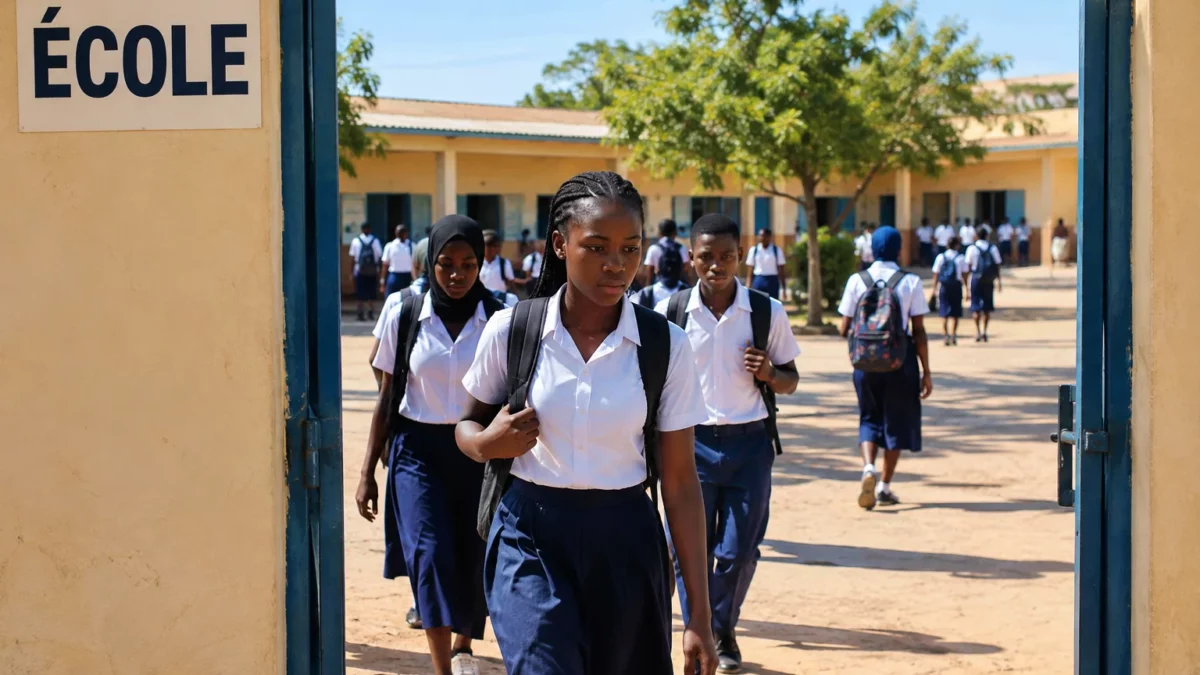
In Dakar, as in the south-eastern regions, an adolescent’s marriage is not simply a family decision. It can interrupt her education, reduce her autonomy and affect her health. In Senegal, recent data show that the practice persists despite commitments to end it.
A first international day, a regional issue
27 November 2026 marks the first International Day for the Elimination of Child, Early and Forced Marriage. The United Nations General Assembly established the day through a resolution adopted on 4 September 2026. It aims to raise the profile of unions involving minors, including those that are not officially registered.
According to UN estimates, 115 million women and girls living in sub-Saharan Africa were married before adulthood. This figure refers to people already affected, not the number of marriages taking place each year. Globally, around 12 million girls are married before the age of 18 each year.
Across West Africa, the situation varies considerably from one country to another. Social norms, access to education, household income and the enforcement of laws all shape people’s lives. ECOWAS, which brings together the states of the region, provides a framework for cooperation, but concrete responses remain largely national and local.
Slow progress and persistent disparities in Senegal
Senegal is no exception. The national report on monitoring the Sustainable Development Goals, published in 2026, says that 30.2% of women aged 20 to 24 were married before the age of 18 in 2023. The proportion was 31% in 2015. The decline has therefore been limited. The same report records an increase from 8.5% to 9% in unions before the age of 15 over the period in question.
These figures do not describe exactly the same cohorts as earlier surveys. UNICEF, drawing on the 2019 Demographic and Health Survey, estimated that 32.6% of women aged 20 to 49 had entered their first union before the age of 18. The indicators are therefore not directly interchangeable, but they point to the persistence of the practice.
Senegalese law sets the minimum age of marriage at 16 for girls, compared with 18 for boys. This gap remains a point of tension with regional and international commitments to protect children. The law alone is not enough to prevent informal unions, ensure an adolescent’s consent or provide access to remedies in every locality.
The national average also conceals territorial differences. Data compiled by UNICEF show that marriage before the age of 18 is more common in some rural areas and in regions such as Kolda, Kédougou and Tambacounda. The distance to schools and protection services can make prevention and reporting more difficult. In cities, obstacles take other forms, including poverty and social pressure.
Consent, education and autonomy at the heart of responses
Child marriage and forced marriage sometimes overlap, but the two concepts are not identical. The former refers to a union entered into before the age of 18. The latter concerns the absence of free consent. An adolescent may face pressure from her family or community without this appearing in official records.
The consequences extend far beyond the ceremony. An early union can take a girl out of school and limit her career prospects. It can also expose her to pregnancy when her body and autonomy are not fully protected. These risks vary according to circumstances: household resources, the availability of health services and the possibility of continuing her education make a tangible difference.
In Senegal’s public debate, feminist activist Suzanne Sy and the Waxjotna movement raise issues concerning the rights of women and children. The name Waxjotna means “it is time to speak” in Wolof. Their work is part of a landscape in which associations, families, educators and community leaders can all contribute to prevention. The issue should not, however, be reduced to an opposition between rights and culture: practices also change through local initiatives and the voices of the adolescent girls concerned.
For the authorities, the challenge is to bring legislation closer to lived reality. This means making protection mechanisms widely known, providing services that can support girls without stigmatising them, and creating opportunities to return to school for those who have already been married. Community actors can help prevent unions, while the justice system and social services must be able to intervene when a child’s consent or safety is at issue.
A deadline that calls for measurable action
The new international day puts the issue back on the agenda of United Nations and African Union commitments to girls’ rights. For Senegal and its ECOWAS neighbours, the next challenge will be to turn declarations into measurable results: trends in unions before the age of 18, access to education, protection from pressure and enforcement of existing rules.
The decline recorded in Senegal between 2015 and 2023 remains modest, while recent national data show no fall in unions before the age of 15. This contrast is a reminder that progress cannot be reduced to an annual campaign. It also depends on institutions’ ability to act in the regions and on the place given to girls in decisions affecting their future.