Algeria
 Egypt
 Libya
 Morocco
 Sudan
 Tunisia
 Benin
 Burkina Faso
 Cabo Verde
 Côte d'Ivoire
 Ghana
 Guinea
 Guinea-Bissau
 Liberia
 Mali
 Mauritania
 Niger
 Nigeria
 Sierra Leone
 The Gambia
 Togo
 Cameroon
 Central African Republic
 Chad
 DR Congo
 Equatorial Guinea
 Gabon
 Republic of the Congo
 São Tomé and Príncipe
 Burundi
 Comoros
 Djibouti
 Eritrea
 Ethiopia
 Kenya
 Madagascar
 Malawi
 Mauritius
 Mozambique
 Rwanda
 Seychelles
 Somalia
 South Sudan
 Tanzania
 Uganda
 Angola
 Botswana
 Eswatini
 Lesotho
 Namibia
 South Africa
 Zambia
 Zimbabwe
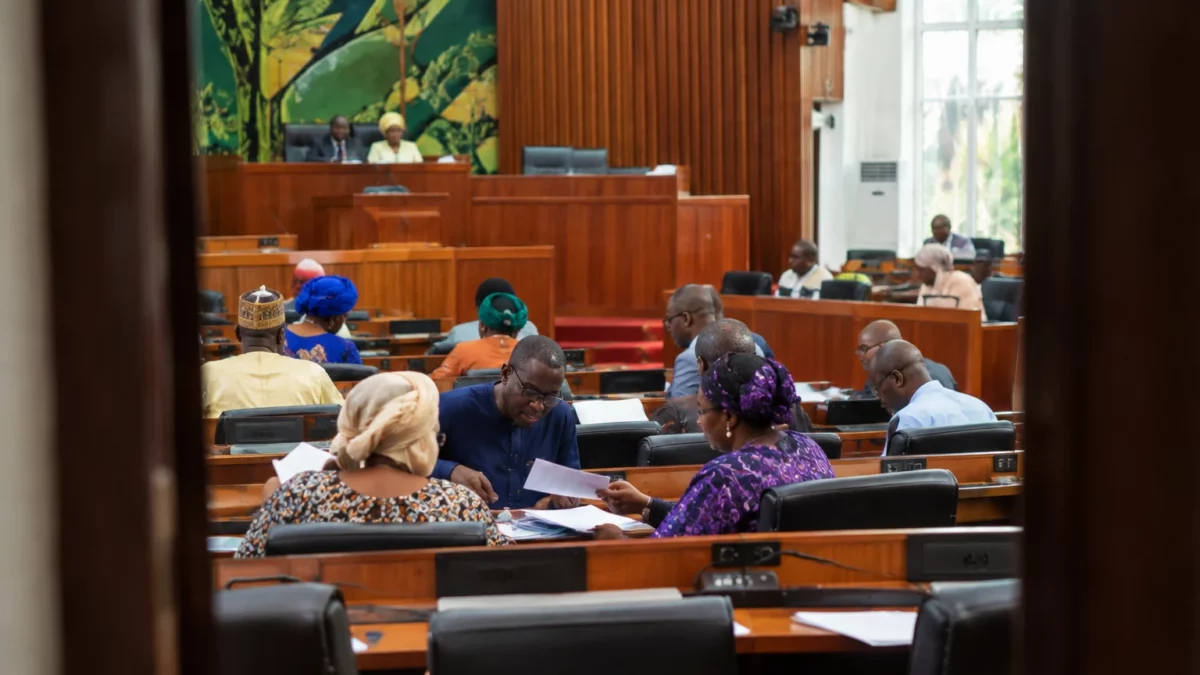
In Senegal, a budget crisis has brought an institutional question to the fore: should President Bassirou Diomaye Faye send MPs back to the voters? Ousmane Sonko, now president of the National Assembly, is publicly urging him to decide. But dissolution is the prerogative of the head of state, not a decision parliament can impose on him.
A constitutional deadline at the heart of the standoff
The debate is unfolding in a situation unprecedented since the 2024 transfer of power. Bassirou Diomaye Faye and Ousmane Sonko, long-time political allies, now occupy two separate institutional roles. Faye has led the executive since April 2024. Sonko is president of the National Assembly, where his party, Pastef, holds a majority.
The constitution bars the president from dissolving the Assembly during the first two years of a legislature. The current legislature began on 2 December 2024, so the restriction expires on 2 December 2026. The text then allows the head of state to dissolve the Assembly by decree, after seeking the views of the prime minister and the president of the Assembly. Those views are required, but the decision belongs to the president. The rule was clarified by the Constitutional Council in 2024.
This framework gives the date immediate political significance. It does not, however, mean that a dissolution will take place at midnight, or that the president is obliged to call a new election. Such a decision would open a new electoral period and require parties to seek the Senegalese people’s votes again.
The revised budget, the breaking point
Tensions have crystallised around the 2026 revised budget, which adjusts revenue and spending forecasts during the year. MPs rejected the bill. On 19 November, Bassirou Diomaye Faye nevertheless brought it into force by decree. The executive justified this course by citing constitutional provisions governing the budget review and the need to ensure the continuity of the state.
The government says the constitutional deadline had expired and cites, among other things, the need to honour the country’s financial commitments. In the Assembly, MPs have challenged the use of a decree and have initiated a process to examine its implications. The disagreement is therefore about both the substance of budget choices and the way the executive proceeded after parliament rejected the bill.
In his remarks on Thursday 26 November, Sonko said: “If it were up to me, I would dissolve the National Assembly at midnight on 2 December.” He also questioned the president’s willingness to face a new election. This accusation reflects his political assessment; it does not, on its own, establish Faye’s intentions.
Political calculations, tangible consequences
A dissolution could clarify the balance of power if it leads to a clear-cut election. It also carries risks for both camps. Pastef would have to defend its electoral base, while the president would have to gauge the support for his own political project. No outcome can be inferred from current statements.
For Senegalese people, the stakes go beyond the rivalry between two figures who emerged from the same political movement. A prolonged conflict between government and parliament can slow the passage of laws, complicate decisions on public spending and fuel uncertainty about the state’s financial commitments. The effects would not be the same everywhere: budget decisions affect public services and investment in the regions, as well as government spending in Dakar. Economic players, in both the formal and informal sectors, may also be affected by reduced visibility over public policy choices.
The precedent is a reminder that Senegalese institutions have already experienced an early dissolution. In September 2024, Faye dissolved the Assembly elected in 2022 and then called voters to the polls on 17 November. Pastef won a majority of seats. This time, the disagreement is between leaders who governed together, rather than between the president and an opposing parliamentary majority.
The presidential movement Kiiraay, launched by Faye, has been seeking to build its organisation for several months. Sonko, for his part, retains a strong capacity to mobilise party supporters. He has announced a rally in Thiès on 6 December. The date could provide an indication of political mobilisation, but does not presage either a dissolution or an electoral timetable.
A situation being watched beyond Senegal
What happens next will depend first on the head of state’s decision after 2 December and on the institutions’ response to the budget dispute. For the countries of ECOWAS, the West African regional organisation, developments will be watched as a test of a political system’s ability to manage a major disagreement through constitutional mechanisms.
Senegal has long been seen as a model of institutional stability in West Africa, but that reputation does not exempt its political actors from following procedures and making their decisions understandable. The decisive question, then, is not only whether MPs will be sent back to the polls. It is also whether the executive and the legislature can keep the state functioning during their political confrontation.
For now, Sonko is calling for an electoral contest; Faye retains the authority to decide. The date of 2 December opens up a constitutional possibility, not an automatic way out of the crisis.