Algeria
 Egypt
 Libya
 Morocco
 Sudan
 Tunisia
 Benin
 Burkina Faso
 Cabo Verde
 Côte d'Ivoire
 Ghana
 Guinea
 Guinea-Bissau
 Liberia
 Mali
 Mauritania
 Niger
 Nigeria
 Sierra Leone
 The Gambia
 Togo
 Cameroon
 Central African Republic
 Chad
 DR Congo
 Equatorial Guinea
 Gabon
 Republic of the Congo
 São Tomé and Príncipe
 Burundi
 Comoros
 Djibouti
 Eritrea
 Ethiopia
 Kenya
 Madagascar
 Malawi
 Mauritius
 Mozambique
 Rwanda
 Seychelles
 Somalia
 South Sudan
 Tanzania
 Uganda
 Angola
 Botswana
 Eswatini
 Lesotho
 Namibia
 South Africa
 Zambia
 Zimbabwe
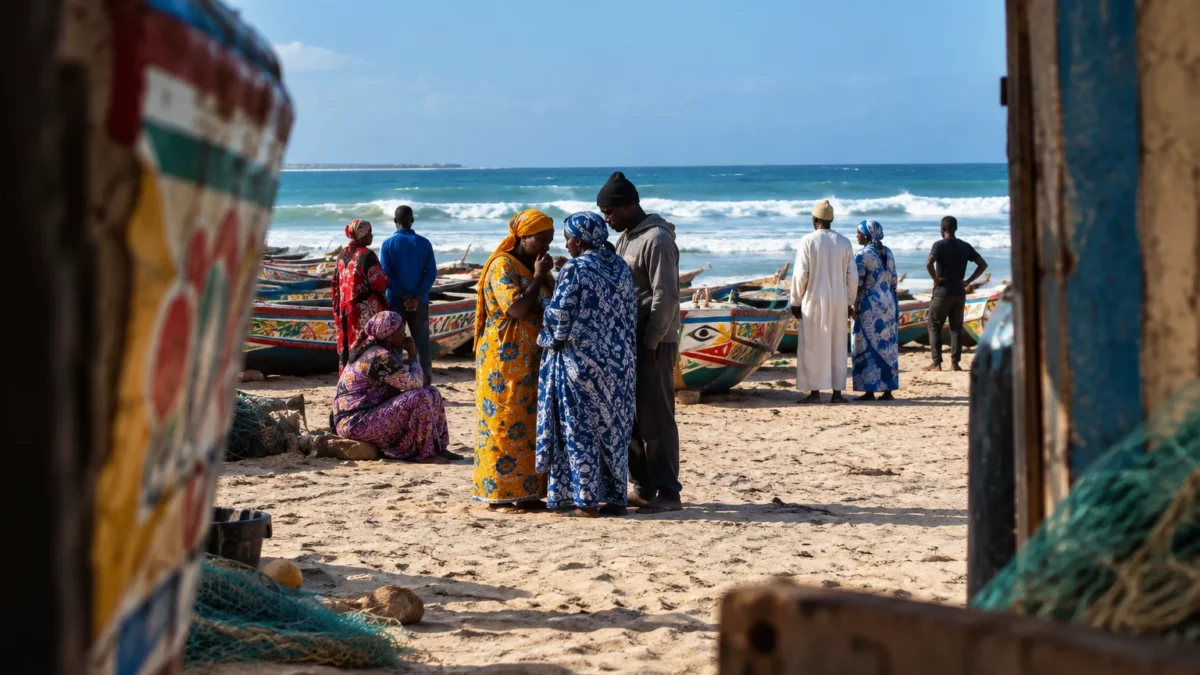
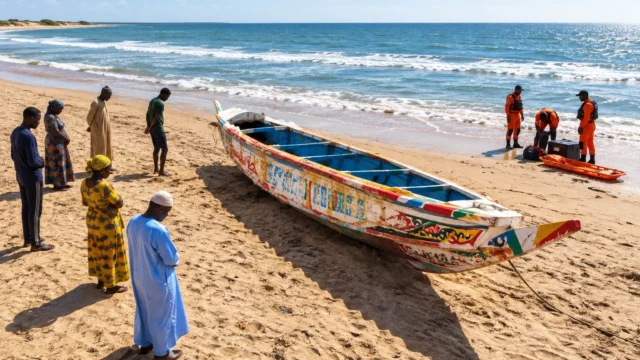
In Yoff, the wait is measured by phones that do not ring. Families of fishermen in Dakar are still seeking news of relatives who set off for Spain aboard a pirogue. The silence confirms neither a shipwreck nor an arrival. It leaves families without answers, as searches at sea remain at the heart of their demands.
A disappearance, two estimates of the number of passengers
The pirogue is believed to have left Yoff, a district of the Senegalese capital, between 9 and 10 November 2026. It was carrying people from Yoff, Ngor, Ouakam and Cambérène, among other places. Relatives and local officials put the number of passengers at about 175. The Senegalese organisation Action for Human Rights and Friendship (ADHA), meanwhile, estimates that 172 people are missing. The figures do not therefore fully agree. They nevertheless describe a boat from which no passenger has given any confirmed news since departure, according to information published on 23 and 24 November by Senegalese and international media.
The discrepancy between an estimated 175 people on board and 172 presumed missing should be retained, rather than reduced to a definitive toll. As of 24 November, neither the pirogue’s arrival nor a shipwreck had been confirmed in the available information. In the absence of survivor testimony or a location for the boat, the passengers’ fate remains unknown. Reuters’ report carried by Internazionale gives the estimates from local officials and ADHA.
Families are calling for search efforts to be stepped up. Relatives interviewed in Yoff say they do not understand why drones, planes, helicopters and naval units have not been able to find the boat. Their appeal also reflects a practical difficulty: families do not receive regular operational updates to tell them where to search or how to interpret the silence at sea.
Searches and interceptions, but few answers for relatives
The Senegalese Navy says search operations are under way. At the same time, maritime forces continue to intercept pirogues. According to information attributed to the Navy, more than 5,200 people are said to have been rescued, intercepted or prevented from leaving Senegal since the beginning of November. This figure covers several types of operation: it does not relate solely to rescues at sea and, on its own, does not indicate what resources have been deployed to find the missing pirogue.
The contrast matters to families. The authorities present interceptions as a way to prevent dangerous departures and assist people in distress. But when a boat remains missing, relatives need specific information about searches, their scope and how they are progressing. An operation to monitor the coastline and a search for survivors do not meet the same need.
The context makes this anxiety particularly acute. A few days before the disappearance, another pirogue sank off Lompoul, in north-western Senegal. The death toll given by the Senegalese authorities reached 39. This disaster, separate from the disappearance of the boat that left Yoff, is a reminder of the dangers of Atlantic crossings and the difficulty of quickly establishing the fate of people who have neither been rescued nor found. The Senegalese Press Agency reported the toll and the announcement of assistance for bereaved families.
Families and livelihoods under strain at the point of departure
In Yoff, some relatives say young fishermen leave because they struggle to earn enough from their work and contribute to household expenses. Their testimony sheds light on some of the motivations, without reducing departures to a single cause. Migration decisions are made in varied circumstances: hopes of finding work, family responsibilities, networks already established abroad and the prospect of a better future can all play a part.
The consequences of departure extend beyond the person on board. When a fisherman goes missing, relatives also lose a potential source of income and are left facing administrative and emotional uncertainty. Coastal neighbourhoods, where family ties, fishing and activities around the landing site are closely linked, bear a particular share of this wait. By contrast, public debate often focuses on preventing departures and interception figures, and less on sustained support for families who have heard nothing.
The Senegalese authorities have also announced an intensification of efforts to combat smuggling networks. On 17 November, the Senegalese Press Agency reported that the National Division for the Fight against Migrant Smuggling had recorded 6,889 arrests, prevented 107 departures and dismantled 88 networks between January and November 2026. These police figures describe action against smuggling networks; they do not measure the economic needs of fishing communities or the effectiveness of searches for a particular boat.
A Senegalese issue on a West African route
The crossing to the Canary Islands forms part of an Atlantic route used by people from several West African countries. Passengers face long journeys at sea, the loss of their bearings and difficulties in securing rescue when boats drift offshore. The route also involves countries of departure, transit and arrival, as well as maritime cooperation mechanisms and the protection of missing people.
For Senegal, a member of the Economic Community of West African States (ECOWAS), the challenge is therefore not limited to preventing departures from Dakar. It includes coordinating rescue efforts, combating smugglers and ensuring that families can obtain reliable information. Surveillance operations can reduce some immediate risks, but they do not replace channels for searches and reporting, or responses to the difficulties that drive plans to leave.
The next decisive development would be locating the pirogue or identifying survivors. Until then, the number of passengers should continue to be presented as an estimate, and their disappearance cannot be treated as a death toll. For families in Yoff, Ngor, Ouakam and Cambérène, this distinction does not ease the wait: it simply serves as a reminder that their relatives’ fate has not been established.