Egypt
 Libya
 Morocco
 Sudan
 Tunisia
 Benin
 Burkina Faso
 Cabo Verde
 Côte d'Ivoire
 Ghana
 Guinea
 Guinea-Bissau
 Liberia
 Mali
 Mauritania
 Niger
 Nigeria
 Senegal
 Sierra Leone
 The Gambia
 Togo
 Cameroon
 Central African Republic
 Chad
 DR Congo
 Equatorial Guinea
 Gabon
 Republic of the Congo
 São Tomé and Príncipe
 Burundi
 Comoros
 Djibouti
 Eritrea
 Ethiopia
 Kenya
 Madagascar
 Malawi
 Mauritius
 Mozambique
 Rwanda
 Seychelles
 Somalia
 South Sudan
 Tanzania
 Uganda
 Angola
 Botswana
 Eswatini
 Lesotho
 Namibia
 South Africa
 Zambia
 Zimbabwe
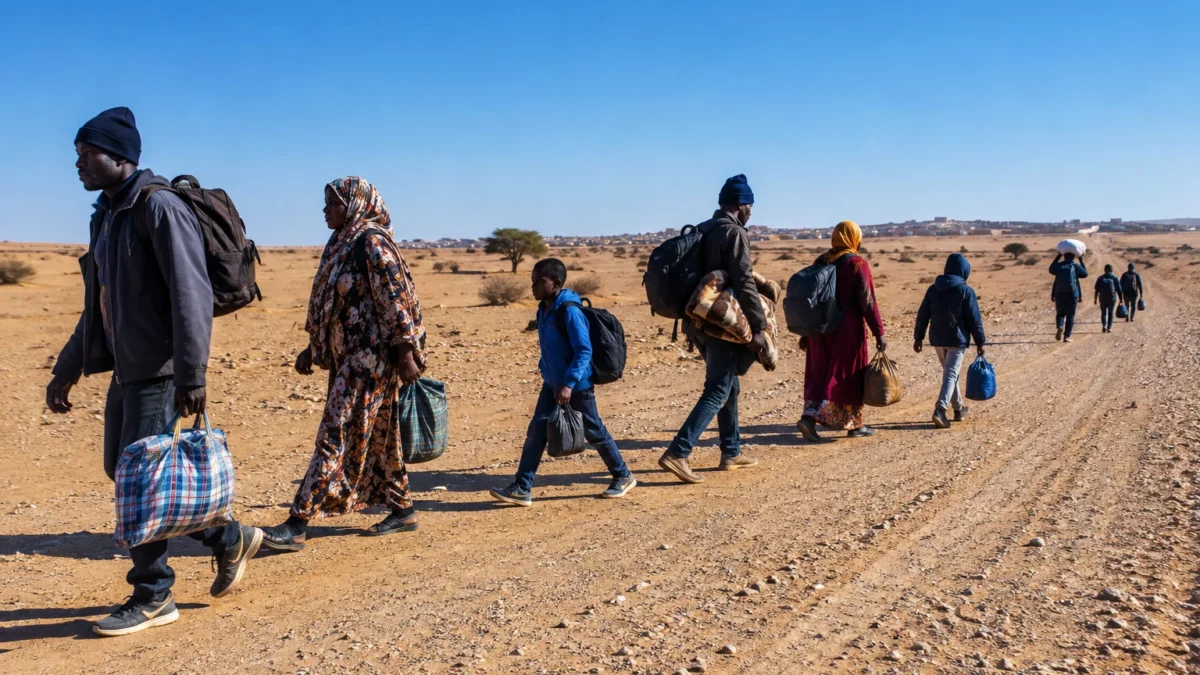
In Assamaka, the border does not always mark the end of a journey. For people expelled from Algeria, it can mean a further trek across the desert before they reach a place of reception in Niger.
A border turned into a place of arrival
This situation is part of the migration movements crossing the Sahara. The Agadez region links several routes between West Africa, Algeria and Libya. The UNHCR describes it as a crossroads for mixed movements, where displacement, returns and expulsions intersect. These journeys involve people of various nationalities and cannot be reduced to a single route or migration plan.
The issue also affects relations between Niamey and Algiers, as well as states’ responsibilities in managing borders. Niger is a member of ECOWAS, the West African economic community. Algeria is not: the border in question lies between two states belonging to different regional frameworks. The African Union, for its part, has continental commitments on mobility and the protection of people.
In this context, distinctions between methods of removal matter. Alarme Phone Sahara (APS), a monitoring and assistance organisation based in Niger, describes convoys as either “official” or “unofficial”. In the former, people are generally taken to Assamaka. In the latter, groups are dropped in a desert area known as “Point Zero”.
Figures close to the 2025 total
In its report published on 18 November 2026, APS estimates that 31,743 people have been expelled from Algeria to Niger since the start of the year. The NGO says the figure is based on observations by its team in Assamaka. It is close to the 2025 total, when more than 34,000 people were reportedly sent back, according to the organisation’s records.
The NGO’s data are not a comprehensive administrative count. However, other independent monitoring confirms the scale of the movements. The UNHCR recorded 11,752 people expelled from Algeria to Assamaka in the first quarter of 2026. The Mixed Migration Centre, meanwhile, reports that APS had counted at least 14,600 expulsions between 18 January and 17 May. These figures cover different periods and use different methods; they support the trend but do not, on their own, confirm the annual total announced.
Not all those affected are Nigeriens. APS has recorded nationals of Niger as well as several other African countries. According to the organisation, Nigeriens, including children and adolescents, are often taken to Assamaka in convoys. Others are sometimes left at Point Zero, about 15 kilometres from the town. They must then walk that distance to reach an initial point of assistance.
Support is also needed beyond the border
For people dropped at Point Zero, the journey to Assamaka presents an immediate difficulty. APS reports harsh climatic conditions and risks to health and safety. Access to water, healthcare, information and shelter then becomes critical. The UNHCR also says expulsions and other movements are putting pressure on reception capacity in the Agadez region.
This pressure is not evenly distributed. Assamaka, a remote border town, receives new arrivals and faces urgent needs. Arlit and other northern towns may also be affected by onward movements. In Niamey, diplomatic and political decisions are made far from the area, while residents and local services face the direct consequences. Those sent back may, in turn, have to find a way forward without sufficient resources.
APS also reports the death in July 2026 of a Togolese national, Ousmane Mansour, who reportedly suffered severe burns after his expulsion. This information is reported by the organisation. In the absence of identified independent confirmation, the precise circumstances of the death must remain attributed to this source and cannot be presented as established by several investigations.
The NGO has noted a possible change in practices: more people may be sent directly to their countries of origin rather than being left in the Nigerien desert. But APS says this trend needs to be confirmed. According to its records, around 5,000 people were reportedly expelled from Algeria to Niger between September and October. The high annual total nevertheless shows that this possible shift has not ended arrivals in Assamaka.
A regional challenge for protection and monitoring
These expulsions raise questions about coordination mechanisms between neighbouring countries. Algeria must ensure that its removal procedures and the safeguards applicable to those concerned are respected. Niger, for its part, must organise reception and referral across a vast territory, where services are far from decision-making centres. For people from other states, seeking protection or a safe return also involves their countries of origin and the relevant organisations.
The available figures therefore call for cautious interpretation. Records from a local NGO, UNHCR data and specialist analyses shed light on different aspects of the phenomenon, but do not constitute a common register. Comparing future reports, alongside the publication of detailed official data on procedures, nationalities and what happens after removals, will make it possible to assess developments more accurately.
At the West African and continental levels, Assamaka is a reminder that border policy does not end with controlling a crossing. It also concerns the safety of displaced people, consular cooperation and the ability of authorities to prevent removals from resulting in abandonment in the desert. For now, the available data point to continued arrivals, while the precise scale of the 2026 total is documented mainly by APS.
Context sources: Alarme Phone Sahara observations in Assamaka, UNHCR monitoring in Niger for the first quarter of 2026 and Mixed Migration Centre analysis of mobility in Africa.