Algeria
 Egypt
 Libya
 Morocco
 Sudan
 Tunisia
 Benin
 Cabo Verde
 Côte d'Ivoire
 Ghana
 Guinea
 Guinea-Bissau
 Liberia
 Mali
 Mauritania
 Niger
 Nigeria
 Senegal
 Sierra Leone
 The Gambia
 Togo
 Cameroon
 Central African Republic
 Chad
 DR Congo
 Equatorial Guinea
 Gabon
 Republic of the Congo
 São Tomé and Príncipe
 Burundi
 Comoros
 Djibouti
 Eritrea
 Ethiopia
 Kenya
 Madagascar
 Malawi
 Mauritius
 Mozambique
 Rwanda
 Seychelles
 Somalia
 South Sudan
 Tanzania
 Uganda
 Angola
 Botswana
 Eswatini
 Lesotho
 Namibia
 South Africa
 Zambia
 Zimbabwe
When pasture is scarce, herds do not stop at borders. But transhumance routes can be cut off by insecurity, movement restrictions or local tensions. For families who depend on livestock rearing, access to water and pasture then becomes a question of income, food and security.
A pastoral season under pressure, but with uneven conditions across areas
The Sahel and West Africa are not facing a uniform situation. The 2026-2027 pastoral season is difficult in several Sahelian and Saharan areas, while more southerly regions have greater biomass. This disparity makes livestock movements particularly important — and their organisation more challenging.
The AGRHYMET Regional Centre, attached to the Permanent Interstate Committee for Drought Control in the Sahel (CILSS), estimates that just over 60% of the Sahelian zone had, in autumn, conditions unfavourable to good fodder production. A report cited by Mali’s public news agency AMAP repeats this estimate. Deficits are nevertheless localised: some areas of Niger and Burkina Faso are better supplied than others, while parts of Mauritania, Mali and Chad are experiencing severe difficulties.
This contrast matters. When resources dwindle in one region, herders turn to other pastures, sometimes in a neighbouring country. Pastoral mobility is a longstanding economic and social practice. It nevertheless depends on passage agreements, accessible water points and working relationships between herders, farmers and local authorities.
Dakar at the heart of regional talks
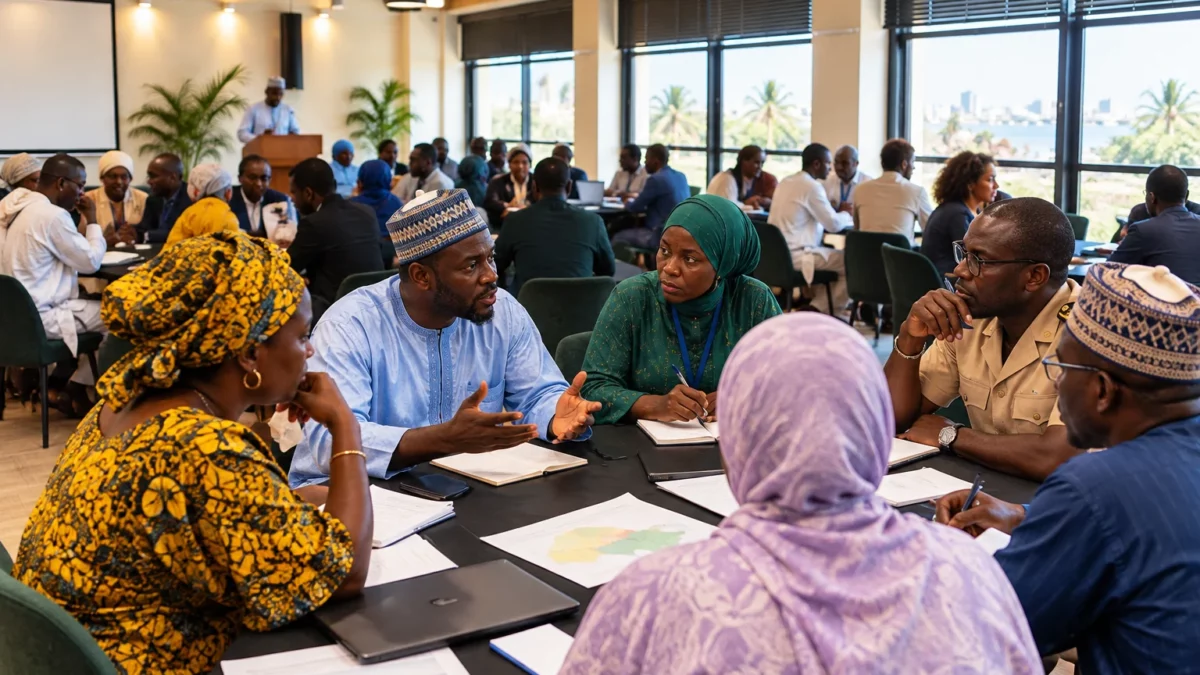
From 24 to 26 November, Dakar is hosting a high-level meeting on the pastoral situation and cross-border cooperation. The CILSS and the Billital Maroobé Network, a network of West African pastoral organisations, are organising it with Senegal and regional institutions. Representatives of states, herders and development partners are taking part.
The associations attending come notably from Burkina Faso, Mali, Mauritania, Niger, The Gambia, Ghana, Guinea, Senegal, Togo and Chad. They are calling on governments and donors to support practical measures. The issue affects millions of people whose incomes depend directly on livestock rearing. The figure of around 20 million cited by the organisers and regional stakeholders is not a count of the meeting’s participants alone.
Warnings focus on declining water resources and a shortage of fodder. The CILSS has reported that many water points have seen a significant drop in levels. In some areas, fodder deficits are said to reach 25 to 90%, according to data presented by the Billital Maroobé Network. This figure describes particularly hard-hit areas, not all the territories concerned.
In Chad, a Central African country that is also a CILSS member, herders’ representatives report difficulties in several provinces and friction over access to resources. Tensions are not automatic: they depend on local rules, pressure on land and the ability of authorities to prevent or settle disputes. Stakeholders meeting in Dakar also report that insecurity and movement restrictions, particularly between Mali and Mauritania, are complicating some journeys.
Corridors alone are not enough without local agreements
Among the proposals being advocated is the development of secure transhumance corridors. These routes should allow herds to move without encroaching on fields or losing access to water points. But drawing a route on a map does not solve everything. It must also be publicised, maintained and its use negotiated with local authorities, farmers and herders.
Participants are also discussing the possibility of facilitating movements to coastal countries where pasture may be more readily available at certain times, notably Guinea, Benin and Côte d’Ivoire. Such movements require coordination between states: animal health rules, entry conditions, information on available resources and conflict prevention mechanisms.
The effects of a pastoral crisis extend beyond herding households. A shortage of fodder weakens animals and can reduce milk production and the value of herds. Markets and meat supply chains are also affected. For rural populations, pressure on land and water can make access to livelihoods more difficult. The consequences vary according to region, means of transport and the role of livestock in the local economy.
In Senegal, the Ministry of Livestock estimates that livestock rearing accounts for 36% of the agricultural gross domestic product of Sahelian countries. The figure, attributed to the ministry in information provided around the meeting, highlights the sector’s economic weight. It also underlines that pastoral policies are not just a matter of emergency aid: they affect trade, employment and food security.
Regional cooperation put to the test by borders
The Dakar meeting highlights a mismatch: herd routes cross borders, while decisions on pasture, water and security often remain national or local. The CILSS, which brings together Sahelian states to work on food security and resilience, can facilitate the sharing of alerts and technical coordination. Pastoral organisations, for their part, provide on-the-ground information and advocate for herders’ place in decision-making.
The meeting is due to conclude on 26 November with policy recommendations. Their impact will depend on whether they are translated into budgets, agreements between countries and mechanisms accessible to communities. Needs differ from one border to another: a regional response will therefore have to link surplus areas with deficit areas without imposing a one-size-fits-all solution.
Progress will be measured by practical results: open crossing points, monitored water points, shared alerts and local mechanisms for settling disputes. In a season marked by widely varying deficits, the flow of information may matter as much as the development of routes. For herders and farmers alike, the challenge is to preserve access to resources without allowing scarcity to turn into lasting conflict.