Algeria
 Egypt
 Libya
 Morocco
 Sudan
 Tunisia
 Benin
 Cabo Verde
 Côte d'Ivoire
 Ghana
 Guinea
 Guinea-Bissau
 Liberia
 Mali
 Mauritania
 Niger
 Nigeria
 Senegal
 Sierra Leone
 The Gambia
 Togo
 Cameroon
 Central African Republic
 Chad
 DR Congo
 Equatorial Guinea
 Gabon
 Republic of the Congo
 São Tomé and Príncipe
 Burundi
 Comoros
 Djibouti
 Eritrea
 Ethiopia
 Kenya
 Madagascar
 Malawi
 Mauritius
 Mozambique
 Rwanda
 Seychelles
 Somalia
 South Sudan
 Tanzania
 Uganda
 Angola
 Botswana
 Eswatini
 Lesotho
 Namibia
 South Africa
 Zambia
 Zimbabwe
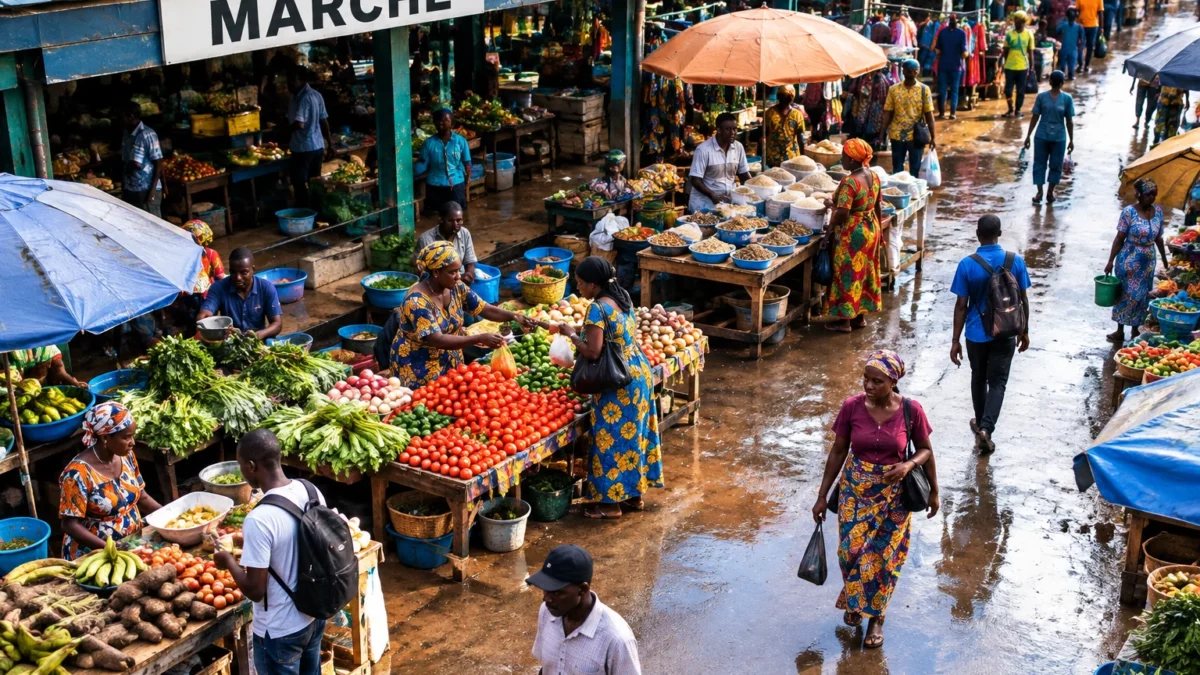
A modern market is measured by more than its buildings. For traders in Ouagadougou and Bobo-Dioulasso, the question will also be who can work there, at what cost and under what conditions. The RAAGA project promises new facilities. Its impact will depend on whether they are genuinely accessible to the people who keep trade going day to day.
Three sites in the two main cities
Burkina Faso’s Council of Ministers has included the RAAGA project among the specific projects of the National Office for Major Projects of Burkina Faso. The decision dates from 19 November 2026. The programme provides for two complexes in districts No. 1 and No. 4 of Ouagadougou, and a third in Sarfalao, in Bobo-Dioulasso. Its announced cost is CFAF 104.38 billion, funded from the state budget.
The complexes are to bring together market stalls, shops, food outlets, toilets and security premises. The project also includes a medical centre, administrative offices and multi-storey car parks. Electric vehicle charging points, automatic bank tellers and money transfer services are also on the list of facilities. At this stage, the announcement covers the project’s inclusion and its features; the information reviewed does not specify a construction timetable or how sites will be allocated.
A key sector, largely informal
The focus on trade reflects the importance of this activity to Burkina Faso’s economy. The 2024 General Census of Enterprises by the National Institute of Statistics and Demography (INSD) counts 389,172 economic units. Trade accounts for 52.7% of them, or 205,098 units. These figures appear in the INSD report and were also cited during the official presentation of the results.
But new infrastructure does not automatically formalise business activity. The census highlights the significant role of the informal economy. For small vendors, the benefits will therefore depend on practical factors: the cost of stalls, proximity to customers, opening hours, the security of goods and the ability to continue mobile or street trading. Traders already operating around the future sites could also be affected by construction and redevelopment.
The planned facilities could improve working conditions and make some services easier to access. A medical centre, functioning toilets and suitable storage areas would meet everyday needs. However, the available report does not yet detail operating rules, maintenance of the facilities or access criteria. These decisions will determine whether the markets accommodate a range of activities or mainly favour operators able to bear higher costs.
A public investment to scrutinise
The announced funding from the state budget puts public spending at the heart of the project. The CFAF 104.38 billion figure is confirmed by the Council of Ministers’ report; the pan-African news agency APA has also reported the approval and overall cost. The documents reviewed do not, however, establish a precise disbursement timetable, details of construction contracts or the planned oversight mechanisms.
Building three complexes in the country’s two largest cities could support commercial activity and related services. However, it will not, on its own, address the constraints faced by traders in secondary cities and rural areas. The impact will also depend on transport links, supply, access to electricity and how the authorities involve professional organisations in managing the sites.
The project comes amid regional realignment. Burkina Faso, Mali and Niger left ECOWAS in January 2025 and are cooperating within the Alliance of Sahel States. Burkina Faso nevertheless remains a member of the West African Economic and Monetary Union, which shares a common currency, the CFA franc, among other things. Trade with neighbouring countries and regional supply chains will therefore continue to matter for Burkina Faso’s markets. Modernising national facilities cannot be separated from these flows.
The next steps will be decisive
For now, RAAGA is a project included on the list of major projects, not three markets already under construction. The steps to watch are publication of the timetable, tenders, the actual start of construction and the rules for allocating sites. Transparency over costs, deadlines and future management will also make it possible to assess whether the investment delivers on its promises.
The challenge is twofold: to build durable facilities and make them accessible to people working in trade, both formal and informal. In Ouagadougou and Bobo-Dioulasso alike, the project’s success will be judged less by the height of the buildings than by their usefulness to the women vendors, transporters, retailers and customers who will use them.