Algeria
 Egypt
 Libya
 Morocco
 Sudan
 Tunisia
 Benin
 Burkina Faso
 Cabo Verde
 Côte d'Ivoire
 Ghana
 Guinea
 Guinea-Bissau
 Liberia
 Mali
 Mauritania
 Niger
 Nigeria
 Senegal
 Sierra Leone
 The Gambia
 Togo
 Cameroon
 Central African Republic
 Chad
 DR Congo
 Equatorial Guinea
 Gabon
 Republic of the Congo
 São Tomé and Príncipe
 Burundi
 Comoros
 Djibouti
 Eritrea
 Ethiopia
 Kenya
 Madagascar
 Malawi
 Mauritius
 Mozambique
 Rwanda
 Seychelles
 Somalia
 South Sudan
 Tanzania
 Angola
 Botswana
 Eswatini
 Lesotho
 Namibia
 South Africa
 Zambia
 Zimbabwe
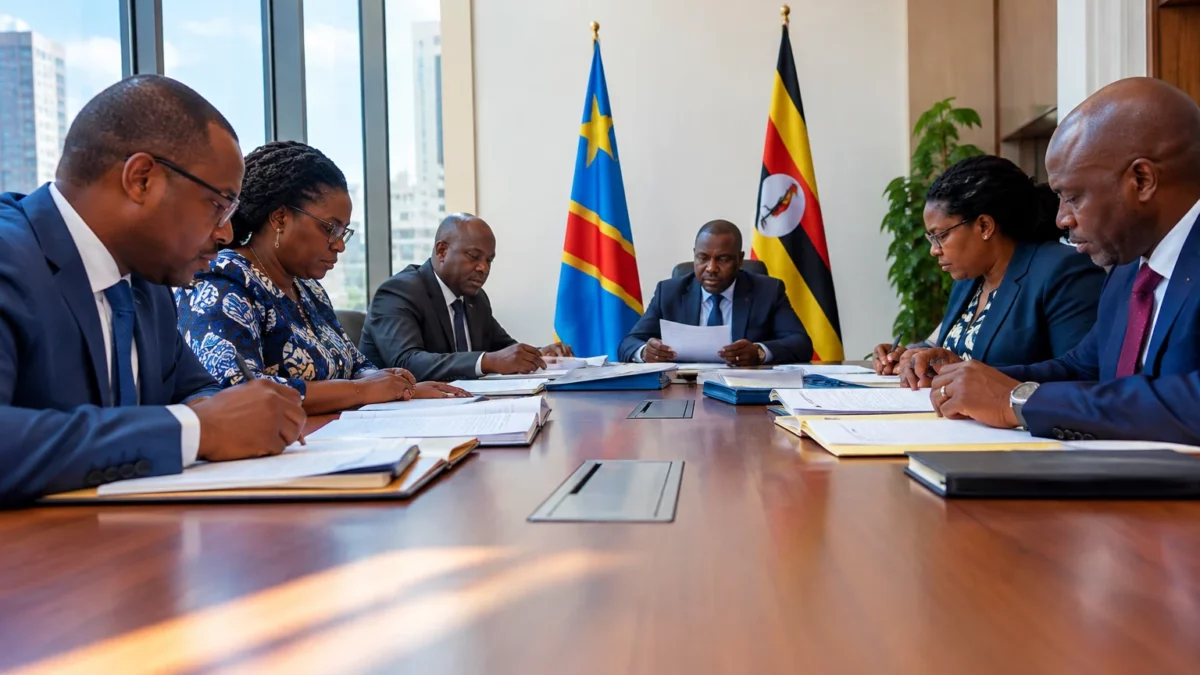
In North Kivu, a sentence posted on X by a senior military official can carry consequences far beyond the screen. When it refers to armed groups advancing and foreign troops on Congolese territory, it puts trust between neighbours to the test in a region already under strain.
A diplomatic summons, not yet Kampala’s position
On Tuesday 24 November 2026, the government of the Democratic Republic of the Congo summoned the head of mission at Uganda’s embassy in Kinshasa. The move followed messages posted on X by General Muhoozi Kainerugaba, head of the Uganda People’s Defence Forces (UPDF) and son of President Yoweri Museveni.
According to the Congolese Press Agency and APA, the general expressed support for a possible seizure of Walikale by the Front for the Refoundation of the Nation (FRN), a movement linked to former Congolese president Joseph Kabila. He is also reported to have said that Ugandan forces would not oppose it, or might even advance themselves. The messages in question were no longer accessible when the reports were published. These remarks are therefore reported by the media and cannot be verified directly on the general’s account.
In its statement, the Congolese foreign ministry described the comments as “particularly serious”. Kinshasa asked Kampala for an official clarification and for measures to prevent such remarks from recurring. The summons constitutes a diplomatic protest; on its own, it does not prove that Uganda has made an operational decision.
This distinction is essential. A public statement by a military chief is a legitimate cause for concern, but Uganda’s position as a state must be established through its authorities and actions. The sources consulted do not report an official response from Kampala to the Congolese request.
Walikale at the heart of a shifting front
Walikale is in North Kivu, a province where front lines and the balance of power remain unstable. The latest report by the UN secretary-general consulted for this article notes an intensification of clashes between the M23 and self-defence armed groups in Masisi and Walikale in August and September 2026. It also describes the risks these clashes pose to civilians.
Here, the acronym FRN refers to the Front for the Refoundation of the Nation, a name used by several Congolese media outlets for the movement associated with Joseph Kabila and the former M23 rebellion. Names and alliances are evolving in this conflict. The names of groups should therefore not be presented as interchangeable or entirely settled.
Uganda’s military presence in the DRC is also part of a specific context. Kampala has taken part in joint operations with Congolese forces against the Allied Democratic Forces (ADF), an armed group active in eastern Congo. This security cooperation makes Muhoozi’s remarks particularly sensitive: they come as the two countries are supposed to coordinate some efforts, despite interests and perceptions that do not always align.
A regional relationship exposed to ambiguity
The DRC and Uganda are members of the East African Community (EAC), a regional organisation that has supported peace initiatives in eastern Congo. In 2022, an EAC regional force, to which Uganda contributed, was deployed in the region. But a common framework is not enough to prevent tensions when public statements run counter to the spirit of cooperation.
There is also a precedent. Earlier posts by Muhoozi about security in the DRC had already prompted reactions in Kinshasa. In 2024, his threats against foreign mercenaries present around Goma were followed by a diplomatic summons, the Congolese outlet Actualite.cd reported. The recurrence of such episodes fuels uncertainty about the boundary between personal statements and political signals.
For the Congolese authorities, the immediate challenge is to defend territorial integrity without allowing a communications crisis to close diplomatic channels. For Kampala, the expected clarification would help distinguish the remarks of a military official from the government’s official policy. For the people of North Kivu, however, the concrete consequences of the fighting — displacement, access to services and everyday security — determine the urgency far more than exchanges between capitals.
Agreements put to the test on the ground
The tension comes as several peace processes are supposed to reinforce one another. The UN Security Council has emphasised the African Union’s mediation role and called for coherence between regional and international efforts. Resolution 2808, adopted in 2025, also provides for MONUSCO support for ceasefire monitoring and verification mechanisms.
These arrangements will not settle a dispute that began on social media. They do, however, underline that a statement supporting an armed advance is not insignificant in a place where ceasefires, security arrangements and the restoration of state authority remain contested objectives. The episode tests the ability of regional institutions to secure clarifications and prevent incidents between neighbouring states.
The next step, then, is less a new statement than a formal response from Kampala. It will also be important to see whether Kinshasa and its partners maintain security cooperation and mediation mechanisms. Without clarification, the general’s remarks risk fuelling mistrust; with it, the two governments will at least be able to separate a digital controversy from their official relations.