Algeria
 Egypt
 Libya
 Morocco
 Sudan
 Tunisia
 Benin
 Burkina Faso
 Cabo Verde
 Ghana
 Guinea
 Guinea-Bissau
 Liberia
 Mali
 Mauritania
 Niger
 Nigeria
 Senegal
 Sierra Leone
 The Gambia
 Togo
 Cameroon
 Central African Republic
 Chad
 DR Congo
 Equatorial Guinea
 Gabon
 Republic of the Congo
 São Tomé and Príncipe
 Burundi
 Comoros
 Djibouti
 Eritrea
 Ethiopia
 Kenya
 Madagascar
 Malawi
 Mauritius
 Mozambique
 Rwanda
 Seychelles
 Somalia
 South Sudan
 Tanzania
 Uganda
 Angola
 Botswana
 Eswatini
 Lesotho
 Namibia
 South Africa
 Zambia
 Zimbabwe
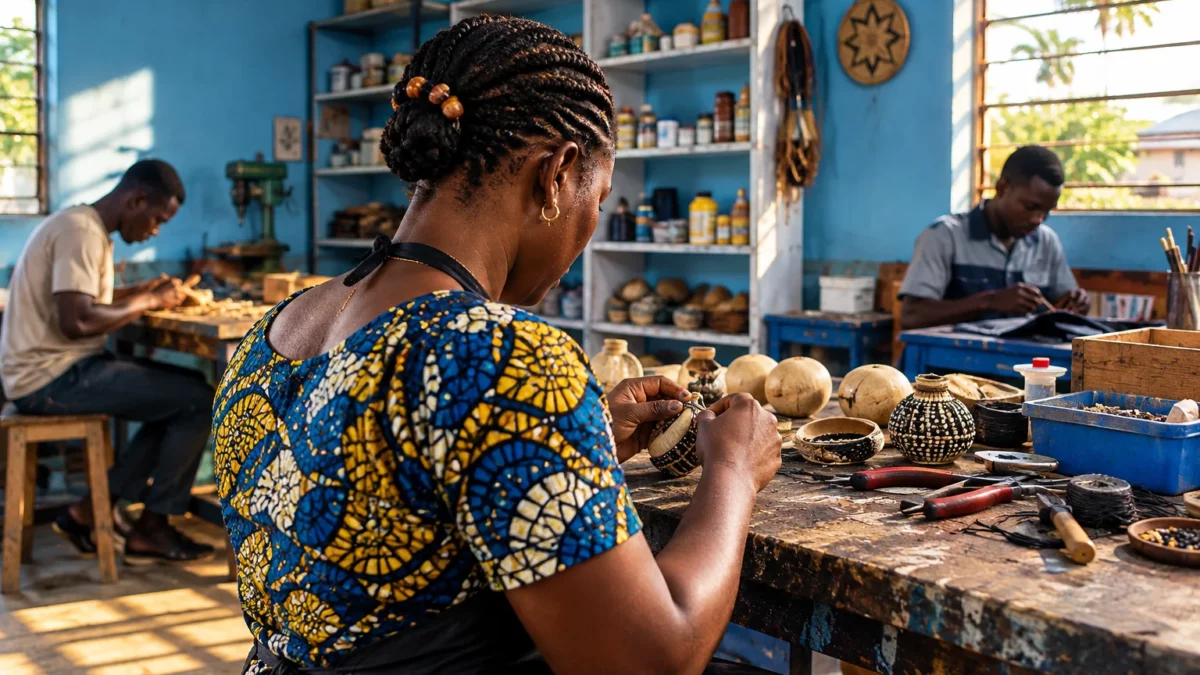
A budget can show a 6.4% increase without revealing, on its own, what households or businesses will feel. In Côte d’Ivoire, the 2027 proposal now faces two key stages: final parliamentary review and the practical delivery of its stated priorities.
Committee approval, but not yet law
On 13 November 2026, the National Assembly’s Committee on Economic and Financial Affairs (CAEF) approved the draft finance bill and its tax annex. The proposed budget stands at CFAF 18,466.1 billion, compared with CFAF 17,350.2 billion in 2026. The Ivorian News Agency and the Directorate General of the Budget and Finance confirm these figures and this stage in the parliamentary process.
Approval by the committee does not yet make the measures applicable. The bill must be submitted to a plenary sitting and then transmitted to the Senate. According to the timetable announced by the Directorate General of the Budget and Finance, the upper house is due to examine it from 10 to 13 December 2026. The final vote and promulgation therefore remain decisive.
The CAEF’s work involved ministers and their representatives over four days. The committee’s chair, Ouattara Karim, reported 759 interventions, 3,028 questions and 64 hours of debate and voting. These figures come from the parliamentary review reported by the Ministry of Finance. The committee said that most ministerial budgets were approved without opposition, with a few abstentions and one vote against.
A growth trajectory constrained by the budget
The government is forecasting growth of 6.6% in 2027, after an expected 6.2% in 2026. It also projects a 10.1% rise in investment and a 4.7% increase in final consumption. These are forecasts set out in the draft, not outcomes already achieved. Their delivery will depend in particular on expenditure execution and the course of economic activity.
At the same time, the executive plans to bring the budget deficit down to 3.5% of gross domestic product, from 3.8% in 2026, and then to 3% in 2028. This target is part of the framework of the West African Economic and Monetary Union (WAEMU), which brings together eight countries that share, among other things, a currency and economic convergence rules. The government is counting on higher domestic revenues and tighter control of operating expenditure, while maintaining structural investment.
This dual objective creates a practical trade-off: funding services and public projects while reducing the deficit. Budget allocations alone do not guarantee that funds will be spent on time or that they will improve local services. Residents of major cities, rural communities and small businesses will not necessarily experience spending and tax choices in the same way.
The proposal forms part of the 2026–2030 National Development Plan, the state’s multi-year roadmap. The Ministry of Finance says that appropriations will be executed in line with the principles of good governance. The strength of this commitment will depend in particular on expenditure monitoring, the effective mobilisation of revenues and transparency about results.
Tax measures balance revenue and business support
The tax annex contains 41 articles grouped under five themes: revenue mobilisation, support for investment and competitiveness, social measures, tax simplification and technical provisions. Measures presented include a tax on gold of up to 12%, depending on the sale price, as well as tax marking for drinks, excluding water.
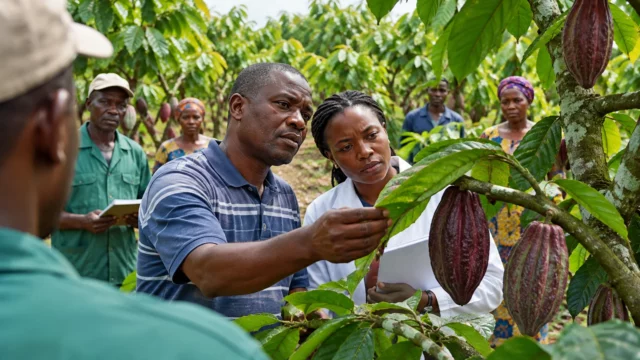
The single exit duty applied to exports of raw cashew nuts would rise from 5% to 7%. The expected yield is estimated at CFAF 15.13 billion. The measure affects a major export sector: its impact on public revenue will need to be considered alongside its potential effects on those in the supply chain, including producers and collection or processing operators.
The bill also provides for measures to support businesses. SMEs enrolled in the PEPITE 2030 programme could benefit for three years from a tax credit equivalent to 20% of certain eligible expenses. Tax incentives are also proposed for the film and book sectors. Their reach will depend on the criteria adopted and whether smaller organisations can access the schemes in practice.
On social and productive measures, the proposal provides for VAT exemptions on certain food products and inputs for livestock farming, as well as some fertiliser inputs. The reduced rate of 9% would be extended to pasta made from durum wheat or other cereals. Another provision would grant a 50% tax credit to companies and training organisations that use support services for people with disabilities.
These reliefs target specific costs, but their impact on prices and employment will depend on how they are applied. The proposal also provides for the abolition of the minimum flat-rate regularisation tax, while retaining the minimum tax payable at CFAF three million. These are still proposed provisions and may change during the parliamentary process.
Next milestone: the plenary vote
In Côte d’Ivoire, the debate goes beyond approval of the financial balances. It also concerns the state’s ability to turn revenue into investment and services without imposing excessive costs on households and businesses. Across WAEMU, the targeted return to the 3% deficit threshold in 2028 falls within a common framework, but each country retains its own priorities and constraints.
The next step is a vote by MPs in plenary, scheduled for 26 November 2026, followed by Senate review in December. Only after this sequence will the tax measures be rules that have been adopted, rather than proposals. Their implementation and the 2027 budget results will then show the gap between forecasts and actual effects.