Algeria
 Egypt
 Libya
 Morocco
 Sudan
 Tunisia
 Benin
 Burkina Faso
 Cabo Verde
 Côte d'Ivoire
 Ghana
 Guinea
 Guinea-Bissau
 Liberia
 Mauritania
 Niger
 Nigeria
 Senegal
 Sierra Leone
 The Gambia
 Togo
 Cameroon
 Central African Republic
 Chad
 DR Congo
 Equatorial Guinea
 Gabon
 Republic of the Congo
 São Tomé and Príncipe
 Burundi
 Comoros
 Djibouti
 Eritrea
 Ethiopia
 Kenya
 Madagascar
 Malawi
 Mauritius
 Mozambique
 Rwanda
 Seychelles
 Somalia
 South Sudan
 Tanzania
 Uganda
 Angola
 Botswana
 Eswatini
 Lesotho
 Namibia
 South Africa
 Zambia
 Zimbabwe
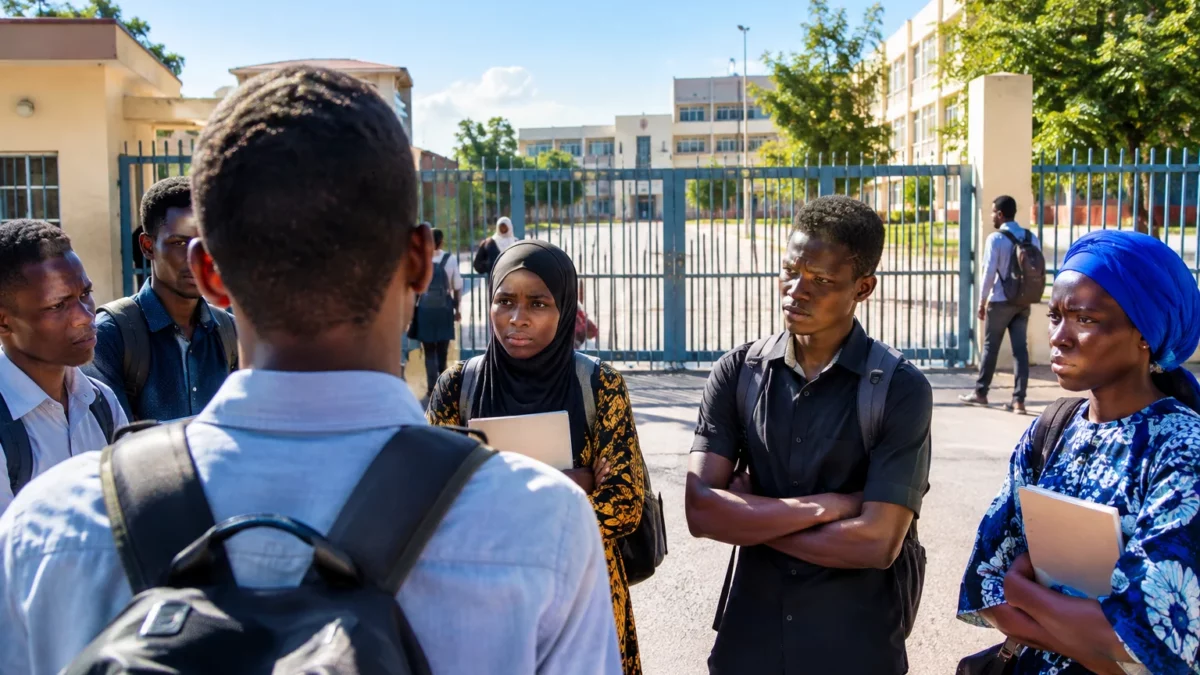
A campus closure is measured not only by the empty lecture halls. In Mali, the university lecturers’ strike also raises a fundamental question: how can a right enshrined in legislation be implemented when its financial terms remain unresolved?
An allowance provided for, but with no amount set
The action, launched on 26 October 2026, reaches 30 days this Tuesday, 24 November. CEN-SNESUP, the National Union of Higher Education and Scientific Research, is demanding implementation of the research allowance provided for under the 2017 statute governing university lecturers. The amount and payment date have yet to be determined. The union is also calling for arrears accumulated since the legislation came into force to be paid.
Decree No. 2017-0850/P-RM of 9 October 2017 sets out the arrangements for implementing the statute. The allowance is among the benefits listed for university lecturers. But recognising a right and putting it into practice are not the same thing: its amount and payment terms still need to be specified.
On 18 November, a union general assembly voted to continue the strike. The decision, reported by several Malian media outlets, set out three conditions for considering a return to work: setting the amount, announcing an implementation date and settling the arrears claimed since 2017.
Alleged pressure, with the scale difficult to assess
University lecturers quoted in accounts published on 24 November describe campuses as almost empty, particularly in Kabala, near Bamako. One of them puts strike participation at 90% in other cities. This figure is not official and cannot be presented as a verified national assessment.
The same accounts report that the ministry asked university leaders to draw up lists naming those on strike, bar them from the premises and make deductions from their pay. The Ministry of Higher Education declined to comment on these claims when approached. They should therefore remain attributed, rather than being treated as independently confirmed.
The reported pay deductions form part of the standoff between the administration and striking staff. They could affect the incomes of the lecturers taking part, while the closure of campuses or suspension of classes directly affects students. The impact varies by institution and course: each day of disruption could complicate the delivery of classes, assessments and the organisation of the academic year.
The dispute therefore pits more than a union against the state. It concerns the continuity of public higher education, researchers’ working conditions and students’ academic paths, including those who rely more heavily on public institutions. At this stage, no consolidated data are available to quantify delays or lost teaching nationwide.
Mediation continues, but no agreement has been announced
Religious mediators, including representatives of Mali’s High Islamic Council, have met with union leaders. Another meeting took place in the week before the 30th day of the strike. The discussions keep a channel for dialogue open, but have not produced a public compromise on the amount of the allowance or its timetable.
Another disagreement concerns the framework for talks. According to accounts of meetings reported by the Malian press, the government wants the demand to be addressed under the Social Pact. CEN-SNESUP opposes this approach, notably because it is not a signatory to the pact, and is calling for negotiations focused directly on the terms of the allowance.
The union movement is not entirely united. Studio Tamani reported on 19 November that the branch which signed the Stability Pact disavowed the strike and called for classes to resume. This division matters: it could make it harder for lecturers to maintain a common position and for the authorities to identify representative interlocutors.
A governance issue beyond the campuses
For the transitional authorities, the challenge is twofold: to contain the effects of a prolonged strike and respond to a demand for the implementation of an existing law. For university lecturers, the lack of an amount and a date turns a statutory provision into a promise with no deadline. For students, the uncertainty is primarily about a return to classes and the academic calendar.
The regional context gives the dispute particular resonance, though it is not its direct cause. Mali’s withdrawal from ECOWAS, the West African regional integration organisation, took effect on 29 January 2025. The country is now also part of the Confederation of Sahel States, established with Burkina Faso and Niger. This realignment does not resolve the domestic problems facing the university system, but it is a reminder that Malian public policy is being pursued in a changing regional environment.
What happens next will depend less on declarations of resolve than on a verifiable proposal: an amount, a timetable and a mechanism for settling the arrears. Until these three elements have been negotiated, mediation can reopen dialogue, but it cannot guarantee that classes will resume. In Bamako and at institutions in other regions, students remain the first to bear the brunt of the impasse.