Algeria
 Egypt
 Libya
 Morocco
 Sudan
 Tunisia
 Benin
 Burkina Faso
 Cabo Verde
 Côte d'Ivoire
 Ghana
 Guinea
 Guinea-Bissau
 Liberia
 Mauritania
 Niger
 Nigeria
 Senegal
 Sierra Leone
 The Gambia
 Togo
 Cameroon
 Central African Republic
 Chad
 DR Congo
 Equatorial Guinea
 Gabon
 Republic of the Congo
 São Tomé and Príncipe
 Burundi
 Comoros
 Djibouti
 Eritrea
 Ethiopia
 Kenya
 Madagascar
 Malawi
 Mauritius
 Mozambique
 Rwanda
 Seychelles
 Somalia
 South Sudan
 Tanzania
 Uganda
 Angola
 Botswana
 Eswatini
 Lesotho
 Namibia
 South Africa
 Zambia
 Zimbabwe
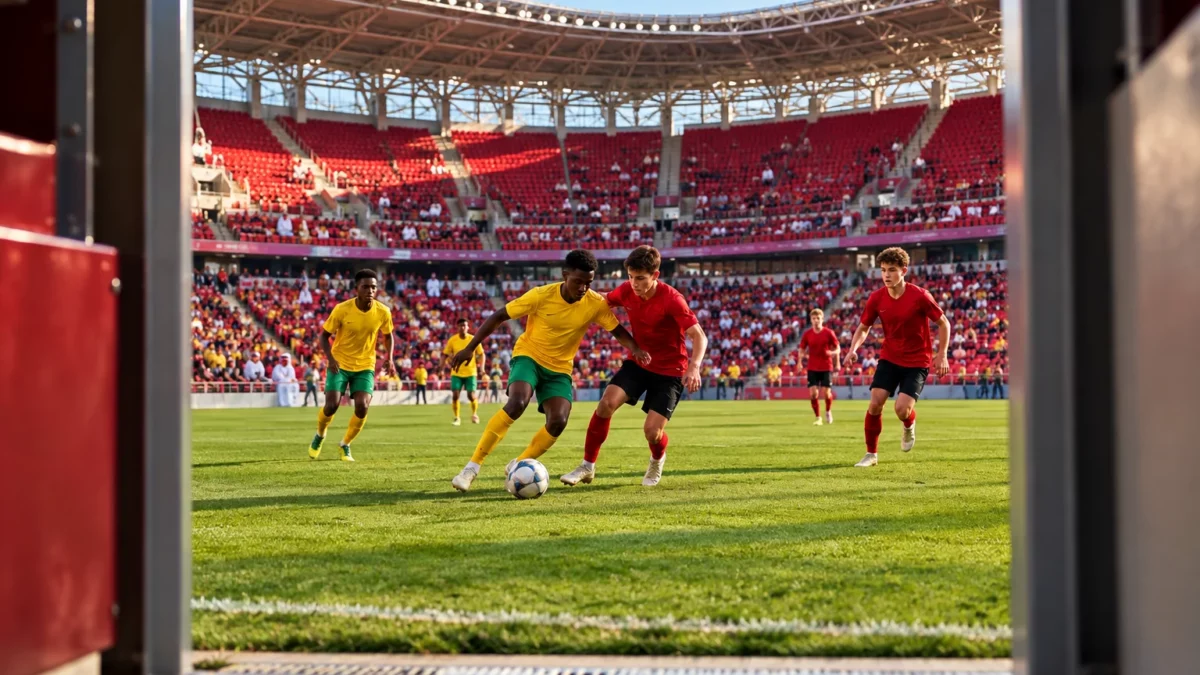
After falling behind after 13 minutes, Mali did not let the match slip away. In Doha, the under-17s responded quickly, then found the decisive goal after the break. This victory against Belgium matters as much for the standings as for the way it was achieved: the young Malians turned a difficult start into a collective win.
A West African side making its mark on the world stage
The U17 World Cup brings together national teams from every continent, but it also offers a glimpse of the work being done in youth development. For Mali, whose football federation is based in Bamako, these tournaments extend a regular presence in youth competitions. The campaign is unfolding in a group where every result carries significant weight in the race for the knockout stage.
The tournament is taking place in Doha, Qatar. African teams are competing in separate groups: Senegal, Morocco and Côte d’Ivoire are also taking part. Their results show that the continent is not represented by a single trajectory. Head-to-head encounters, managing momentum and squad depth make the difference in a tight schedule.
At regional level, Mali is part of the Confederation of African Football (CAF), which organises continental competitions. Youth teams play an important role in identifying and showcasing players. But a good result at the World Cup alone does not sum up the state of an entire development system: it is part of the work of clubs, academies and federations, whose resources and conditions vary.
Quick response after the opening goal
On Monday 23 November 2026, in the second round of Group G, Mali faced Belgium at the Aspire Zone in Doha. Niels Filippo put Belgium ahead in the 13th minute. Five minutes later, Djigui Koïta levelled the score. Then, in the 67th minute, Yaya Niang scored to make it 2-1.
The Malian Football Federation and CAF report the same score and goalscorers. CAF also says that Mali’s Halidou Maïga was named player of the match. These details confirm the key sequence of events: a Belgian opener, a quick equaliser, and then a Malian lead held until the final whistle.
The victory comes after a promising start to the tournament for the Aiglonnets. CAF says they had won their opening group match before beating Belgium. With this second win, the Malian team secured qualification for the knockout stage, according to the continental governing body. Their next scheduled match is against Vietnam on Thursday 26 November.
Teamwork at the heart of the comeback
The match first highlights the team’s ability to respond. The equaliser five minutes after Belgium’s goal meant Mali did not have to chase the score for long. The second goal, scored in the second half, then gave Soumaïla Coulibaly’s players a lead to defend. The timing of the goals, confirmed by both federations and CAF, is more telling than any interpretation suggesting one side dominated.
The Malian federation lists the team’s starting formation for the match as 4-2-3-1. This describes the initial set-up, but is not enough on its own to explain the performance. In a youth match, roles can change in possession and with substitutions. Above all, the result shows that the Malians responded to conceding a goal and then remained capable of taking the lead.
The players and their coaching staff benefit first from this success, and can now continue the tournament with less uncertainty over qualification. For supporters in Mali and across its diaspora, it also offers a reason to follow a generation competing on the international stage. But a national team’s success does not automatically guarantee players a lasting career: development, access to club playing time and support after competitions remain crucial.
The national team’s stakes should also be distinguished from those of football at grassroots level. A team’s results are visible and measurable. Youth development, by contrast, depends on a broader set of factors: local competitions, coaching, infrastructure, medical support and opportunities to progress. The World Cup can raise players’ profiles, but it cannot replace these fundamental conditions.
Qualification secured, a new challenge begins
The significance of this victory extends beyond Mali’s group, without needing to make it a single continental symbol. It confirms that an African side can prevail in a tight match and secure a place in the next round. Other African teams are pursuing their own campaigns in parallel, with different results and opponents. This diversity deserves attention without reducing the tournament to a uniform contest between continents.
The next fixture, against Vietnam on 26 November, will show how the Malians approach a match after securing qualification. Managing workloads, rotating the squad and maintaining consistency in their play will be points to watch. The knockout stage then brings a different dynamic: one mistake can end a campaign, even after a strong group phase.
For Mali, the 2-1 win over Belgium is therefore a step, not a conclusion. Koïta and Niang’s goals turned the match around and opened the door to the next round. It remains to be seen whether the Aiglonnets can maintain this ability to respond when the opposition and pressure change. The next phase of their campaign will be measured over time, not by a single result.
The Malian Football Federation has detailed the goals and key details of the Mali-Belgium match. The Confederation of African Football confirmed Mali’s qualification. Malian public television also reported the result in its match coverage.