Algeria
 Egypt
 Libya
 Sudan
 Tunisia
 Benin
 Burkina Faso
 Cabo Verde
 Côte d'Ivoire
 Ghana
 Guinea
 Guinea-Bissau
 Liberia
 Mali
 Mauritania
 Niger
 Nigeria
 Senegal
 Sierra Leone
 The Gambia
 Togo
 Cameroon
 Central African Republic
 Chad
 DR Congo
 Equatorial Guinea
 Gabon
 Republic of the Congo
 São Tomé and Príncipe
 Burundi
 Comoros
 Djibouti
 Eritrea
 Ethiopia
 Kenya
 Madagascar
 Malawi
 Mauritius
 Mozambique
 Rwanda
 Seychelles
 Somalia
 South Sudan
 Tanzania
 Uganda
 Angola
 Botswana
 Eswatini
 Lesotho
 Namibia
 South Africa
 Zambia
 Zimbabwe
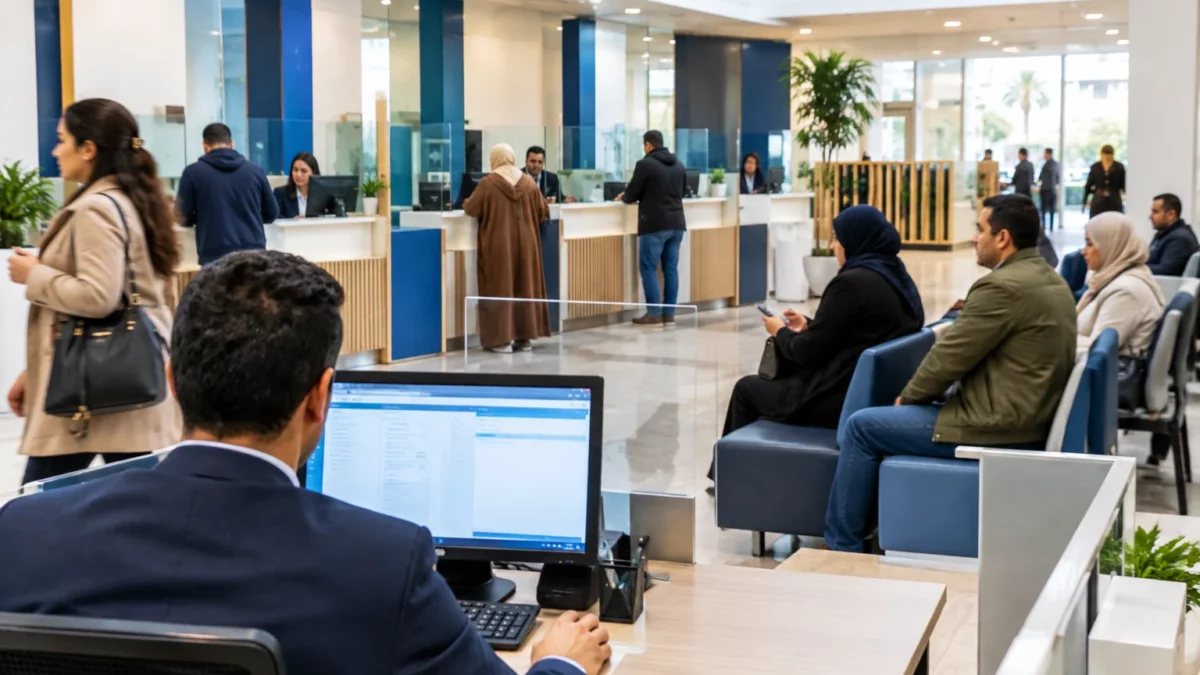
A bank can report higher profits without its revenues accelerating at the same pace. That is the signal from Bank of Africa (BOA) in Morocco: profitability rose in the first nine months of 2026, while consolidated net banking income remained almost unchanged.
In Morocco, core activities cushion market decline
In Rabat, the unaudited accounts to 30 September were published on 23 November with the Moroccan Capital Markets Authority. Net profit attributable to the group reached 3.4 billion dirhams, an increase of 13% year on year. At constant scope — that is, excluding the effect of the change in its stake in its African holding company — the increase was 8%, the group said in its financial statement submitted to the AMMC.
Net banking income, which brings together a bank’s main revenues, stood at 15.3 billion dirhams. Growth in recurring activities offset part of the decline in market income. The interest margin rose by 5.5% and the commission margin by 4.4%, according to results detailed by Médias24. By contrast, gains on certain financial instruments fell to about 405 million dirhams, from 1.1 billion a year earlier, after a particularly strong 2025.
The trend is not limited to the accounts. Consolidated loans reached 247 billion dirhams, up 9% over 12 months. Deposits stood at 285 billion, also up 9% year on year. These figures include the bank’s activities in Morocco and those of its subsidiaries. For Bank of Africa SA alone, loans stood at 161.7 billion and deposits at 181.3 billion dirhams.
Lower unpaid loans support earnings
The decline in the cost of risk is another important factor. This indicator measures provisions and anticipated losses linked to loans that may not be repaid. On a consolidated basis, it fell by 21.2% to 2.1 billion dirhams, according to the published results and their coverage by the Moroccan business press.
This improvement helped lift operating profit to 6.2 billion dirhams, up 4.3%. The coverage ratio for non-performing loans with provisions reached 70.6% at the end of September, compared with 69.5% at the end of December 2025. These indicators measure the protection built up against defaults, but do not mean that credit risk has disappeared.
At the same time, operating expenses increased. The cost-to-income ratio — the share of revenue absorbed by day-to-day expenses — rose from 43.4% to 45.6%. BOA links this development, in particular, to its IT investments in Morocco. Modernising systems can weigh on costs in the short term, while any operational gains will depend on implementation and effectiveness.
African share of profit rises with stake
The reported increase in profit attributable to shareholders also reflects a change in ownership. In the first half of 2026, Bank of Africa increased its stake in Luxembourg-based BOA Holding from 72.41% to 81.82%. The group said it had acquired the shares of an institutional development shareholder. It therefore holds a larger share of the holding company’s results. The transaction changes the share of profit accruing to the parent company, without in itself implying an equivalent increase in revenue generated by subsidiaries.
The distinction between business growth and a change in scope is essential to understanding the accounts. The 13% increase is the reported net profit attributable to the group; the figure of 8% at constant scope excludes the effect of the increased stake. Net profit at Bank of Africa SA, the Moroccan entity, rose by 6% to 2.1 billion dirhams.
BOA Holding oversees a banking network operating in several African countries. Its cross-border presence allows the Moroccan group to diversify its markets and sources of revenue, but also exposes it to different economic, regulatory and monetary environments. Consolidated results therefore do not describe the situation of customers or subsidiaries in each country uniformly.
A group to watch between Casablanca and its African markets
For Morocco’s economy, the figures show growth in lending and deposit-taking, alongside spending on digital transformation. For borrowing businesses and households, the increase in outstanding loans indicates that financing continues to flow, but does not in itself reveal lending conditions, its cost or how it is distributed across sectors and regions.
At regional level, the issue is that of a Moroccan banking group whose results also depend on its African operations. BOA also says that, through its British subsidiary and alongside nine other banks, it is contributing to the financing of a railway line in Tanzania. The project, mentioned in the quarterly statement, illustrates the diversity of the group’s cross-border activities beyond retail banking.
The next important assessment will come with the full-year results: these will show whether the decline in the cost of risk continues, whether IT investments keep weighing on expenses and how revenues outside Morocco perform. To assess underlying performance, it will also be necessary to distinguish operating results from the accounting effect of the increased stake in BOA Holding.