Algeria
 Egypt
 Libya
 Morocco
 Sudan
 Tunisia
 Benin
 Burkina Faso
 Cabo Verde
 Côte d'Ivoire
 Ghana
 Guinea
 Guinea-Bissau
 Liberia
 Mali
 Mauritania
 Niger
 Nigeria
 Senegal
 Sierra Leone
 The Gambia
 Togo
 Cameroon
 Central African Republic
 Chad
 DR Congo
 Equatorial Guinea
 Gabon
 Republic of the Congo
 São Tomé and Príncipe
 Burundi
 Comoros
 Djibouti
 Eritrea
 Ethiopia
 Kenya
 Madagascar
 Malawi
 Mauritius
 Mozambique
 Rwanda
 Seychelles
 Somalia
 South Sudan
 Tanzania
 Uganda
 Angola
 Botswana
 Eswatini
 Lesotho
 Namibia
 South Africa
 Zambia
 Zimbabwe
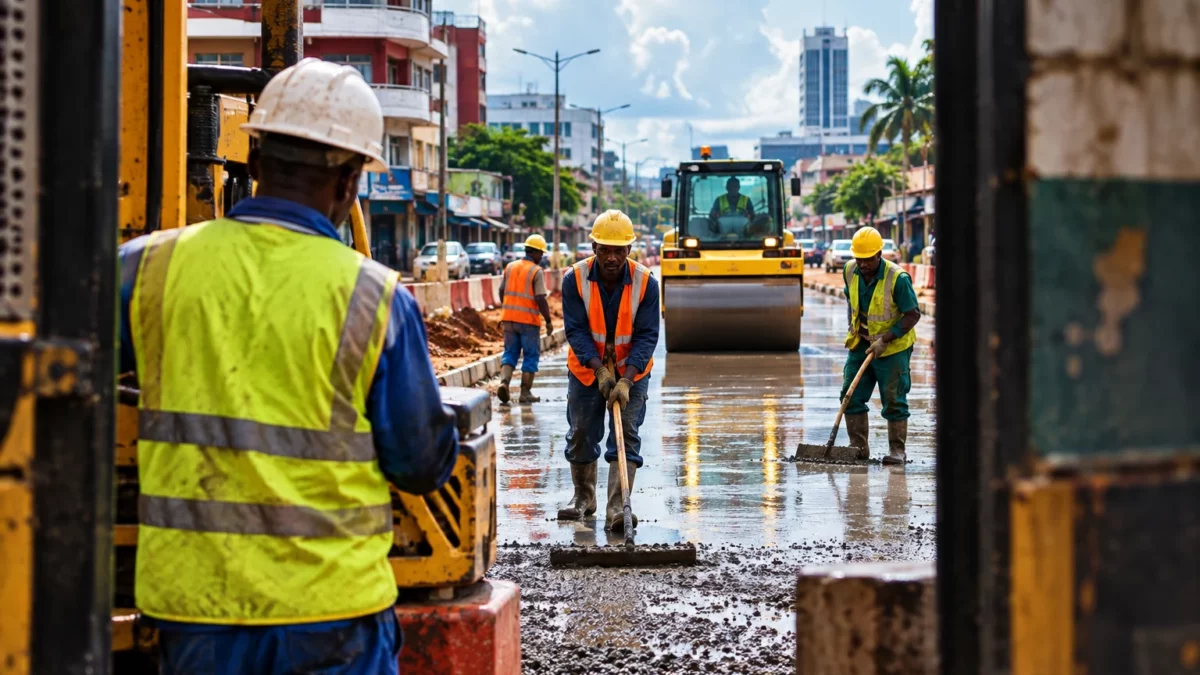
For a regional development bank, raising funds is not enough: it must also be able to turn them into loans and projects that move forward. In Central Africa, the Development Bank of the Central African States (BDEAC) is seeking to strengthen its cash position while broadening the sources of financing for its activities.
Regional financing constrained by liquidity
BDEAC finances public and private investment in the six countries of the Economic and Monetary Community of Central Africa (CEMAC): Cameroon, Congo, Gabon, Equatorial Guinea, the Central African Republic and Chad. CEMAC shares a currency, the Central African CFA franc, and has a regional financial market where states and institutions can borrow.
But this market remains shallow. In its financial documents, the bank says issuance is concentrated among a handful of sovereign borrowers, with a limited investor base. Market conditions have also prevented BDEAC from raising the funds planned on the regional money market up to June 2026.
Liquidity concerns are not new. After identifying pressure on its cash position at the end of 2024, the bank adopted an emergency plan in January 2025. In April 2026, CEMAC’s economy and finance ministers, in consultation with the Bank of Central African States (BEAC), agreed on measures aimed in particular at clearing state arrears over two years.
First access to international markets
On 13 October 2026, BDEAC closed “AYOP”, its first bond issuance on international markets. It raised $222 million, equivalent to about CFAF 124.3 billion, according to the bank. The bond has a three-year maturity and a coupon of 7.88%, according to an economic note by the French Treasury.
A eurobond is a bond issued on international markets, generally in a currency other than that of the borrowing country or institution. For BDEAC, the transaction opens an additional channel alongside regional borrowing and credit lines provided by bilateral or multilateral partners.
The amount raised marks a milestone for the institution, but also creates a financial obligation to repay. The cost of borrowing and foreign-exchange risk must therefore be factored into the management of its resources. Issuing in dollars exposes the bank in particular to fluctuations between that currency and the currencies in which it raises or lends funds.
CFAF 298.3 billion authorised, not yet disbursed
Meeting in an extraordinary session on 18 November 2026, the board of directors authorised the finalisation of new financial facilities with regional and international partners. The announced total is CFAF 298.3 billion. This is in addition to the approximately CFAF 124.3 billion from the eurobond, but does not mean that all of these funds are already available or committed to projects.
The distinction is important: the board has approved the finalisation of financing operations. The statement does not detail the partners involved, the terms of each facility or their disbursement schedule. The announced amount therefore cannot be treated as money immediately transferred to construction sites or beneficiaries.
The bank says it aims to strengthen its liquidity and support projects in the CEMAC zone. For states, additional resources could expand their capacity to finance infrastructure and public programmes. For businesses, particularly those reliant on loans or co-financing, effective access to funds will depend on the operations BDEAC approves and their implementation.
From financing to delivery: the next test
BDEAC documents note that access to financing also depends on project preparation, states meeting their commitments and the pace of disbursements. Projects involving several countries can be delayed if expected contributions or administrative decisions are late. Mobilised resources alone therefore do not guarantee rapid implementation.
The stakes vary for different actors. Governments may hope to finance investment without relying on a single market. The bank, for its part, must manage its repayment schedule and maintain lenders’ confidence. On the ground, the effects will become tangible only when financed projects deliver services, infrastructure or economic opportunities. Rural areas and urban centres alike will be affected by the nature and distribution of this investment.
The strategy forms part of BDEAC’s 2023-2027 plan, which provides for the diversification of its resources. The bank also remains active in the regional market and works with development institutions. Broadening its sources of financing may reduce its dependence on a single channel, but it does not eliminate borrowing costs or the liquidity constraints specific to CEMAC.
A signal to watch across CEMAC
The operation is of interest to all six member states, because BDEAC’s lending capacity determines part of the region’s medium- and long-term financing. It also comes as financial markets in the sub-region remain less developed than major international markets. The institution’s access to new investors may raise its profile, but future borrowing terms and the quality of implementation will shape what happens next.
The board of directors welcomed the measures taken to restore liquidity. The next step will be concrete: finalise the announced facilities, specify their terms, and then turn available funds into financing that is actually disbursed. It is at this stage that states, businesses and populations will be able to measure the impact of the new resources.