Algeria
 Egypt
 Morocco
 Sudan
 Tunisia
 Benin
 Burkina Faso
 Cabo Verde
 Côte d'Ivoire
 Ghana
 Guinea
 Guinea-Bissau
 Liberia
 Mali
 Mauritania
 Niger
 Nigeria
 Senegal
 Sierra Leone
 The Gambia
 Togo
 Cameroon
 Central African Republic
 Chad
 DR Congo
 Equatorial Guinea
 Gabon
 Republic of the Congo
 São Tomé and Príncipe
 Burundi
 Comoros
 Djibouti
 Eritrea
 Ethiopia
 Kenya
 Madagascar
 Malawi
 Mauritius
 Mozambique
 Rwanda
 Seychelles
 Somalia
 South Sudan
 Tanzania
 Uganda
 Angola
 Botswana
 Eswatini
 Lesotho
 Namibia
 South Africa
 Zambia
 Zimbabwe
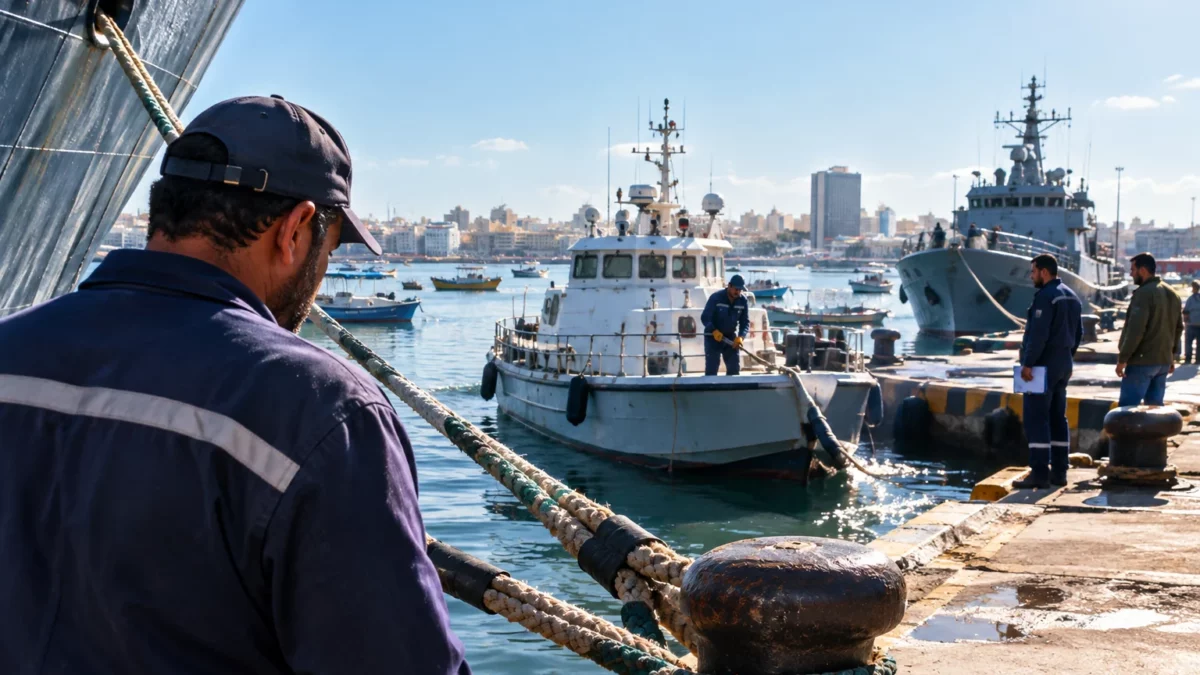
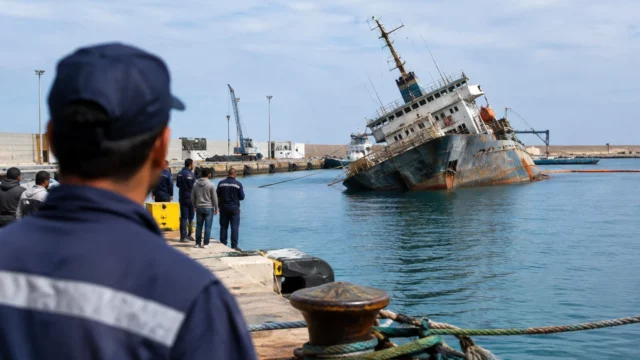
The war between Russia and Ukraine has just reached a Libyan port, far from the front lines. On 22 November, maritime drones struck Russian ships near Benghazi. The operation, claimed by Kyiv, places Libya at the centre of an external conflict it says it does not want to join.
A divided country, competing alliances
Since the fall of Muammar Gaddafi in 2011, Libya has remained divided between rival authorities. In Tripoli, the Government of National Unity is recognised by the UN. In the east, around Benghazi, Osama Hammad’s administration relies on the forces of Field Marshal Khalifa Haftar, who maintains close ties with Moscow.
This political fracture is compounded by external alliances. The Tripoli government maintains ties with Turkey and Western countries. The eastern camp cooperates with Russia, particularly on military matters. In a country where central authority remains limited, these relationships can affect ports, bases and security balances.
Libya belongs to the Arab Maghreb Union, whose political integration remains weak. The UN retains a central role in efforts to mediate between the Libyan camps. This time, eastern authorities want the organisation also to examine the alleged presence of Ukrainian military personnel in the west of the country.
Two ships targeted near Benghazi
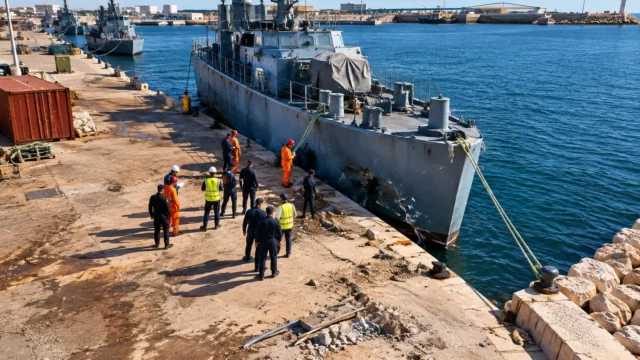
Ukrainian President Volodymyr Zelensky claimed an operation on Monday 23 November, saying it had been carried out the previous day using seven maritime drones. According to him, the Russian corvette Merkury was sunk in Benghazi’s military port. He also said a cargo ship, the MV Angara, was hit offshore. Kyiv maintains that the vessel was carrying Russian military equipment.
The extent of the damage remains disputed, however. Two Libyan officials cited by the Associated Press say the corvette was badly damaged, without confirming that it sank. They report that drones were intercepted and others hit the vessel. The agency also reports at least ten Libyan and Russian people wounded, according to a local official. These details have not been confirmed by an independent official assessment.
Eastern authorities say the Russian ship had called to refuel under a cooperation agreement with their administration. They have announced a joint investigation with Moscow. Another drone attack hit a commercial vessel flying the Maltese flag off Benghazi, according to information reported by the Associated Press. Libyan authorities have not published a full account of that incident.
The Ukrainian claim and the account given by the eastern authorities do not address the same questions. Kyiv presents the ships as targets linked to Russia’s war effort. Benghazi denounces a violation of Libyan sovereignty. The Kremlin, meanwhile, said it had taken note of Ukraine’s statements, without confirming the corvette’s destruction.
Tripoli and Benghazi trade accusations
The eastern government has asked the UN to open an international investigation into the strikes and the alleged presence of Ukrainian personnel or units in western Libya, particularly around Misrata and Zawiya. It accuses sites in the region of potentially having been used to prepare the attacks. These allegations remain to be established.
The government based in Tripoli, for its part, has warned against the use of ports and civilian facilities in foreign conflicts. It has also said that the presence of foreign forces without a legal framework would expose the country to the conflict spilling over. No official response from Tripoli to the specific allegations about possible Ukrainian bases was reported in the initial accounts.
The accusations follow press reports published earlier in the year about the presence of Ukrainian drone specialists in western Libya. The Associated Press reports that Libyan officials had then referred to sites in Misrata, Tripoli and Zawiya. These anonymous accounts do not, on their own, constitute official confirmation of the chain of command or the role of these personnel in the 22 November attack.
Possible consequences for Libyans
For the rival authorities, the incident offers a new arena for political confrontation. Benghazi can use it to denounce foreign influence in the west and strengthen its cooperation with Moscow. Tripoli, for its part, must respond to the accusations without straining its relations with partners or allowing the impression that its territory is being used as a base for external operations.
The consequences extend beyond rivalry between leaders. Renewed insecurity at ports could complicate maritime and commercial activities, alarm crews and increase risks for Libyan workers. Coastal cities, their businesses and residents who depend on trade are not parties to the Russian-Ukrainian war, but could suffer its fallout. At this stage, no public assessment puts a figure on any lasting economic impact.
The episode also shows how institutional fragmentation makes a coordinated national response difficult. The east has announced an investigation with Russia, while also calling for an international inquiry. The value of these efforts will depend on their access to material evidence, their independence and whether the various Libyan authorities can take part.
A regional issue to watch
The strike brings the Russian-Ukrainian war further into the southern Mediterranean. Russia maintains military ties with the eastern camp and uses Libya as a foothold in the region. For Ukraine, striking ships linked to Russian logistics beyond the Black Sea broadens the theatre of its operations. But Kyiv’s claim does not settle the legal and political questions surrounding an attack carried out on the territory of a third country.
For the African Union and neighbouring states, the challenge is to limit the internationalisation of Libya’s divisions. The immediate priority is to establish the facts: which ships were hit, what damage they suffered and where the drones were launched from. The request for a UN investigation, Tripoli’s response and the outcome of the inquiry announced by the east will be decisive. Without a common mechanism, each camp risks presenting events according to its own interests, to the detriment of a unified Libyan response.