Algeria
 Egypt
 Libya
 Morocco
 Sudan
 Tunisia
 Benin
 Burkina Faso
 Cabo Verde
 Côte d'Ivoire
 Ghana
 Guinea
 Guinea-Bissau
 Liberia
 Mali
 Mauritania
 Niger
 Nigeria
 Senegal
 Sierra Leone
 The Gambia
 Togo
 Cameroon
 Central African Republic
 Chad
 Equatorial Guinea
 Gabon
 Republic of the Congo
 São Tomé and Príncipe
 Burundi
 Comoros
 Djibouti
 Eritrea
 Ethiopia
 Kenya
 Madagascar
 Malawi
 Mauritius
 Mozambique
 Rwanda
 Seychelles
 Somalia
 South Sudan
 Tanzania
 Uganda
 Angola
 Botswana
 Eswatini
 Lesotho
 Namibia
 South Africa
 Zambia
 Zimbabwe
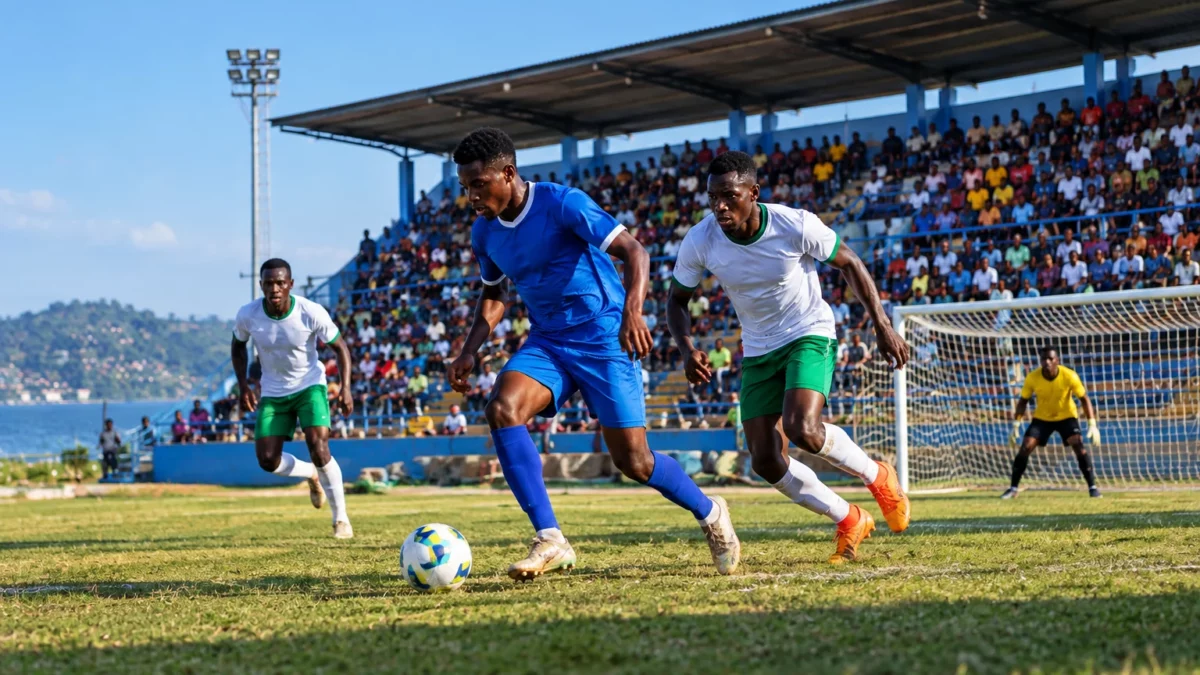
For a player developed in the domestic league, the door to the Leopards’ senior side rarely opens all at once. Magloire Ntambwe Kalonji’s first call-up marks a milestone, but also a challenge: turning a place in the squad into a lasting presence on the pitch.
A career built in Lubumbashi
Born in Lubumbashi and developed at TP Mazembe, the 28-year-old centre-back has become captain of the Ravens. He has represented the Democratic Republic of the Congo in youth categories and then the Leopards A’ at the African Nations Championship, CHAN, which is reserved for players competing in domestic leagues.
His first call-up to the senior team came in November 2026. Coach Sébastien Desabre called him up to replace Willy Kambwala, who withdrew before the double-header against Sierra Leone. The Lubumbashi club confirmed the call-up. Kalonji was the only player from the Congolese league selected for the squad.
The defender did not play in either of the two 2027 Africa Cup of Nations qualifying matches. DR Congo beat Sierra Leone 3-1 in Kinshasa on 12 November, before drawing 1-1 in Casablanca on 17 November. The results were confirmed by the Congolese Football Federation and the Congolese news agency ACP for the first match, and by Radio Okapi for the second.
For Kalonji, being left on the bench does not diminish the significance of this first experience. He explained that the call-up fulfilled a long-standing ambition: one day representing the senior Leopards. He says he wants to keep working to earn his place and convince the coach at future gatherings.
A call-up that also shines a light on the league
Kalonji’s trajectory highlights the link between the national team and Linafoot, DR Congo’s top-flight league. Players based in the country can earn a place in the senior team, but competition remains fierce from internationals playing abroad. A one-off call-up guarantees neither playing time nor an automatic return for the next gathering.
The defender returns to TP Mazembe in this context. His team are due to face FC Tanganyika in Kalemie. The match, initially scheduled for Monday 23 November, was moved to Tuesday 24 November at 15:00, according to the club, following logistical constraints related to the travel of the Lubumbashi delegation. The schedule is a reminder of a practical reality of domestic football: travel between cities, match organisation and postponements all affect clubs’ and players’ preparation.
On the pitch, Kalonji must quickly find his bearings again as captain. At TP Mazembe, he gets regular playing time and plays a central role in defence. In July 2025, the Congolese news agency ACP reported that he had made 39 starts during the season in question. His club record is a sporting asset, but selection also depends on Desabre’s tactical choices and the competition for his position.
The player says the call-up to the senior team has not changed his way of life or his attitude. He says, however, that the experience has strengthened his motivation to work. For a defender, the challenge now is to turn his availability into opportunities to play, without confusing a first call-up with a place secured.
The challenge of taking the final step
Kalonji’s case raises a broader question for Congolese football: how can a regular pathway be maintained between the country’s clubs, local selections and the senior team? CHAN offers a showcase for Linafoot players, while club performances inform selectors’ assessments. But this pathway requires consistency, particularly for players competing far from the major leagues followed internationally each week.
This pathway also involves clubs. A call-up recognises their development work and can raise the profile of their players. In return, absences during international breaks and rescheduled fixtures can sometimes complicate teams’ preparations. In Kalemie, the postponement of Tanganyika-Mazembe shows that a return to league action depends not only on sporting form, but also on organisational constraints.
At regional level, DR Congo are competing in Group E of the 2027 Africa Cup of Nations qualifiers alongside Sierra Leone, Equatorial Guinea and Zimbabwe. The four remaining matchdays will decide the teams’ fate. DR Congo picked up points in the November double-header, without securing early qualification, which a win in Casablanca could have brought closer.
For Kalonji, the next steps lie on two fronts: rediscovering his form with TP Mazembe and staying on the national team staff’s radar. His first call-up opens a door, but guarantees nothing. Consistency in Linafoot and the Leopards’ upcoming fixtures will show whether this spell in the squad can mark the start of a lasting international career.