Algeria
 Egypt
 Libya
 Morocco
 Sudan
 Tunisia
 Benin
 Burkina Faso
 Cabo Verde
 Côte d'Ivoire
 Ghana
 Guinea
 Guinea-Bissau
 Liberia
 Mali
 Niger
 Nigeria
 Senegal
 Sierra Leone
 The Gambia
 Togo
 Cameroon
 Central African Republic
 Chad
 DR Congo
 Equatorial Guinea
 Gabon
 Republic of the Congo
 São Tomé and Príncipe
 Burundi
 Comoros
 Djibouti
 Eritrea
 Ethiopia
 Kenya
 Madagascar
 Malawi
 Mauritius
 Mozambique
 Rwanda
 Seychelles
 Somalia
 South Sudan
 Tanzania
 Uganda
 Angola
 Botswana
 Eswatini
 Lesotho
 Namibia
 South Africa
 Zambia
 Zimbabwe
Mauritanians living abroad send money home and also set up businesses there. Yet turning these ties into lasting investment depends as much on private initiatives as on the rules and guarantees offered by the state.
Useful remittances, but mostly spent on day-to-day needs
In 2024, personal remittances received by Mauritania reached about $94.5 million, or nearly 0.9% of gross domestic product, according to World Bank data. This estimate confirms the scale cited in public debate, although figures may vary depending on the data series and calculation methods.
These transfers directly support households, covering housing, food, healthcare, education and unexpected expenses. They also sustain local businesses. Building a house, for example, provides work for tradespeople and suppliers. But a transfer intended for consumption or a family construction project does not necessarily amount to sustainable productive investment.
Mauritania’s Ministry of the Interior has itself highlighted the need to better understand and integrate the financial, technical and professional contributions of Mauritanian communities abroad into the formal economy. Its 2021–2023 migration strategy refers in particular to making the most of skills, facilitating return and creating jobs.
Setting up a business at home, with concrete safeguards
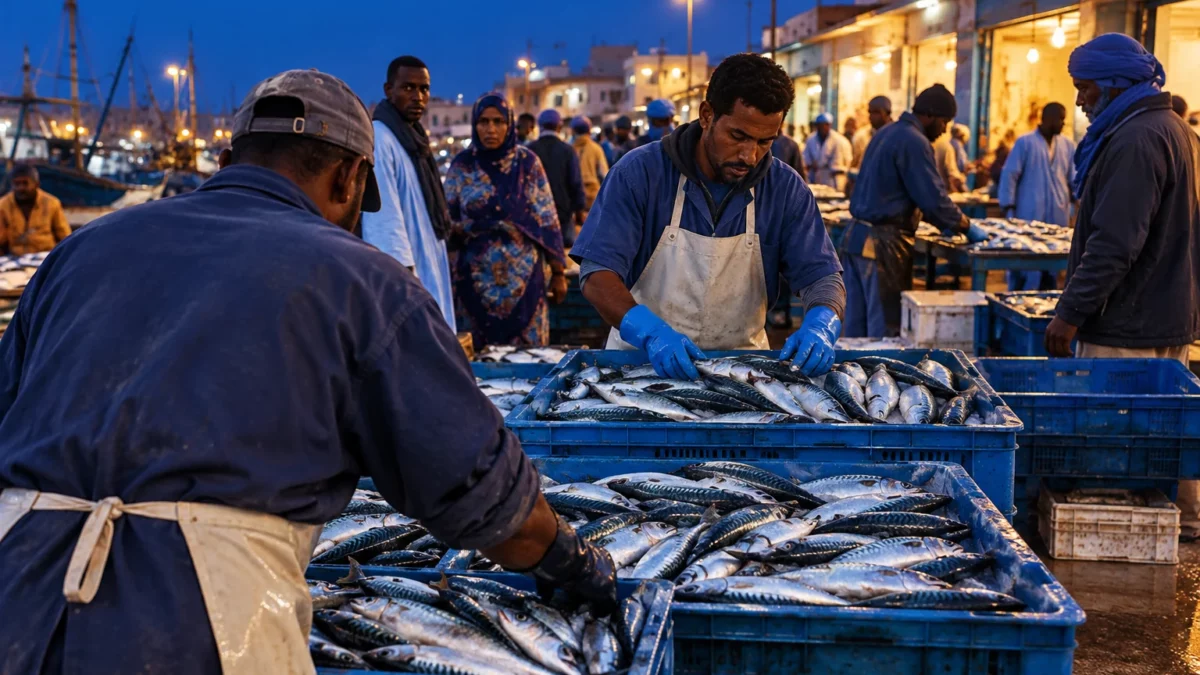
Individual cases show that it is possible to move from sending money to engaging in economic activity. Mohamed Ammé, who returned from Europe a decade before the account was given, ventured into exporting seafood products to Europe and importing second-hand vehicles. His experience illustrates the opportunities linking Mauritanian markets with those of the diaspora.
But initiative alone is not enough. Mauritanian entrepreneurs are calling for simpler procedures, predictable justice, protection of property rights and equal application of the law. These conditions matter particularly to investors who live far from the country and have to monitor their operations remotely.
The national migration management strategy recognises several of these challenges: maintaining regular contact with the diaspora, better identifying its skills and strengthening legal assistance. The challenge now is to turn these aims into accessible services, designated points of contact and clear administrative timelines.
A growing economy that remains concentrated
The question arises in an economy where extractive industries and fishing play a major role. Hydrocarbons have also strengthened the country’s economic outlook. However, growth does not automatically translate into diverse employment or opportunities for small businesses.
Recent estimates also show why figures need to be dated. The World Bank puts Mauritania’s growth at 3.6% in 2025, while International Monetary Fund data and forecasts vary with revisions. The 4.4% rate cited in earlier estimates should therefore not be presented as the current figure without specifying the year and source.
For entrepreneurs in the capital, Nouakchott, access to finance and markets remains crucial. In the regions, the impact of investment also depends on infrastructure, training and the ability to connect producers, transporters and buyers. The benefits are therefore not the same for formal businesses, self-employed workers and households receiving funds.
The diaspora as a partner, not just a source of capital
Mauritanians abroad can contribute more than money: professional experience, business networks, knowledge of export standards and access to partners. These skills can support local fish processing, logistics, digital services and the development of young businesses.
To achieve this, schemes must meet the needs of different groups. A diaspora member looking to fund a family business has different expectations from an entrepreneur seeking to set up an export company. Transparent mechanisms, reliable information and effective avenues for redress can reduce perceived risks, without promising that an investment will automatically be profitable.
The regional context also matters. Mauritania withdrew from ECOWAS, the Economic Community of West African States, in December 2000. It subsequently concluded an association agreement with the organisation. This particular position makes trade links with both its West African neighbours and the Maghreb countries, which are also home to Mauritanian communities, important.
The next challenge: turning ties into local business activity
Across the continent, the issue connects with a question shared by many African countries: how can remittances become an additional source of productive finance without overlooking their essential role for families? In Mauritania, the answer will depend less on a general call to invest than on predictable rules and projects capable of creating lasting value locally.
Progress can be measured by tracking public commitments on assistance for Mauritanians abroad, administrative simplification and access to avenues of redress. The priority is to link diaspora skills with the needs of businesses and local communities, while maintaining the trust of households that rely on remittances in their daily lives.
Data and background sources: World Bank data on Mauritania, IMF economic review, Mauritania’s migration management strategy and history of ECOWAS.