Algeria
 Egypt
 Libya
 Sudan
 Tunisia
 Benin
 Burkina Faso
 Cabo Verde
 Côte d'Ivoire
 Ghana
 Guinea
 Guinea-Bissau
 Liberia
 Mali
 Mauritania
 Niger
 Nigeria
 Senegal
 Sierra Leone
 The Gambia
 Togo
 Cameroon
 Central African Republic
 Chad
 DR Congo
 Equatorial Guinea
 Gabon
 Republic of the Congo
 São Tomé and Príncipe
 Burundi
 Comoros
 Djibouti
 Eritrea
 Ethiopia
 Kenya
 Madagascar
 Malawi
 Mauritius
 Mozambique
 Rwanda
 Seychelles
 Somalia
 South Sudan
 Tanzania
 Uganda
 Angola
 Botswana
 Eswatini
 Lesotho
 Namibia
 South Africa
 Zambia
 Zimbabwe
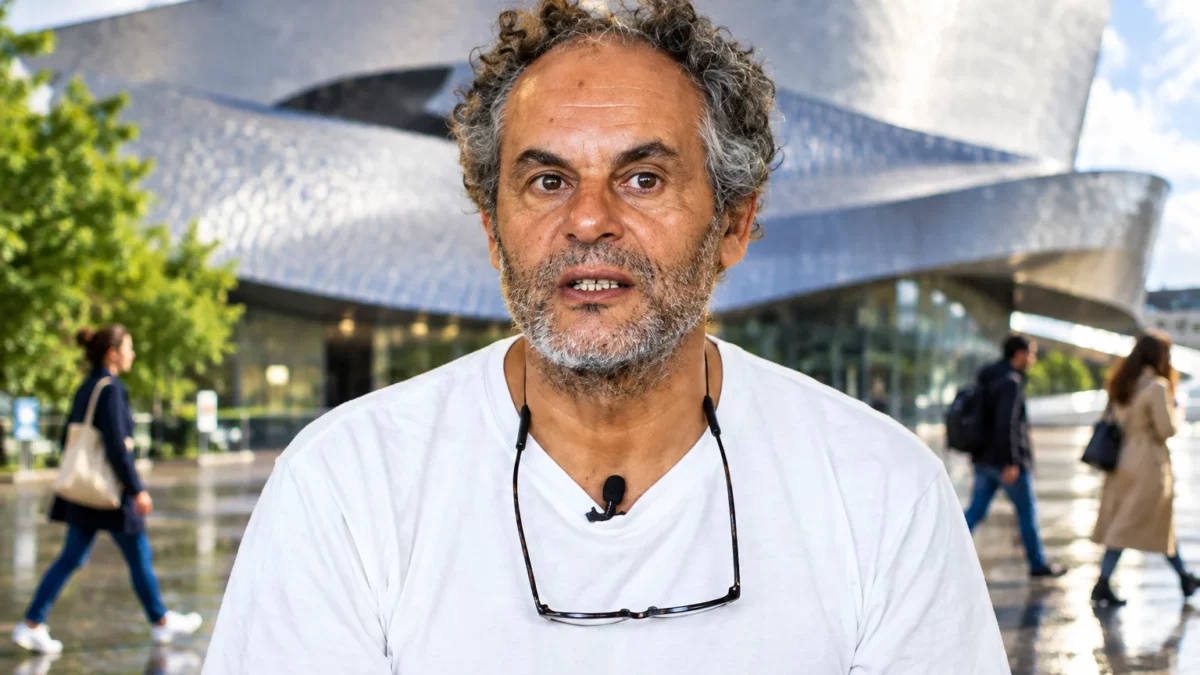
Those who enter Hassan Hajjaj’s world do not simply look at celebrities. They also discover the objects, clothes and cultural references that shape their image. In “My Rock Stars”, the Moroccan photographer turns portraiture into a meeting place for music, fashion and multiple heritages.
A Moroccan between Larache, London and Marrakech
Born in Larache, Morocco, in 1961, Hassan Hajjaj grew up in London. This trajectory informs a body of work shaped by several cultural scenes. British urban rhythms and styles sit alongside Moroccan references, with neither world serving merely as a backdrop for the other.
A photographer, stylist and visual artist, Hajjaj works across several disciplines. He designs the clothes, sets and sometimes the frames that surround his subjects. Drinks crates, packaging and everyday objects thus become elements of the composition. His work is not limited to capturing a face: he arranges everything around it.
This approach is part of a contemporary Moroccan art scene that engages with the world without being reduced to an opposition between tradition and modernity. In Marrakech, as in Rabat, museums, galleries and independent venues present a range of artistic practices. Hajjaj’s work is also shown in international institutions, while its references remain rooted in Moroccan and diasporic experiences.
Portraits in which the setting speaks
Presented at the Musée de la musique, at the Philharmonie de Paris, the exhibition “My Rock Stars” runs from 22 September 2026 to 25 April 2027. It brings together around 40 portraits and pairs the photographs with a musical work by Acid Arab, a group that blends sounds from the Arab world with electronic music. This information is confirmed by the exhibition’s official presentation.
Billie Eilish, Madonna, Cardi B and other artists appear in staged scenes saturated with colour and patterns. Bottles, boxes and familiar objects sometimes make up the frames. The clothes may evoke elements of Moroccan fashion, while the poses and visual references point to global popular culture.
The setting is not there to give an otherwise neutral image a local touch. It draws the eye and changes how the portrait is read. The celebrity remains present, but shares the scene with the objects and signs around them. Visitors are invited to look as much at how the image is made as at the familiar face.
The Philharmonie complements the photographs with an installation evoking a Moroccan interior, featuring drinks crates and recycled seating. Acid Arab’s soundtrack extends this construction. It does not merely illustrate the images: it gives the exhibition a rhythm and recalls the role of music in Hajjaj’s artistic development.
Identity, representation and the choice of perspective
The vivid colours and visual humour may at first seem to invite a light-hearted reading. Yet these portraits raise a concrete question: who chooses the signs associated with a culture, and who decides how they are shown? By reworking commercial codes and stereotyped images, Hajjaj creates his own scenes rather than taking an external gaze for granted.
This strategy does not eliminate all ambiguity. A pattern or garment can carry different meanings for different audiences. But the artist places individual personalities at the centre, rather than a uniform image of Morocco. International stars appear alongside musicians and less well-known figures. The result brings distinct paths together without conflating them.
The frame plays an important role here. Often made from everyday objects, it is a reminder that visual culture is also shaped by what we produce, buy, reuse and display. This choice connects Hajjaj’s work with creative and design practices that turn familiar materials into an artistic language. The biography published by the Moroccan gallery L’Atelier 21 also describes a body of work at the intersection of photography, design, fashion and installation.
A reach beyond the Paris exhibition
For Morocco, Hajjaj’s international visibility is a reminder that Moroccan artists take part in global debates on images, identities and popular cultures. His work alone does not sum up the country’s creative output. Rather, it offers a window onto a practice shaped by exchanges between Morocco, Europe and diasporas.
Across North Africa, these exchanges cross borders and cultural scenes. The Arab Maghreb Union, which includes Morocco, provides a regional framework, even if its political activity remains limited. Artistic exchanges, festivals and professional networks can, in turn, bring audiences and creators closer across institutional divides.
What follows will also depend on how visitors receive these images: as celebrity portraits, as an aesthetic proposition or as a reflection on the power to represent. Until 25 April 2027, the exhibition presents these layers together. Above all, it shows how a Moroccan artist turns the encounter between several worlds into a deliberate staging choice, rather than a merely decorative blend.