
 Algeria
 Egypt
 Libya
 Sudan
 Tunisia
 Benin
 Burkina Faso
 Cabo Verde
 Côte d'Ivoire
 Ghana
 Guinea
 Guinea-Bissau
 Liberia
 Mali
 Mauritania
 Niger
 Nigeria
 Senegal
 Sierra Leone
 The Gambia
 Togo
 Cameroon
 Central African Republic
 Chad
 DR Congo
 Equatorial Guinea
 Gabon
 Republic of the Congo
 São Tomé and Príncipe
 Burundi
 Comoros
 Djibouti
 Eritrea
 Ethiopia
 Kenya
 Madagascar
 Malawi
 Mauritius
 Mozambique
 Rwanda
 Seychelles
 Somalia
 South Sudan
 Tanzania
 Uganda
 Angola
 Botswana
 Eswatini
 Lesotho
 Namibia
 South Africa
 Zambia
 Zimbabwe
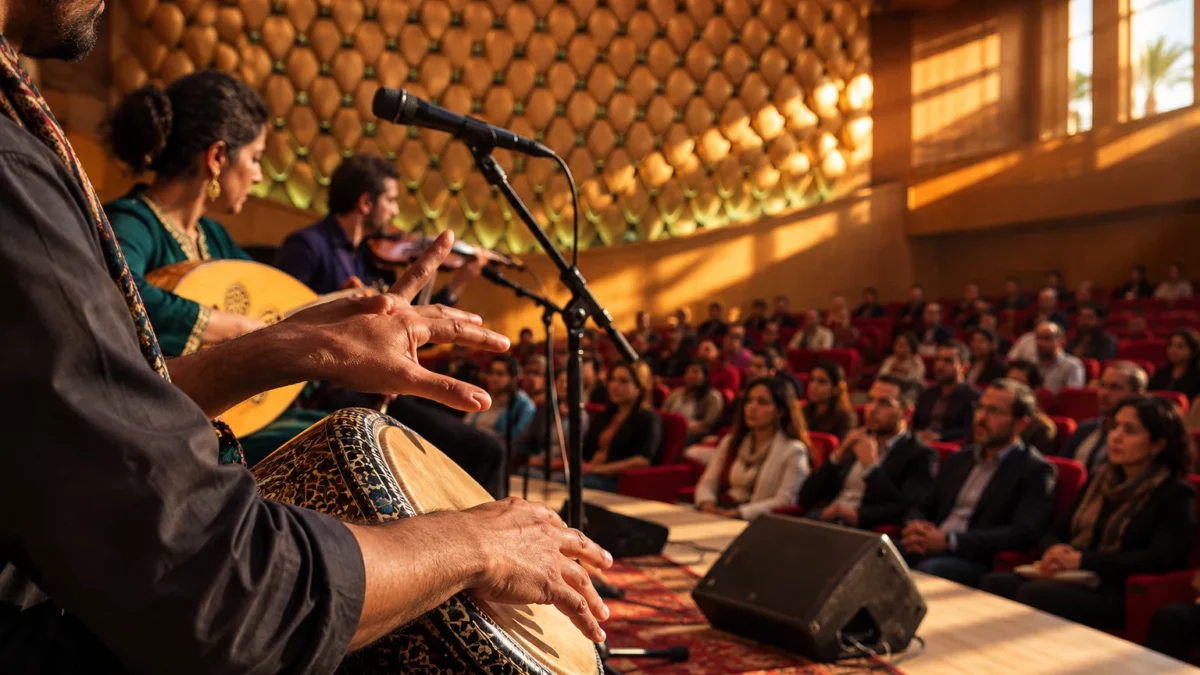
In Rabat, a stage can become more than a concert venue: a meeting point for artists, bookers and professionals able to help their work reach new audiences. That is the idea behind Visa For Music, whose 13th edition runs from 18 to 21 November 2026 at several venues in the Moroccan capital.
In Rabat, a festival designed also as a marketplace
Founded in 2014, Visa For Music combines concerts with professional meetings. The event is organised by Moroccan cultural organisation ANYA Culture and the Atlas Azawan association. Its founder, Brahim El Mazned, champions a space where artistic discovery can lead to collaborations and tours.
This model addresses a practical difficulty for many musicians: performing in front of an audience is not always enough to gain access to distribution networks, bookers or touring partners. The festival therefore brings artists and music professionals together. Showcases — short concerts designed to present a project — also serve as a platform for scenes that sometimes remain little known outside their own countries.
The 2026 programme brings together Moroccan and international artists. Meryem Aboulouafa, Olivia Khoury and Kazdoura are among the names announced. The selection combines different musical approaches, rather than reducing African scenes to a single genre or identity.
Artists’ mobility at the heart of the issue
For an artist, meeting a booker can open up the possibility of performing abroad. For a festival or venue, it is an opportunity to discover new projects and build exchanges. These contacts guarantee neither contracts nor tours. They can, however, help artists take a first step in a sector where professional networks and the means to travel carry significant weight.
The challenge goes beyond visibility alone. The circulation of work also depends on copyright, streaming revenues, production and transport costs, as well as the ability to obtain visas and organise tours. A professional event can bring people together, but it cannot overcome these obstacles on its own. It nonetheless gives African professionals a space to negotiate and build partnerships from the continent.
This is why the meetings planned around the concerts matter. The festival invites music industry figures, including festival organisers. For artists, these exchanges can help them reach a wider audience. For professionals, they offer a chance to compare practices and discover projects beyond established circuits.
A Moroccan platform with continental connections
Holding the event in Rabat places it within a Moroccan cultural trajectory focused on regional and international exchanges. Visa For Music presents itself as a festival and marketplace dedicated to music from Africa and the Middle East, with a programme open to artists from other backgrounds. This diversity is a tool for making connections, not proof that the continent’s scenes form a homogeneous whole.
Cultural cooperation between Maghreb countries also remains distinct from the political mechanisms of the Arab Maghreb Union, a regional organisation comprising Morocco, Algeria, Tunisia, Libya and Mauritania. Artistic exchanges can continue through professional networks even when regional institutional cooperation encounters obstacles. They create connections without erasing differences in context or tensions between states.
Across Africa, the issue is also economic. Cultural industries need venues, funding and infrastructure capable of linking national markets. An event such as the one in Rabat does not in itself amount to an integrated continental market. It can, however, help forge ties between professionals and make creative work more accessible to bookers.
What the 2026 edition will show
The festival says it received more than 900 applications from over 90 countries for this edition. These figures indicate the interest generated by the call for applications, but do not by themselves measure the event’s lasting impact. The selection, meetings and professional follow-up — invitations, contracts, co-productions or tours — will say more about the opportunities secured by artists.
The coming months will therefore help distinguish immediate visibility from tangible results. Will the selected artists gain access to new stages? Will the bookers attending turn their discussions into invitations? These questions are especially relevant to musicians whose projects have fewer distribution channels outside their countries.
For Morocco, hosting this cultural marketplace strengthens Rabat’s role as a meeting place for artistic scenes. For African professionals, the challenge is broader: to ensure that discovery at a festival leads to more regular circulation of work and better-structured remuneration. The promise of sharing evoked by Brahim El Mazned will be measured by what follows, beyond the four days of concerts.



