Algeria
 Egypt
 Libya
 Morocco
 Sudan
 Benin
 Burkina Faso
 Cabo Verde
 Côte d'Ivoire
 Ghana
 Guinea
 Guinea-Bissau
 Liberia
 Mali
 Mauritania
 Niger
 Nigeria
 Senegal
 Sierra Leone
 The Gambia
 Togo
 Cameroon
 Central African Republic
 Chad
 DR Congo
 Equatorial Guinea
 Gabon
 Republic of the Congo
 São Tomé and Príncipe
 Burundi
 Comoros
 Djibouti
 Eritrea
 Ethiopia
 Kenya
 Madagascar
 Malawi
 Mauritius
 Mozambique
 Rwanda
 Seychelles
 Somalia
 South Sudan
 Tanzania
 Uganda
 Angola
 Botswana
 Eswatini
 Lesotho
 Namibia
 South Africa
 Zambia
 Zimbabwe
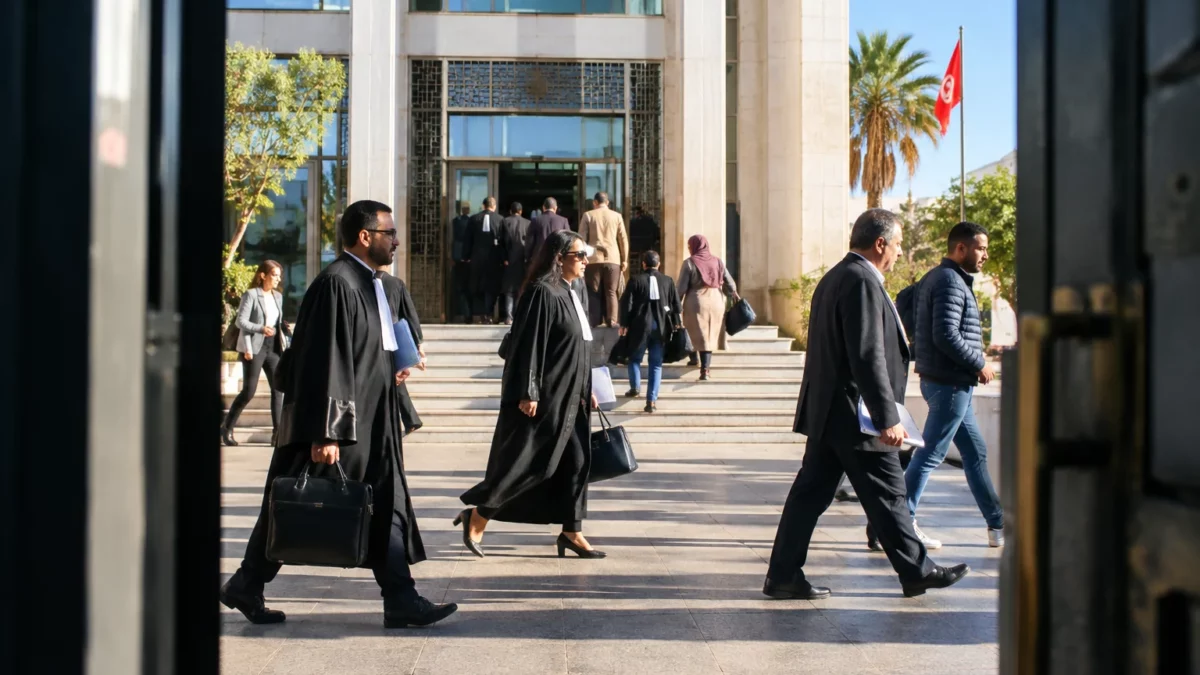
In Tunisia, the work of remembering the past that began after the 2011 revolution is now also playing out in the courts. The new sentence imposed on Sihem Bensedrine has brought a sensitive question back to the fore: how far can institutions examine past abuses without their own officials being prosecuted for their work?
A case linked to reparations and past abuses
On 20 November 2026, a criminal chamber of the economic and financial judicial division of the Tunis Court of First Instance sentenced the former president of the Truth and Dignity Commission (IVD) to five years in prison. The ruling concerns an arbitration and reconciliation agreement concluded by the Commission as part of transitional justice, involving businessman Lazhar Sta, according to Amnesty International. The organisation also says that Bensedrine and her lawyers had not received the indictment before the trial began.
This sentence adds to the convictions handed down on 26 June 2026: a total of 25 years in two other cases, comprising five years in one case and 20 years in another, according to Amnesty. These rulings do not amount to immediate imprisonment. Bensedrine was released on bail on 19 February 2025 and remains, according to the organisation, awaiting appeal proceedings. The activist and her lawyers contest the prosecutions; the charges must be distinguished from facts that have been definitively established.
Tunisian rights organisation Lawyers Without Borders has also condemned the 20 November ruling. This local corroboration confirms the date and sentence reported, but does not resolve the debate over the substance of the charges. Kapitalis’s report sets out the reaction from Lawyers Without Borders.
The IVD, an institution at the heart of the transition
Established by Tunisian law in 2013, the IVD was tasked with documenting human rights violations, contributing to reparations for victims and promoting accountability for abuses committed under successive regimes. Transitional justice refers specifically to this range of measures aimed at addressing the legacies of political violence after a change of regime. Bensedrine chaired the Commission from 2014 to 2018. Its final report, published in 2019, covered decades of abuse and corruption.
The current prosecutions concern, among other things, aspects of the IVD’s work and decisions taken under its mechanisms. In the sources consulted, the judicial authorities have not publicly provided a full explanation of their position on the procedural criticism. It is therefore important to distinguish between two questions: the legality of the Commission’s decisions, which may be examined by the courts, and respect for the safeguards owed to anyone facing prosecution.
Tunisia’s legal framework does not limit transitional justice to the pursuit of criminal responsibility. It also provides for truth, reparation, collective memory and reforms intended to prevent abuses from recurring. Organic Law No. 2013-53 of 24 December 2013 sets out these objectives. The challenge to the IVD’s work therefore concerns the rights of those implicated, but also the expectations of victims who testified and sought reparations.
Multiple proceedings, a question of safeguards
Amnesty says Bensedrine faces seven criminal proceedings linked to her role at the head of the IVD. The organisation notes that she was detained from 1 August 2024 to 19 February 2025, for more than six months, before being released on bail. It argues that the trials raise fair-trial concerns, including the defence’s lack of prior access to certain case materials. These are the findings of a human rights organisation; they do not replace court rulings or the responses of the Tunisian authorities.
The implications extend beyond the former president’s personal situation. For judges, the challenge is to handle politically sensitive cases while ensuring access to documents and the rights of the defence. For victims, the follow-up to the IVD’s findings and recommendations will determine whether the reparations process remains effective. For civil society and journalists, these cases are an indicator of the space available to investigate the state’s responsibilities.
A signal watched across the Maghreb
Since the measures taken by President Kaïs Saïed in July 2021, the concentration of power and the evolution of public freedoms have fuelled concern among Tunisian and international organisations. Amnesty describes the prosecutions as reprisals for the IVD’s work; this interpretation is contested by the absence of a final judicial decision on the appeals. The debate should therefore remain grounded in verifiable elements: charges, access to case files, hearings, the reasoning behind judgments and avenues of appeal.
Tunisia is a member of the Arab Maghreb Union (AMU), which also brings together Algeria, Libya, Morocco and Mauritania, as well as the African Union. The AMU is the relevant regional framework for the Maghreb, even though its political mechanisms remain limited. Tunisia’s experience continues to be watched in African debates on transitions, institutional accountability and the role of truth-seeking mechanisms after an authoritarian regime.
The immediate next step will be the consideration of appeals and Bensedrine’s legal status: will she remain free pending the appeals, or will she face a new arrest? More broadly, the handling of the IVD cases will indicate whether transitional justice remains a recognised framework in Tunisia, or whether its legacy will gradually be reshaped by proceedings against those who led it.