Algeria
 Egypt
 Libya
 Morocco
 Sudan
 Tunisia
 Benin
 Burkina Faso
 Cabo Verde
 Côte d'Ivoire
 Ghana
 Guinea
 Guinea-Bissau
 Liberia
 Mali
 Mauritania
 Niger
 Nigeria
 Senegal
 Sierra Leone
 The Gambia
 Togo
 Cameroon
 Central African Republic
 Chad
 DR Congo
 Equatorial Guinea
 Gabon
 Republic of the Congo
 São Tomé and Príncipe
 Burundi
 Comoros
 Djibouti
 Eritrea
 Ethiopia
 Kenya
 Madagascar
 Malawi
 Mauritius
 Mozambique
 Rwanda
 Seychelles
 Somalia
 Tanzania
 Uganda
 Angola
 Botswana
 Eswatini
 Lesotho
 Namibia
 South Africa
 Zambia
 Zimbabwe
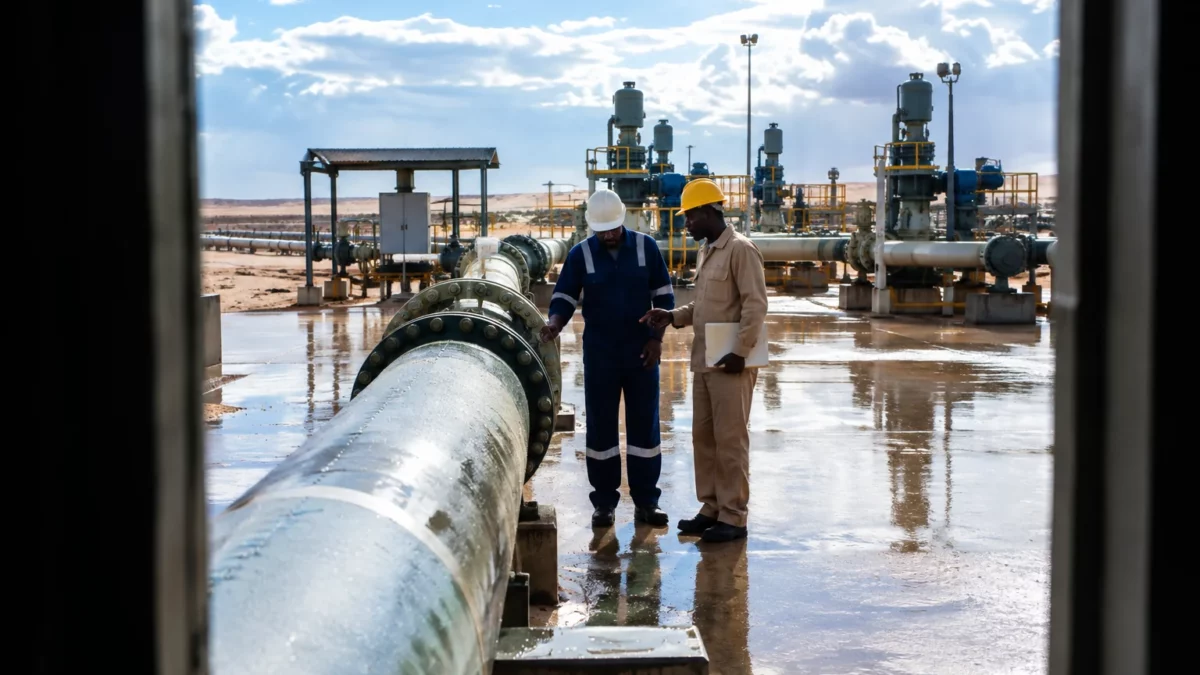
For South Sudan, finding new oilfields is not enough: it must also be able to transport crude, sell it and turn the proceeds into public services. The opening of 14 exploration blocks puts this equation centre stage, while national revenues remain closely tied to infrastructure in its northern neighbour.
Exploration offer in a landlocked country
Independent since 2011, South Sudan remains landlocked. Its oil exports travel through pipelines crossing Sudan to facilities on the Red Sea. The war that began in Sudan in April 2023 has made this corridor particularly vulnerable to fighting and infrastructure damage.
This dependence weighs on the entire economy. The African Development Bank estimates that oil accounts for between 70 and 80% of budget revenues and about 95% of exports. Any interruption to production or transport therefore cuts state revenues and foreign-currency earnings, with effects beyond the oil sector.
The country is a member of the Intergovernmental Authority on Development (IGAD), a regional organisation in East Africa. But Sudan remains crucial to its crude exports. Plans outlined by Juba to diversify export routes and expand refining address logistical vulnerability as much as the need for growth.
Fourteen blocks, but data still needed
In a national address delivered on Wednesday 18 November 2026, Petroleum Minister Awow Daniel Chuang announced that 14 blocks were being offered to regional and international investors. The ministry lists them under the references A1, A2, A3, A4, A5, A6, B1, B4, C1, C2, D1, D2, E1 and E2. The list is also reported by South Sudanese outlet Eye Radio.
The government is targeting production of more than 200,000 barrels a day within the next two years. The baseline varies according to the dates and information available: the ministry puts it at about 170,000 barrels a day, while oil officials reported 174,000 barrels in June 2026. Any increase in current output will therefore depend as much on restoring existing fields as on future discoveries.
Ministry documents set out a process for consulting or acquiring data before investors can access detailed maps, geographical coordinates and technical reports. They include the 2012 Petroleum Act and a model production-sharing agreement, which divides revenues and risks between the state and companies.
The project has one important limitation: according to the official investors’ guide, most blocks have mainly gravity and magnetic data. Seismic data and information from drilling are scarce. Companies will therefore have to assess the cost and uncertainty of further exploration work before committing.
Pipeline risk remains
Recent events show the scale of the challenge. In February 2024, a rupture in the pipeline carrying Dar Blend crude halted flows from fields in the Upper Nile basin. The World Bank documented a sharp fall in production, from about 150,000 barrels a day before the rupture to fewer than 50,000, according to its climate and development report. Figures vary depending on the period and datasets used, but sources agree that there was a temporary collapse.
Operations and exports through the main pipeline resumed in April 2025. However, drone attacks on oil infrastructure in Sudan in May, August and October of the same year disrupted flows again, according to the World Bank. In November 2025, after another interruption, a South Sudanese official announced that exports had resumed, the Associated Press reported. Transport thus depends on agreements and security conditions that are largely beyond Juba’s control.
The minister also cited needs for new pipelines, refining capacity, fuel depots and alternative export routes. These investments could reduce the country’s vulnerability over time. However, they require substantial funding, agreements with transit countries and lasting operational stability.
Who benefits from oil revenues?
For the state, increased production promises revenue and foreign currency. But the effect on everyday life will depend on how those revenues are managed, in a country where non-oil revenues remain limited. Communities near oilfields may also be affected by access to land, employment and environmental risks, while consumers in cities and remote regions remain sensitive to fuel prices and availability.
The issue is therefore not limited to the number of blocks awarded. Contract transparency, publication of financial terms, revenue oversight and investment in activities less dependent on oil will shape long-term benefits. The scarcity of seismic data also indicates that exploration may take time to generate revenue.
The announcement comes ahead of the South Sudan Oil & Power conference, scheduled for 24 and 25 November 2026 in Juba. The meeting is expected to bring officials and investors together to discuss energy projects. It will provide an early opportunity to gauge interest in the blocks, but guarantees neither signed contracts nor a rapid increase in output.
For East Africa, the issue is a reminder that energy security also depends on cross-border corridors and cooperation between neighbours. The next indicator to watch will be whether the offer leads to exploration agreements, alongside progress on infrastructure and the reliability of transit through Sudan.