Algeria
 Egypt
 Libya
 Morocco
 Sudan
 Tunisia
 Benin
 Burkina Faso
 Cabo Verde
 Côte d'Ivoire
 Ghana
 Guinea
 Guinea-Bissau
 Liberia
 Mali
 Mauritania
 Niger
 Nigeria
 Senegal
 Sierra Leone
 The Gambia
 Togo
 Cameroon
 Central African Republic
 Chad
 DR Congo
 Equatorial Guinea
 Gabon
 Republic of the Congo
 São Tomé and Príncipe
 Burundi
 Comoros
 Djibouti
 Eritrea
 Ethiopia
 Kenya
 Madagascar
 Malawi
 Mauritius
 Mozambique
 Rwanda
 Seychelles
 Somalia
 Tanzania
 Uganda
 Angola
 Botswana
 Eswatini
 Lesotho
 Namibia
 South Africa
 Zambia
 Zimbabwe
An election alone will not guarantee peace in South Sudan
In Juba, preparations for the first national elections since independence are advancing amid a tense political climate. But for South Sudanese, the stakes go beyond voting on 22 December 2026: the question is also whether the institutions and peace commitments will survive the election.
The country has been independent since 2011. The civil war that erupted in 2013 pitted forces linked to President Salva Kiir against those of his rival, Riek Machar. The 2018 revitalised peace agreement ended the main fighting and established power-sharing within a transitional government. Elections planned under the deal have already been postponed several times.
This transition is also unfolding in a regional environment where IGAD — the Intergovernmental Authority on Development, a Horn of Africa cooperation organisation — and the African Union are playing a mediating role. They are seeking to maintain dialogue between the agreement’s signatories and prevent a return to fighting.
An election date clouded by serious concerns
On 10 November, Anita Kiki Gbeho, head of the United Nations Mission in South Sudan (UNMISS), warned the Security Council that the main test would be whether the political process could preserve peace and trust after the vote. The election is scheduled for 22 December, six weeks away at the time of her remarks.
The diplomat also stressed a practical question: will citizens be safer after the election? Her warning does not amount to challenging the principle of holding a vote. Rather, it underlines that the election alone would resolve neither political disagreements nor the security problems facing the country. Anita Kiki Gbeho’s statement to the Security Council cites concerns about logistics, security arrangements and the Electoral Commission’s ability to organise the vote within the time available.
The decision taken by Salva Kiir in September has heightened tensions. The president dissolved the transitional unity government, removed his vice-presidents, including Riek Machar, and installed an interim administration. Opposition groups denounce this as a breach of the power-sharing rules set out in the 2018 agreement. The Associated Press also reported the dissolution of state governments and the national parliament. The government, for its part, is defending the election and believes further postponements are no longer desirable.
Riek Machar remains in detention and is facing prosecution. His allies challenge the proceedings, and his movement, the SPLM-IO, says his release is a prerequisite for its participation in political dialogue. These positions are reported by the parties concerned and do not prejudge the outcome of the legal proceedings.
Participation and resources: two decisive questions
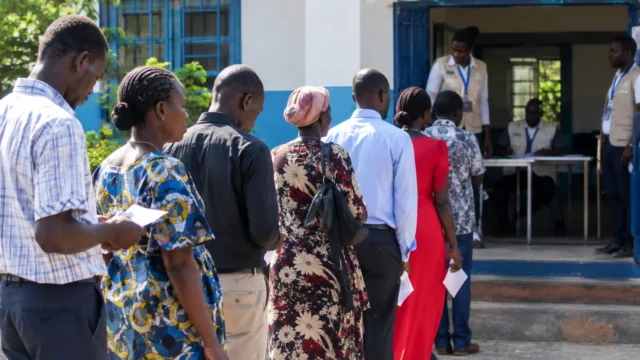
An election cannot be assessed solely by its polling date. It is also necessary to consider who can campaign, which parties are taking part, whether voters can travel without fear, and whether mechanisms are in place to resolve disputes. UNMISS reported that the ruling party had begun its national primaries, while electoral activity by other parties remained limited. The Associated Press echoed these concerns and said the timetable for preparations remained uncertain.
Material capacity matters just as much. Funding, logistical operations, access to different regions and training for electoral staff all determine the process’s credibility. The African Union representative, Jakaya Kikwete, told the Security Council that there was a lack of resources to fund the elections. Meanwhile, the AU Peace and Security Council had already identified funding and administrative gaps in August, while stressing that credible elections require political consensus, the security of citizens and the participation of women, young people and displaced people.
The consequences of a disputed process would not be the same for everyone. In Juba, institutions and political leaders are contesting the legitimacy of power. In states affected by fighting, insecurity can restrict movement and access to services. For displaced people, registration and participation in the vote also depend on practical conditions, including security and the ability to reach a polling station.
The debate is therefore about two imperatives that South Sudan’s leaders cannot separate: ending a prolonged transition and preserving the safeguards of the peace agreement. An election date can give the country a sense of direction. It cannot replace the political compromise that helped contain the conflict.
A regional test for the peace agreement
The African Union and IGAD have called for the resumption of inclusive dialogue and implementation of the commitments in the revitalised agreement. In August 2026, the AU Peace and Security Council called on the signatories to resume direct talks, strengthen election preparations and accelerate the unification of the security forces. It also recalled that the transitional mandate must end in February 2027, with no further extension.
This deadline puts regional mediators in a delicate position. Pushing for a vote without sufficient safeguards could further undermine the compromise. Postponing the election again, by contrast, could fuel the sense that the transition has no end. The African Union communiqué on South Sudan sets out these priorities and provides for coordination with IGAD, the AU and the United Nations.
The implications extend beyond South Sudan’s borders: the election is testing the ability of African and international mechanisms to support an end to the transition without reducing peace to an electoral deadline. In the coming weeks, signs to watch will include whether dialogue genuinely opens, whether opposition parties participate, what resources are provided to the Electoral Commission and what security guarantees are put in place. The outcome on 22 December will matter. So too will the way it is achieved, and how the parties then accept the common rules.