Algeria
 Egypt
 Libya
 Morocco
 Sudan
 Tunisia
 Benin
 Burkina Faso
 Cabo Verde
 Côte d'Ivoire
 Ghana
 Guinea
 Guinea-Bissau
 Liberia
 Mali
 Mauritania
 Niger
 Nigeria
 Senegal
 Sierra Leone
 The Gambia
 Togo
 Cameroon
 Central African Republic
 Chad
 DR Congo
 Equatorial Guinea
 Gabon
 Republic of the Congo
 São Tomé and Príncipe
 Burundi
 Comoros
 Djibouti
 Eritrea
 Ethiopia
 Kenya
 Madagascar
 Malawi
 Mauritius
 Mozambique
 Rwanda
 Seychelles
 Somalia
 South Sudan
 Tanzania
 Uganda
 Angola
 Botswana
 Eswatini
 Lesotho
 Namibia
 South Africa
 Zambia
 Zimbabwe

For African countries, the stakes in climate negotiations go beyond reducing emissions. They also include funding adaptation, addressing losses already suffered and ensuring an energy transition that does not make populations bear the cost of a crisis to which they have contributed little.
In Antalya, Türkiye, the issue took on particular significance when the latest draft text omitted any mention of fossil fuels. For the African Group of Negotiators on Climate Change (AGN), the debate is as much about climate ambition as it is about how responsibilities and resources are shared.
A text that rekindles the dispute over responsibility
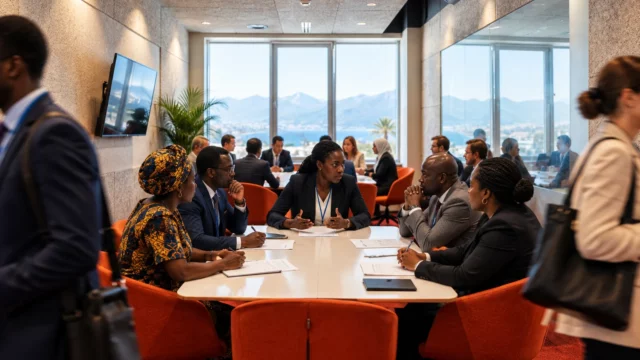
COP31, the annual conference of the states that are parties to the United Nations climate convention, is being held from 9 to 20 November 2026 in Antalya. Türkiye is hosting the summit, while Australia is leading the negotiations. This division of roles is part of a diplomatic gathering where every phrase in the final text must secure sufficiently broad agreement.
The discussions bring together countries with different interests. States heavily dependent on hydrocarbons defend their energy choices. Others are calling for a faster phase-out of coal, oil and gas. Developing countries, meanwhile, are demanding predictable funding to reduce climate risks and transform their energy systems without holding back their development.
Funding lies at the heart of this disagreement. African states point out that financial commitments announced by developed countries do not always translate into resources that are accessible, sufficient and suited to needs. A significant share of those needs concerns adaptation: protecting crops, cities, water networks and infrastructure from droughts, floods and extreme heat.
Prolonged negotiations and a contested reference to fossil fuels
On Friday 20 November, the scheduled closing day of the conference, discussions continued beyond the deadline. An initial draft decision included calls to accelerate the phase-out of coal, oil and gas. But a shorter version, published on Thursday 19 November, no longer mentioned fossil fuels, the main drivers of greenhouse gas emissions.
The omission prompted criticism. Delegations, including those of France, Panama and Côte d’Ivoire, called for a call to accelerate the phase-out of fossil fuels to be reinstated. According to the Associated Press, a new version of the text was expected on Friday, as talks risked running beyond the official closing date.
Zanetor Agyeman-Rawlings, Ghana’s environment minister and chair of the AGN, challenged the proposed sharing of the burden. “We did not come here to beg,” she said, according to Africanews. She added that African populations were suffering the consequences of activities carried out mainly in developed countries, while being expected to fund their own transition.
The Ghanaian leader also warned that the summit must not become a “forum for sterile discussions”. Her remarks reflect the position put forward by the African group in the negotiations. They do not, however, mean that all countries on the continent support every detail of a single energy policy: their resources, needs and economic paths differ.
The cost of the transition is also decided at national level
A just transition must reconcile lower emissions, affordable access to energy and income generation. For African countries, this balance is particularly tangible. Governments have to meet growing demand for electricity and fund infrastructure while reducing their vulnerability to the effects of climate change.
The consequences of an inadequate agreement would not be shared equally. National authorities would have to contend with tight budgets and substantial investment needs. In rural areas, farmers depend more heavily on rainfall and often have fewer resources to absorb a poor season. In cities, low-income households and small businesses are sensitive to the cost of electricity, transport and food.
The debate on “loss and damage” concerns harm caused by climate events that adaptation cannot prevent. It adds to calls for funding for adaptation and emissions reductions. These issues are not interchangeable: a climate finance pledge does not automatically address losses already suffered, and a loan does not have the same effect as a grant for a country already in debt.
At continental level, the African Union and African negotiators are seeking to have the continent’s priorities recognised in global discussions. The AGN coordinates African countries’ positions in the process under the United Nations Framework Convention on Climate Change. This coordination gives weight to common demands, even though states retain their own interests.
COP’s credibility will be measured by the resources provided
The impact of the final decision will therefore depend on two factors: the place given to fossil fuels and the precision of financial commitments. A text that refers to a transition without specifying how it will be funded risks leaving governments to shoulder substantial costs alone. Conversely, commitments without a timetable or monitoring mechanism may be difficult to verify.
For African countries, the outcome will also affect confidence in multilateral negotiations. The issue is not simply a matter of securing a political formula. It concerns access to funds, their terms and timetable, and their ability to support projects shaped by national and regional priorities.
As COP31 was due to end, the final text had not yet been agreed. The prolonged discussions left open the central question raised by African negotiators: will states manage to match their climate commitments with concrete resources, while clarifying the place of fossil fuels? The summit’s significance for Ghana, other African countries and their populations will be judged by these decisions, rather than by statements of principle.
Verification sources: Africanews report on African negotiators’ demands, Associated Press report on the draft text and prolonged discussions and official UNFCCC information on COP31.