Algeria
 Egypt
 Libya
 Morocco
 Sudan
 Tunisia
 Benin
 Burkina Faso
 Cabo Verde
 Côte d'Ivoire
 Ghana
 Guinea
 Guinea-Bissau
 Liberia
 Mali
 Mauritania
 Niger
 Nigeria
 Senegal
 Sierra Leone
 The Gambia
 Togo
 Cameroon
 Central African Republic
 DR Congo
 Equatorial Guinea
 Gabon
 Republic of the Congo
 São Tomé and Príncipe
 Burundi
 Comoros
 Djibouti
 Eritrea
 Ethiopia
 Kenya
 Madagascar
 Malawi
 Mauritius
 Mozambique
 Rwanda
 Seychelles
 Somalia
 South Sudan
 Tanzania
 Uganda
 Angola
 Botswana
 Eswatini
 Lesotho
 Namibia
 South Africa
 Zambia
 Zimbabwe
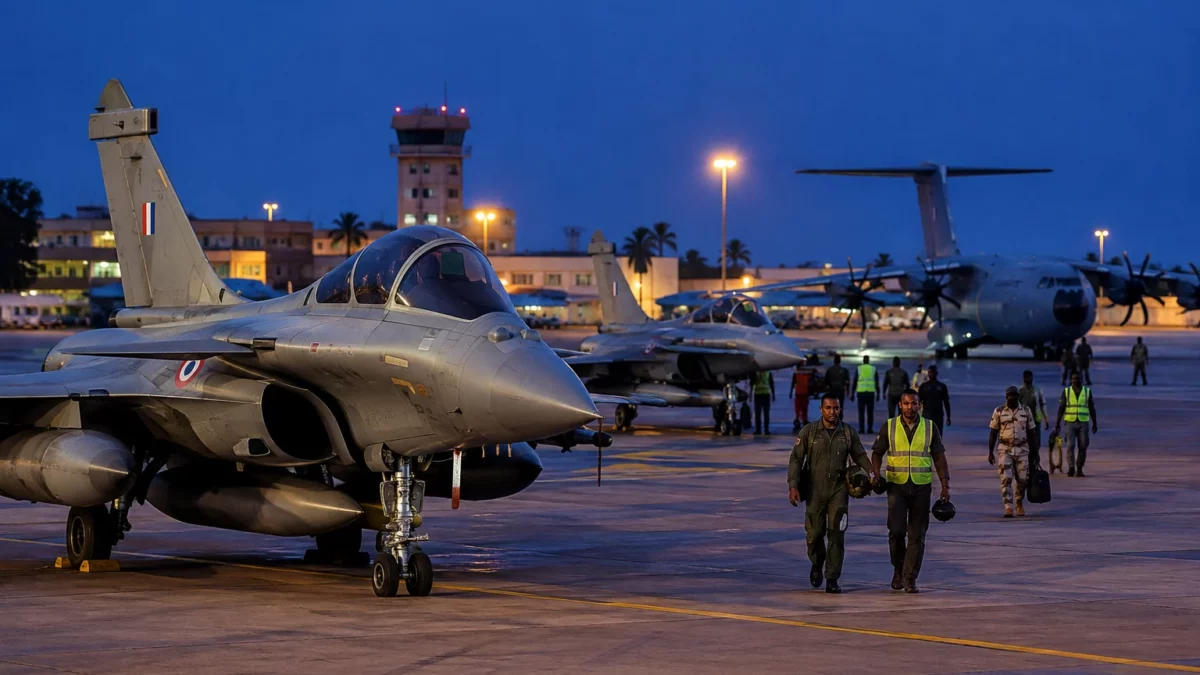
In N’Djamena, the temporary return of French military aircraft raises a question broader than that of a stopover: how far are Chad and France prepared to rebuild ties after the end of their defence agreement? For now, the two capitals describe the aircraft’s presence differently.
A recent break, in a region being reshaped
On 28 November 2024, the Chadian government announced the end of the military cooperation agreement linking it to France. The decision paved the way for the departure of French forces. The last elements of this deployment left the country in January 2025, ending a long-standing French military presence in N’Djamena and several other Chadian cities.
The decision was part of a reshaping of security partnerships in the Sahel and Central Africa. Chad, a landlocked country bordering Sudan, Niger, Nigeria, Cameroon and the Central African Republic, continues to face security challenges that extend beyond its borders. The Sudan crisis and violence in the Lake Chad basin weigh in particular on regional stability.
At the institutional level, Chad is a member of CEMAC, the Economic and Monetary Community of Central Africa. The organisation is not a military alliance, but security developments in its member states can affect trade, travel and cooperation between neighbours. The break with Paris also comes amid a reassessment by African countries of their defence agreements and the role of foreign forces on their territory.
Three aircraft, two descriptions
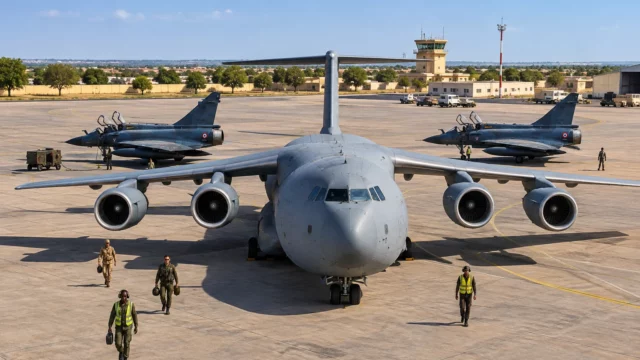
On 19 November 2026, two French Mirage 2000s and a military transport aircraft landed in N’Djamena, according to media reports published the following day. Chadian military authorities described their arrival as a “joint exercise”. The French side described the mission as a short technical stopover, accompanied by training activities.
The stopover was part of the movement of aircraft taking part in an exercise planned in Côte d’Ivoire and Gabon. The passage through Chad may therefore have met an operational need for transit and support. But the mention of training activities, as well as the Chadian army’s description of the visit as a joint exercise, indicate that this was not simply a neutral logistical movement.
The public statements do not, however, allow us to conclude that a new defence agreement has been signed or that a permanent French military presence has returned. Above all, they show that occasional military contacts remain possible after the withdrawal. Available reports do not detail the content or duration of the training, or which Chadian units were involved.
The two accounts may reflect different levels of description: a stopover in terms of the French aircraft’s journey, and a joint activity from the Chadian perspective. Without a joint document setting out the mandate and timetable, it would be premature to see this as proof of a full strategic rapprochement.
A political test as much as a military one
For the Chadian authorities, managing this episode touches on a central question: how to cooperate with a historic partner without giving the impression of reversing the 2024 decision. The termination of the agreement marked an assertion of sovereignty. Limited, negotiated contact may nevertheless meet training or coordination needs without automatically restoring the previous arrangement.
For Paris, the stopover offers an opportunity to maintain professional relations with the Chadian forces and preserve possibilities for cooperation. But the stakes cannot be measured by the number of aircraft alone. They will depend on the conditions set by N’Djamena, the transparency of the arrangements and the ability of both sides to distinguish occasional cooperation from a lasting presence.
The practical consequences are not the same for everyone. Military leaders may benefit from technical exchanges or training. For residents, the immediate impact of a brief stopover is limited. However, any lasting change in security cooperation could matter to people in border regions, where questions of movement, protection and stability are experienced far from the capital.
What happens next will be seen in practice
This renewed contact comes after periods of tension in Franco-Chadian relations, followed by signs of diplomatic easing. It points to a relationship being reorganised rather than an established return to the previous situation. The episode also shows that the end of a military agreement does not necessarily preclude targeted cooperation, provided the two states define its terms.
The next indicator will be whether similar missions recur: the frequency of stopovers, the nature of the training, the presence of French personnel and the publication of a shared framework. Until then, the established facts remain limited: French aircraft reached N’Djamena, the Chadian authorities speak of a joint exercise and the French military of a technical stopover. None of these facts alone confirms the restoration of a defence agreement.
For CEMAC countries and their partners, the episode is a reminder that regional security arrangements evolve in response to sovereign decisions and operational needs. Chad intends to retain control over the form its partnerships take. The real significance of this stopover will therefore depend less on its symbolism than on any agreements, public or otherwise, that may follow.