Algeria
 Egypt
 Libya
 Morocco
 Sudan
 Tunisia
 Benin
 Burkina Faso
 Cabo Verde
 Côte d'Ivoire
 Ghana
 Guinea
 Guinea-Bissau
 Liberia
 Mali
 Mauritania
 Niger
 Nigeria
 Senegal
 Sierra Leone
 The Gambia
 Togo
 Cameroon
 Central African Republic
 Chad
 DR Congo
 Equatorial Guinea
 Gabon
 Republic of the Congo
 São Tomé and Príncipe
 Burundi
 Comoros
 Djibouti
 Eritrea
 Ethiopia
 Kenya
 Madagascar
 Malawi
 Mauritius
 Rwanda
 Seychelles
 Somalia
 South Sudan
 Tanzania
 Uganda
 Angola
 Botswana
 Eswatini
 Lesotho
 Namibia
 South Africa
 Zambia
 Zimbabwe
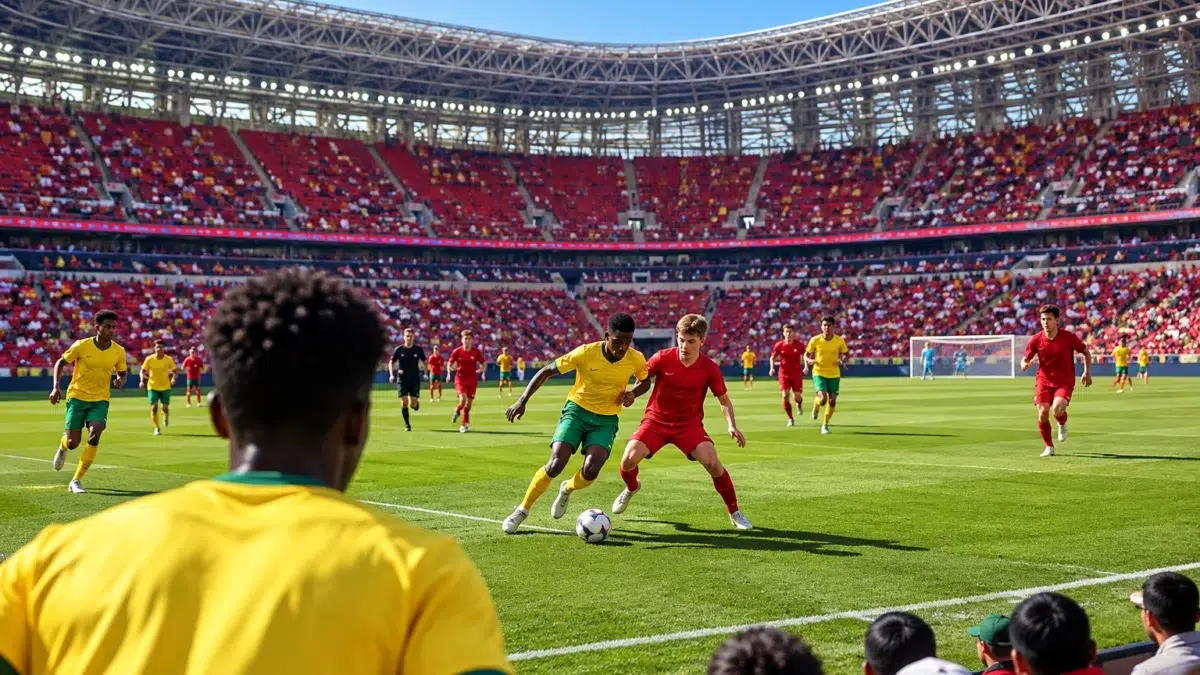
A first match at a World Cup can be about much more than the score. For Mozambique, taking the field in Doha also marked the Under-17 side’s debut at a global finals. On Thursday 19 November 2026, the young Mozambicans turned that first appearance into a convincing victory: 4-0 against Denmark.
A first World Cup built before Doha
The result is part of the recent progress of Mozambican youth football. The team secured its place in the tournament after beating Ethiopia on penalties in May, at the African qualifying competition. Mozambican President Daniel Chapo had then hailed the qualification of the “Mambinhas”, the nickname of the national Under-17 team. The tournament in Qatar is therefore the first World Cup played by Mozambique, in any category, according to FIFA.
The qualification is also the result of a regional campaign. Mozambique finished third in the COSAFA zone qualifiers, which bring together the federations of southern Africa, before progressing through the continental stage. The Confederation of African Football (CAF) organises this route to the World Cup, where ten African teams are competing this year.
In Maputo, as in other parts of the country, a youth team cannot by itself represent the state of the national game. But a first World Cup appearance provides a rare showcase for the players, their coaches and training structures. It can also draw attention to the practical conditions needed for development: regular competitions, technical support and access to pitches.
Four goals and a composed start
Mozambique took the lead in the fourth minute through Khensane. Alírio Cuna then extended the lead with two goals, in the 32nd and 44th minutes. Joaquim Mubaí scored the fourth in second-half stoppage time. FIFA and Mozambican media outlet Club of Mozambique reported the same score and goalscorers.
Denmark had more of the ball, but the Mozambicans proved dangerous. FIFA highlighted Cuna’s performance; he was named player of the match. The win provisionally puts Mozambique top of Group C, level on points with Australia, who beat Argentina 2-0. The victory does not guarantee qualification: each team still has two group matches to play.
African teams had mixed results on the opening day. Mozambique were the only side from the continent to win on 19 November. Egypt lost 2-1 to Greece, while Uganda went down 3-0 to the Republic of Korea. Hosts Qatar beat Panama 2-0; France defeated Haiti 3-1 and Uruguay overcame Saudi Arabia 3-2.
A packed tournament, with more to prove
The 2026 Under-17 World Cup runs from 19 November to 13 December in Qatar. The competition features 48 teams and is being played at the Aspire Zone complex. This expanded format creates more opportunities to qualify, but also leaves teams with a tight schedule. An opening win offers breathing space; it does not yet show how a team will respond once its opponents have studied its game.
Mozambique will face Argentina on Sunday 22 November, before taking on Australia on 25 November. These two matches will show whether the team can reproduce its effectiveness against sides that have also won their opening games. In a short group stage, managing energy, defensive discipline and the ability to convert chances will matter as much as the momentum from the first night.
On Friday 20 November, four more African teams take to the field: Côte d’Ivoire against Uzbekistan, Senegal against Croatia, Mali against New Zealand and Egypt against Greece? No: Egypt have already played on 19 November. The schedule announced for the 20th instead includes Italy against Jamaica, Cuba against Tajikistan and Belgium against Vietnam, in addition to the Ivorian, Senegalese and Malian matches. This clarification matters: several schedules circulated before the tournament sometimes mix up the matchdays.
Significance beyond the standings
For Mozambique, the immediate task remains a sporting one: turn this start into more points and aim to progress further in the tournament. Regionally, the performance also highlights the work of the COSAFA pathway and the range of routes that lead African teams to a global competition. On its own, it is not enough to conclude that there has been a lasting change in the country’s player development or results.
What happens next will be decided on the pitch, but also by the ability to sustain this momentum after the tournament. For young players, a World Cup can open doors; it cannot replace a strong domestic league or long-term support. The 22 November meeting with Argentina will offer an early indication of the competitive maturity of this Mozambican team, now embarked on an unprecedented adventure.