Algeria
 Egypt
 Libya
 Morocco
 Sudan
 Tunisia
 Benin
 Burkina Faso
 Cabo Verde
 Côte d'Ivoire
 Guinea
 Guinea-Bissau
 Liberia
 Mali
 Mauritania
 Niger
 Nigeria
 Senegal
 Sierra Leone
 The Gambia
 Togo
 Cameroon
 Central African Republic
 Chad
 DR Congo
 Equatorial Guinea
 Gabon
 Republic of the Congo
 São Tomé and Príncipe
 Burundi
 Comoros
 Djibouti
 Eritrea
 Ethiopia
 Kenya
 Madagascar
 Malawi
 Mauritius
 Mozambique
 Rwanda
 Seychelles
 Somalia
 South Sudan
 Tanzania
 Uganda
 Angola
 Botswana
 Eswatini
 Lesotho
 Namibia
 South Africa
 Zambia
 Zimbabwe
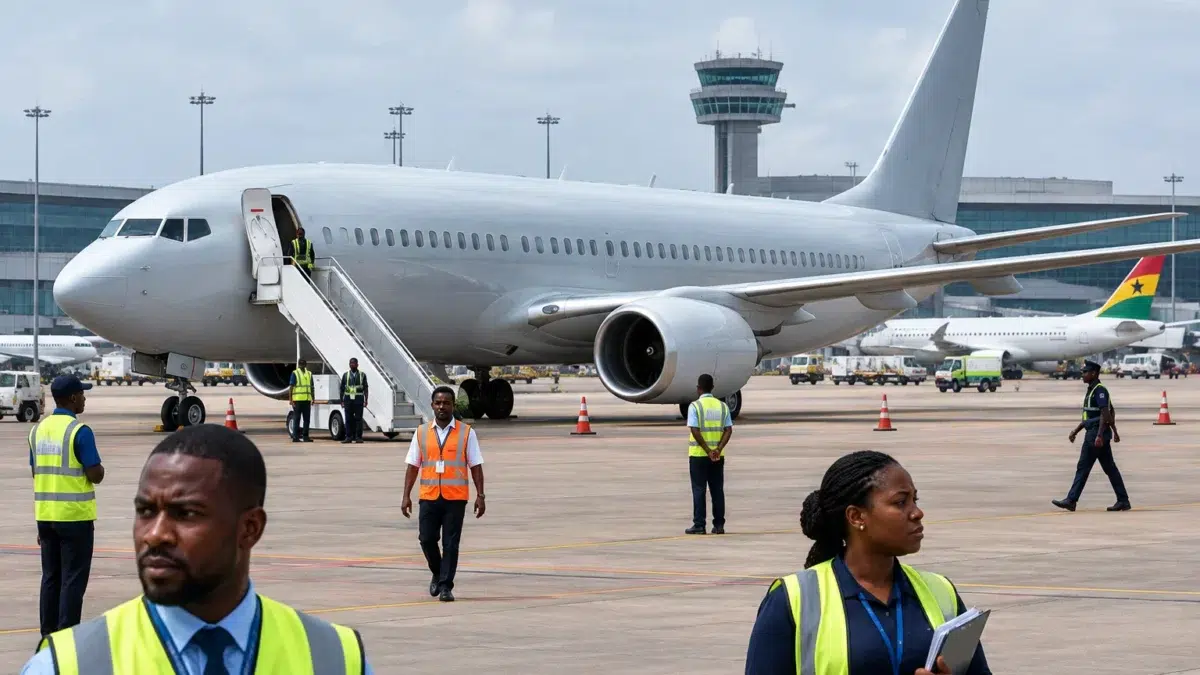
A state aircraft may meet a genuine operational need. But in Ghana, its price and the timing raise a straightforward political question: how can this spending be justified when many households remain concerned about the cost of living? The controversy is about the transparency of the purchase as much as the aircraft itself.
A purchase as part of air force modernisation
Ghana exited its $3 billion financing programme with the International Monetary Fund (IMF) in 2026. The country is nevertheless still engaged in a process of economic recovery and debt management. The government points to progress made; the opposition stresses the social needs that remain.
The debate is also taking place in a regional context where security issues and the capabilities of the armed forces extend beyond national borders. Ghana is a member of ECOWAS, the West African organisation for political and economic cooperation. But the purchase under scrutiny here primarily concerns national budgetary and military decisions.
The Falcon 6X is part of a wider programme to renew Ghana’s air assets. The contract also provides for four Airbus helicopters, for a separate amount. The parliamentary report on these acquisitions states that the agreement for the aircraft was presented on 3 December 2025 and approved by Parliament on 4 December. The Ghanaian parliamentary committee’s report on the aircraft contracts puts the price of the aircraft at $60.68 million.
Aircraft delivered, accounts still demanded
The aircraft, manufactured by Dassault Aviation, landed in Accra on Monday 16 November 2026. It is intended for executive transport and is to replace the Falcon 900EX, which has been in service since 2010. The government says the older aircraft has suffered repeated maintenance problems. The new jet’s greater range should also reduce refuelling stops on long journeys.
These operational considerations help explain the decision, but do not settle the debate over its cost. Samuel Abu Jinapor, an opposition MP, has called for details of the financing, contract and procurement process. According to MyJoyOnline, he also challenged the decision to spend around 720 million cedis on the aircraft, while employment and remuneration needs in public services remain a focus of criticism. The opposition’s questions about the cost of the new aircraft are thus about the trade-off between state equipment and other priorities.
The government says the purchase was approved by Parliament and that Ghana now has more budgetary room than it did in 2022, when the country turned to the IMF. The programme’s completion in 2026 confirms this change. However, this alone does not show that the price paid was the most advantageous or that the financing does not reduce the capacity to meet other needs. These questions require detailed information on the terms of the contract and associated costs.
The controversy also has a partisan dimension. Officials from the National Democratic Congress (NDC), now in power, had criticised the idea of a new presidential aircraft when they were in opposition under Nana Akufo-Addo’s presidency. The current opposition is therefore accusing them of changing their position. The political comparison is real, but it does not replace scrutiny of the technical grounds, cost and process behind the current purchase.
The test of budget transparency
The delivery came after the 2027 budget was presented to Parliament on 12 November. This timing makes the competition between state operating expenditure, public investment and the services on which residents depend more visible. For Ghanaians, the practical issue is not only whether an aircraft is needed: it is also about understanding what its acquisition includes, how it is financed and what other budgetary choices it entails.
The effects are not the same for everyone. The authorities and armed forces may point to the availability of a national aircraft and greater range. Taxpayers, for their part, can legitimately demand an account of how public funds are used. Budgetary trade-offs also affect users of public services, in cities and in the regions, although the purchase of an aircraft alone does not make it possible to quantify what might otherwise have gone to health, education or employment.
The next step is therefore institutional: can Parliament make the contract and financing details available, beyond the authorisation already granted? The parliamentary committee has documented the amounts and approval process. The opposition is now seeking further details. Clear publication of the costs and justifications would help distinguish operational needs from decisions about price and timing.
For ECOWAS and the African Union, the case does not in itself signal a regional shift. It nevertheless illustrates an issue shared by countries across the continent: modernising public assets while maintaining confidence in the management of public finances. In Ghana, the next stage of the debate will depend less on political statements than on the budgetary and contractual documents made public.