Algeria
 Egypt
 Libya
 Morocco
 Sudan
 Tunisia
 Benin
 Burkina Faso
 Cabo Verde
 Côte d'Ivoire
 Ghana
 Guinea
 Guinea-Bissau
 Liberia
 Mali
 Mauritania
 Niger
 Nigeria
 Senegal
 Sierra Leone
 The Gambia
 Togo
 Cameroon
 Central African Republic
 Chad
 DR Congo
 Equatorial Guinea
 Gabon
 Republic of the Congo
 São Tomé and Príncipe
 Burundi
 Comoros
 Djibouti
 Eritrea
 Ethiopia
 Kenya
 Madagascar
 Malawi
 Mauritius
 Mozambique
 Rwanda
 Seychelles
 Somalia
 South Sudan
 Tanzania
 Uganda
 Angola
 Botswana
 Eswatini
 Lesotho
 Namibia
 South Africa
 Zambia
 Zimbabwe
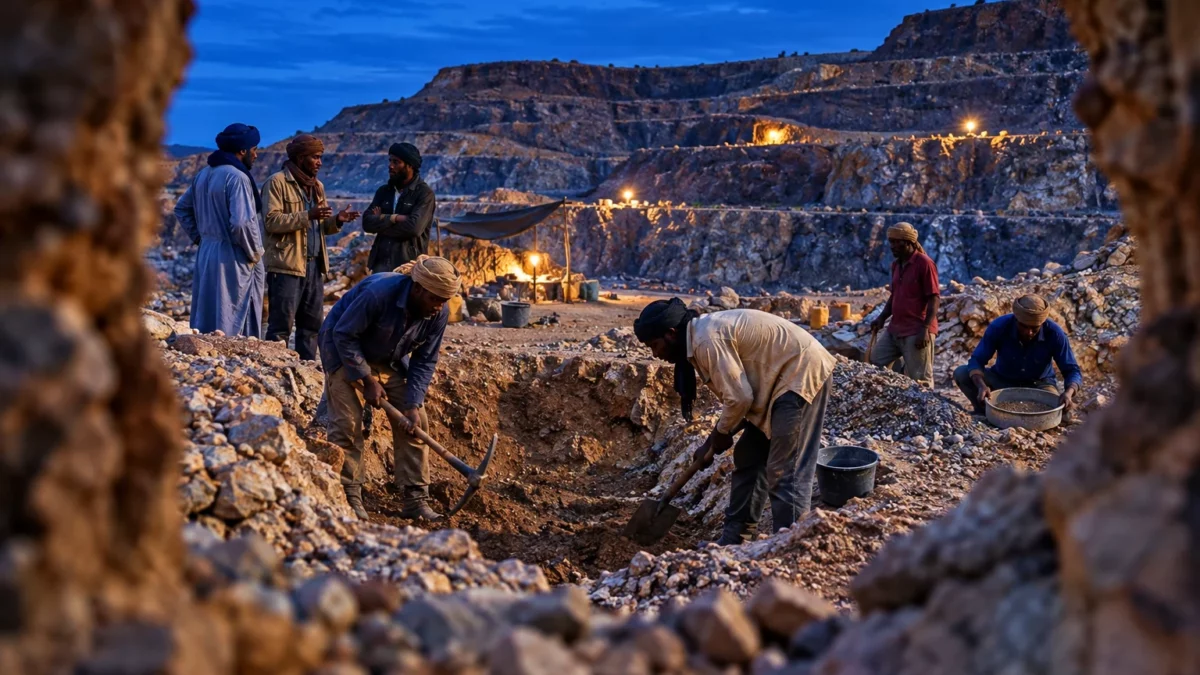
In Miski, in Tibesti, peace also depends on how gold is mined and how its revenues are shared. When mining rules remain contested, an agreement signed in N’Djamena or Bardaï is not enough to ease tensions on the ground.
Deal weakened by disagreements over gold
The conflict around Miski is part of a long-running dispute between the Chadian state and local actors over control of gold-mining sites, the conditions for mining and the sharing of its proceeds. In this remote area of Tibesti, the presence of the administration and the monitoring of commitments are as tangible an issue as the security of the mines.
On 20 April 2025, the government and the Miski Self-Defence Committee signed an agreement in Bardaï aimed at ending hostilities. The text provided, among other things, for an amnesty, the cancellation of mining permits in the area and monitoring mechanisms. Since then, accounts of its implementation have diverged. Signatory groups say the planned commission has not been set up and that the proceeds promised to residents have not been paid. However, reports published in Chad describe subsequent steps in the process and conflicting statements about its implementation.
The issue also concerns the mining brigade, which is attached to the Ministry of Mines and deployed around gold-mining sites. The authorities say its mission is to provide security. Representatives of the groups, meanwhile, accuse it of taking over mines and illegally extracting gold. These accusations cannot be considered established without an independent investigation.
Clashes and conflicting accusations
Violence resumed in October 2026. On 14 October, the Chadian army announced an attack on a mining brigade position in Miski. According to its statement, two officers were killed and nine soldiers wounded. This toll comes from the military authorities and has not been confirmed by an independent source in the information available.
In early November, the Republic’s Ombudsman called for the clashes to stop. It warned that their continuation threatened the peacebuilding efforts under way in the province. This statement shows that Chadian institutions recognise the risk that the process could fail, even though the parties disagree over responsibility.
On 17 November, a civilian was reportedly killed in a drone strike, according to local sources cited in reports carried that day. The death could not be corroborated by a second independent source. It must therefore remain attributed, rather than presented as a confirmed toll. The accusations of air strikes and a blockade made by local groups warrant the same caution.
Abakar Djimi Chahale, president of the Movement for Alternation and Democracy in Chad, one of the signatories, says levies could reach 60 grams of gold per machine. He also accuses the authorities of failing to set up the monitoring commission and of integrating only a small number of fighters into the army. A source close to the government, for its part, accuses the Self-Defence Committee of attacking the mining brigade, while acknowledging that abuses may have occurred. The source says channels for discussion remain open.
Consequences beyond the mining sites
For residents, the issue is not limited to control of a mine. It also concerns access to gold revenues, the safety of travel and the possibility of settling disputes without a return to fighting. When financial commitments and consultation mechanisms cannot be verified, trust between communities, armed groups and the administration erodes.
The mining brigade is at the heart of this power struggle. It is supposed to help secure a strategically important economic activity, but its actions are contested by those who believe local resources are being taken out of their hands. Clarifying levies, permits and where revenues go would help distinguish official rules from accusations made on the ground. It would not replace dialogue, but could narrow the scope for opposing interpretations.
The crisis is unfolding in a national context in which the state is seeking to consolidate its authority in provinces far from N’Djamena. In Tibesti, that presence is tied to security concerns and coveted mineral resources. Responses based exclusively on security risk leaving the disagreement over gold governance unresolved. Conversely, an agreement without a credible monitoring mechanism struggles to produce lasting results.
An issue for Chad and Central Africa
Chad belongs to the Central African Economic and Monetary Community (CEMAC), which brings together six countries in an economic and monetary integration bloc. It also participates in the Economic Community of Central African States (ECCAS), a broader framework for regional co-operation. The tensions in Miski do not, in themselves, amount to a regional crisis. But they are a reminder that a strategic resource can fuel local conflicts when the rules governing its extraction and the sharing of revenues are contested.
At continental level, the issue feeds into debates on natural resource governance and the ability of peace agreements to be implemented beyond their signing. For now, the Chadian authorities describe their actions as a law-enforcement operation, while the groups are calling for a mediator and raising the prospect of recourse to the courts. What happens next will depend in particular on the effective resumption of dialogue, the establishment of the facts surrounding the recent violence and the creation of a monitoring process accepted by the parties.
The links between gold, security and local benefits are not unique to Tibesti. But the response must be tailored to the Chadian reality: verify the accusations, protect civilians and make the commitments made in Miski verifiable. Without this, the agreement of 20 April 2025 risks remaining a fragile political framework rather than an instrument for peace on the ground.