Algeria
 Egypt
 Libya
 Morocco
 Sudan
 Tunisia
 Benin
 Burkina Faso
 Cabo Verde
 Côte d'Ivoire
 Ghana
 Guinea
 Guinea-Bissau
 Liberia
 Mali
 Mauritania
 Niger
 Nigeria
 Senegal
 Sierra Leone
 The Gambia
 Togo
 Cameroon
 Central African Republic
 Chad
 DR Congo
 Equatorial Guinea
 Gabon
 Republic of the Congo
 São Tomé and Príncipe
 Comoros
 Djibouti
 Eritrea
 Ethiopia
 Kenya
 Madagascar
 Malawi
 Mauritius
 Mozambique
 Rwanda
 Seychelles
 Somalia
 South Sudan
 Tanzania
 Uganda
 Angola
 Botswana
 Eswatini
 Lesotho
 Namibia
 South Africa
 Zambia
 Zimbabwe
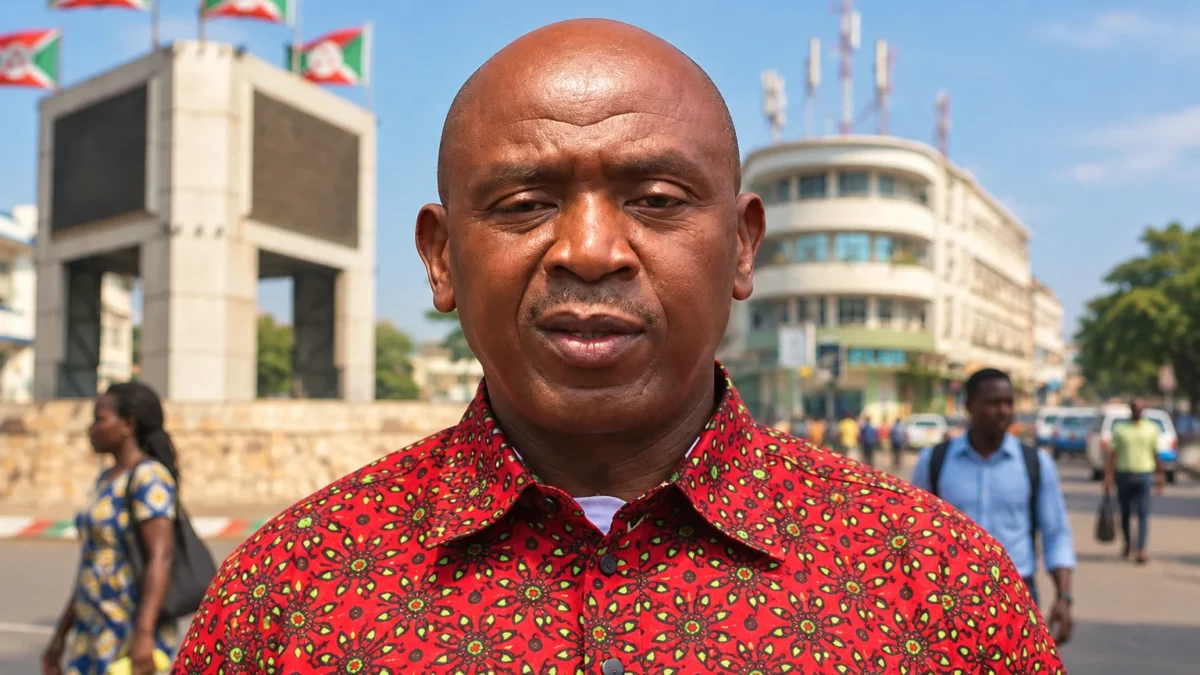
In Burundi, Agathon Rwasa’s candidacy raises a question that goes beyond the career of an opposition figure: what rules will determine who can actually contest the 2027 presidential election? The former leader of the National Congress for Liberty (CNL) has put himself forward as an independent, while his political status remains at the centre of a legal debate.
A candidacy tested against electoral law
On Saturday 21 November, in Bujumbura, Rwasa submitted his file to the Independent National Electoral Commission (CENI). He chose independent status after being removed from the CNL leadership in March 2024. The filing period ends on 22 November, according to the official timetable. Burundian media outlet Iwacu reports his filing and legal arguments. SOS Médias Burundi confirms the date and status of his candidacy.
The disagreement centres on how the rules governing independent candidacies should be interpreted. The presidential decree calling the election provides that a former member of a party’s governing body may stand as an independent after two years have passed since their resignation or removal. It also defines an independent as a person who has not identified with any party for at least one year. The decree setting out the rules and dates for the election therefore distinguishes between several conditions.
Rwasa argues that his removal in 2024 clears the way for his candidacy, as the two-year period has, in his view, elapsed. He says he no longer has any ties to the CNL. The difficulty is that the candidacy file also requires a certificate confirming non-affiliation with a party. Rwasa disputes how the CENI is applying this requirement and invokes Article 99 of the Constitution. These are his arguments, not yet a decision by the electoral authority.
Election under the ruling party’s strong dominance
The presidential election is scheduled for 3 May 2027. Évariste Ndayishimiye, the candidate of the ruling CNDD-FDD party, has already filed his papers. Rwasa, who came second to him in 2020, is seeking to offer voters another option. Several opposition groups have announced their withdrawal or a boycott, while lesser-known candidates have also come forward.
Rwasa’s political career sheds light on what is at stake. A former leader of the National Liberation Forces, he later took part in political life and founded the CNL in 2019. In March 2024, an extraordinary party congress appointed Nestor Girukwishaka as its leader, removing Rwasa from the leadership. The internal dispute has reduced his access to the party machinery, but he says his supporters can mobilise without the CNL label.
The two-year rule now gives the CENI a decisive role. The commission is to examine the files from 23 to 26 November and notify its decision on 27 November. Any appeals will be considered by the Constitutional Court, before the final list is published on 6 December. The CENI’s electoral timetable sets out these next steps.
Credibility will also depend on election conditions
Approving Rwasa’s candidacy would not, by itself, guarantee an open contest. In September 2026, Fortuné Gaétan Zongo, the UN Special Rapporteur on the human rights situation in Burundi, highlighted risks linked to restrictions on political pluralism and the closing of civic and media space. His warnings place the examination of candidacies in a wider context: freedom of organisation, opposition access to the media and the ability to campaign will also matter.
For Burundian voters, the question is a practical one. A candidacy excluded on disputed grounds could deepen doubts about the impartiality of the process. Conversely, a reasoned decision based on rules applied consistently would give candidates and citizens verifiable points of reference. The effects extend beyond political organisations: voters in cities and provinces alike must be able to compare platforms and take part without intimidation.
Burundi is a member of the East African Community (EAC), a regional organisation bringing together several neighbouring countries. Elections there are closely watched for their consequences for stability, population movements and relations between states. At continental level, the case underscores a central issue for the African Union: regular elections gain legitimacy only if the contest is accessible and the rules are clear.
The immediate next step is therefore the CENI’s decision, expected on 27 November. It will determine whether Rwasa can turn his bid into an official candidacy. The final list, due to be published on 6 December, will then set out the choice put before Burundians on 3 May 2027.