
 Algeria
 Egypt
 Libya
 Morocco
 Sudan
 Tunisia
 Benin
 Burkina Faso
 Cabo Verde
 Côte d'Ivoire
 Ghana
 Guinea
 Guinea-Bissau
 Liberia
 Mali
 Mauritania
 Niger
 Nigeria
 Senegal
 Sierra Leone
 The Gambia
 Togo
 Cameroon
 Central African Republic
 Chad
 DR Congo
 Equatorial Guinea
 Gabon
 Republic of the Congo
 São Tomé and Príncipe
 Burundi
 Comoros
 Djibouti
 Eritrea
 Ethiopia
 Kenya
 Madagascar
 Malawi
 Mauritius
 Mozambique
 Rwanda
 Seychelles
 Somalia
 South Sudan
 Tanzania
 Uganda
 Angola
 Botswana
 Eswatini
 Lesotho
 Namibia
 Zambia
 Zimbabwe
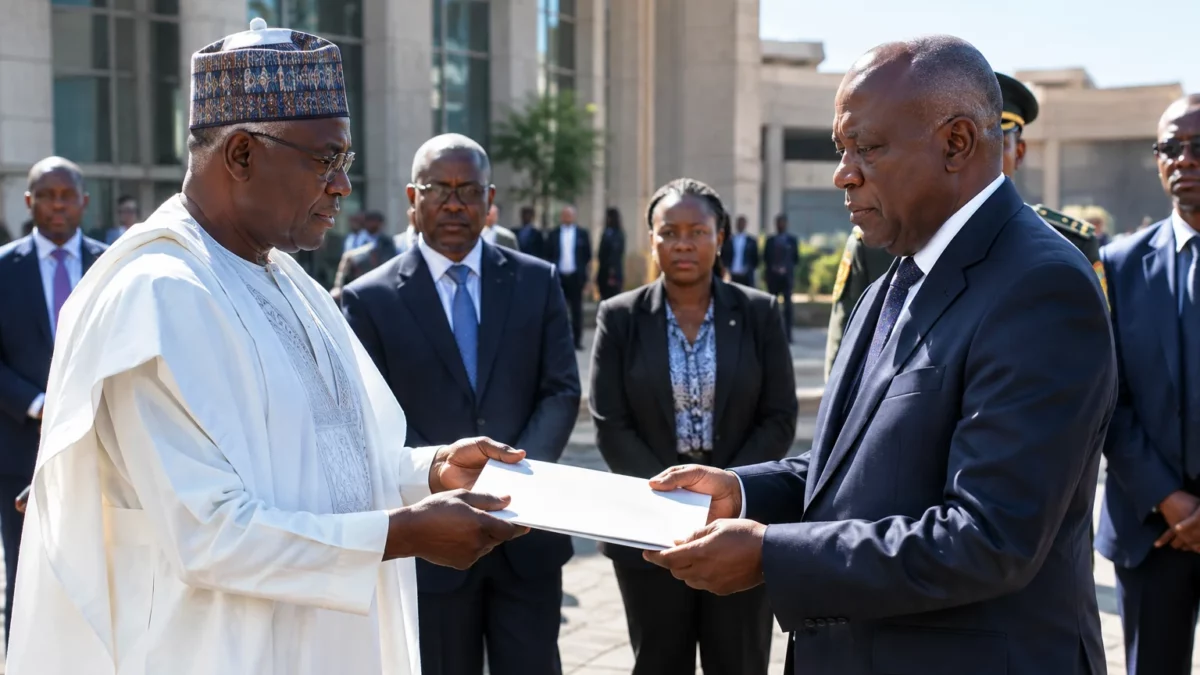
Can a broadcast incident strain relations between two African powerhouses? In Pretoria, a dispute over the speech by Nigeria’s new envoy has taken on political significance, against a backdrop already tense with violence targeting foreign nationals in South Africa.
Protocol ceremony becomes diplomatic affair
On 13 November 2026, Femi Fani-Kayode presented his letters of credence to South African President Cyril Ramaphosa in Pretoria. The formality marks the official start of his mission as Nigeria’s high commissioner. He recalled the ties forged during the struggle against apartheid and called for renewed cooperation between the two countries, according to the Nigerian Ministry of Foreign Affairs.
The controversy concerns the broadcast of the ceremony. Fani-Kayode said his remarks and the introduction of the Nigerian delegation had been left out of the live coverage. South Africa’s presidency attributed the interruption to a technical incident during the preceding segment. It rejected the suggestion that the omission was deliberate and said the president does not direct broadcast operations. A separate video of the speech was subsequently published, several Nigerian media outlets reported, including Punch.
The disagreement continued on social media. On 17 November, the director-general of South Africa’s Department of International Relations and Cooperation (DIRCO) received the envoy and conveyed Pretoria’s concern about his public comments. This was not equivalent to Abuja recalling the diplomat: it was an official exchange with the host country, according to reports relaying DIRCO’s position and the Nigerian outlet AllAfrica.
Tensions predate new envoy’s arrival
The row follows several months of strained relations. In 2026, anti-immigration protests and violence against foreign nationals prompted Nigerians to leave South Africa. Abuja organised voluntary returns and condemned the attacks. In September, Nigeria’s National Assembly suspended official visits to South Africa, citing reported threats and attacks against Nigerians and their businesses, according to Associated Press.
The two governments had nevertheless begun discussions. In July, South African minister Ronald Lamola travelled to Abuja as Ramaphosa’s envoy. The talks covered attacks, migration, security and bilateral cooperation. Pretoria condemned xenophobic violence, while also raising concerns about security and irregular migration. DIRCO presented the discussions as an effort to address disagreements through diplomatic and institutional channels.
The relationship extends beyond migration. Nigeria and South Africa are among the continent’s largest economies and maintain commercial, political and security ties. Abuja also recalls the support Nigerians gave to the struggle against apartheid. That shared history shapes expectations, but is not enough to erase current disagreements.
Balancing public safety and protection of people
South Africa’s immigration debate intersects with practical concerns: access to jobs, neighbourhood safety, border controls and the capacity of public services. But rhetoric that collectively associates foreign nationals with crime can fuel threats against people and businesses, whether or not they are in the country legally. South African authorities must therefore distinguish law enforcement from violence by private groups.
The consequences are not borne equally. Those directly threatened risk losing their homes, income or possessions. Migrant business owners and workers may limit their movements or leave the country. South African companies operating in Nigeria also have an interest in preventing tensions from spilling over into trade and investment. For governments, public pressure makes it harder to seek a compromise without appearing to play down their citizens’ concerns.
Nigerian authorities also have responsibilities towards their citizens: to receive complaints, verify facts and call for investigations when deaths or assaults are reported. Pretoria, for its part, says crimes should be dealt with by the police and courts, not through acts of collective vigilantism. The effectiveness of this response will depend in particular on the protection offered to victims and the judicial follow-up to incidents.
A test for African diplomacy
The live broadcast episode alone does not prove an intention to humiliate Nigeria. Accounts differ over the cause of the interruption, while the subsequent release of a full video weakens the suggestion that the speech was permanently censored. But public statements have turned a disputed technical incident into a test of trust between the two capitals.
What happens next will depend less on exchanges on social media than on diplomatic work: consular cooperation, handling complaints, protecting people and implementing the commitments made in Abuja. The contrast is striking: in July, the two governments announced talks on tensions; a few months later, the new envoy finds himself at the centre of a controversy at his first official ceremony.
The implications extend beyond bilateral relations. Within the Southern African Development Community (SADC), South Africa plays a central role. Nigeria, a member of ECOWAS, carries weight in West African debates. Their ability to defuse the crisis will therefore matter for cooperation between African regions, particularly on the movement of people and security. For now, the dispute over the broadcast remains secondary to the main challenge: preventing political tensions from further weakening the protection of citizens abroad and ties between two major countries on the continent.



