Algeria
 Egypt
 Libya
 Morocco
 Sudan
 Tunisia
 Benin
 Burkina Faso
 Cabo Verde
 Côte d'Ivoire
 Ghana
 Guinea
 Guinea-Bissau
 Liberia
 Mali
 Mauritania
 Niger
 Nigeria
 Senegal
 Sierra Leone
 The Gambia
 Togo
 Cameroon
 Central African Republic
 DR Congo
 Equatorial Guinea
 Gabon
 Republic of the Congo
 São Tomé and Príncipe
 Burundi
 Comoros
 Djibouti
 Eritrea
 Ethiopia
 Kenya
 Madagascar
 Malawi
 Mauritius
 Mozambique
 Rwanda
 Seychelles
 Somalia
 South Sudan
 Tanzania
 Uganda
 Angola
 Botswana
 Eswatini
 Lesotho
 Namibia
 South Africa
 Zambia
 Zimbabwe
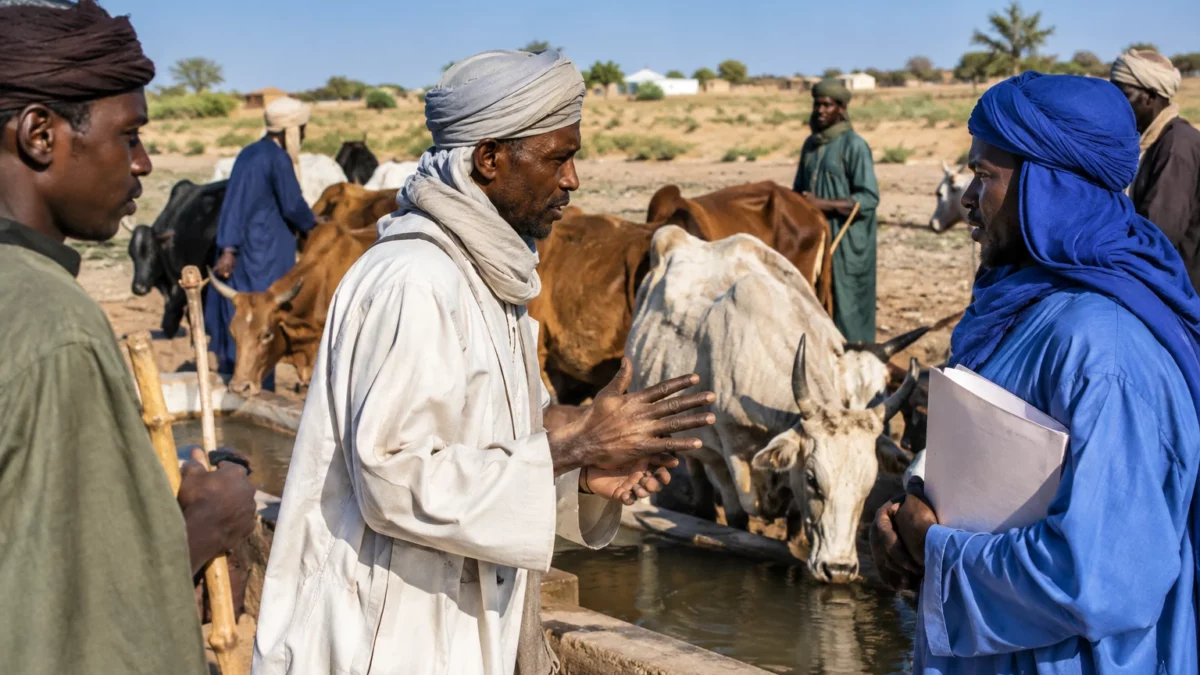
When disputes over water or pasture escalate into clashes, the state’s presence on the ground can calm the situation. On its own, however, it cannot prevent tensions from flaring up again. That is the challenge facing the tour by Chad’s president of six provinces, amid the circulation of weapons among civilians.
Local tensions in a region under pressure
In Chad, conflicts between farmers and herders are often rooted in competition for land, water and transhumance corridors. The availability of weapons can turn a local dispute into a deadly confrontation. The United Nations’ annual report on Chad says intercommunal conflicts caused 182 deaths and 149 injuries in 2024. It also notes the aggravating role of the proliferation of small arms.
These tensions are part of a wider geographical picture. In the east, the conflict in Sudan and the arrival of refugees are placing additional pressure on host communities. In the west, the Lake Chad basin remains under threat from armed groups. Local violence therefore has no single cause: resources, population movements, border security and institutional capacity all intersect.
The president’s tour also comes as the country has completed its political transition following Mahamat Idriss Déby Itno’s election in May 2024. Domestic stability remains an issue for N’Djamena, but also for the Central African Economic and Monetary Community (CEMAC), which brings together six countries and where border tensions can have regional effects.
Nine days on the road and instructions for authorities
Launched on 7 November 2026, the tour ended on 15 November. Mahamat Idriss Déby Itno travelled through Ennedi-Est, Ennedi-Ouest, Ouaddaï, Salamat, Batha and Hadjer-Lamis before returning to N’Djamena. The African news agency APA reports that the programme included mediation between communities, meetings with local officials and instructions to authorities tasked with preventing further violence.
In Torboul, in Ennedi-Ouest, the president intervened in a dispute between herders over access to water and pasture. According to APA, the situation risked escalating into an armed confrontation. In Salamat, in Am-Timan, he ordered the disarmament of civilians holding weapons of war and announced that they would be imprisoned. The measure, reported by APA and regional radio station WADR, signals a hard line. Its implementation will nevertheless depend on the security forces and local judicial authorities.
The tour was not solely focused on weapons control. Discussions with residents, political representatives and senior armed forces officials also put mediation and the role of the provincial administration in the spotlight. The details of the measures taken at each stop and the timetable for implementing them will be crucial in assessing the tour’s practical outcomes.
Disarmament, security and trust
Removing weapons of war from civilian hands can reduce the capacity to inflict harm when tensions escalate. But a presidential order alone does not guarantee effective disarmament. It must be clear who oversees operations, how weapons will be collected and whether the rules will apply equally to different communities. Without a transparent mechanism, a disarmament campaign risks fuelling suspicion rather than dispelling it.
Prevention also means resolving disputes before they turn violent. Administrative authorities, customary leaders and communities must be able to address disputes over access to water and land, particularly during transhumance periods. For rural populations, the issue is immediate: being able to travel, farm and move herds without fear of attack. Stability also matters in urban centres, for trade and travel. Formal economic actors and informal traders alike depend on roads that are safe and usable.
The United Nations’ 2025 report identifies agropastoral clashes as one of the main sources of intercommunal violence in Chad. It highlights pressure on resources and the effects of climate change, as well as the limits of responses when funding, institutional capacity and economic prospects are lacking. The use of security forces therefore addresses part of the problem, not all of its causes.
Implications beyond the six provinces
For Chad’s partners in CEMAC and the African Union, preventing local violence helps limit forced displacement and cross-border tensions. This responsibility is particularly acute in the east, where the war in Sudan has already upended the balance. The response cannot, however, be reduced to border security: it also depends on protecting civilians and ensuring that local mediation can endure.
The presidential tour has brought disarmament and conflict prevention back to the centre of the official discourse. The next test will not be the number of provinces visited, but the consistent implementation of decisions: investigations into violence, equitable access to resources and credible mediation mechanisms. Without these supporting measures, the calm seen during a visit may prove temporary.
Background and corroborating sources: APA’s account of the tour, WADR report on the disarmament measure, United Nations report on Chad in 2024, United Nations report on Chad in 2025 and CEMAC’s official overview.