Algeria
 Egypt
 Libya
 Morocco
 Sudan
 Tunisia
 Benin
 Burkina Faso
 Cabo Verde
 Côte d'Ivoire
 Ghana
 Guinea-Bissau
 Liberia
 Mali
 Mauritania
 Niger
 Nigeria
 Senegal
 Sierra Leone
 The Gambia
 Togo
 Cameroon
 Central African Republic
 Chad
 DR Congo
 Equatorial Guinea
 Gabon
 Republic of the Congo
 São Tomé and Príncipe
 Burundi
 Comoros
 Djibouti
 Eritrea
 Ethiopia
 Kenya
 Madagascar
 Malawi
 Mauritius
 Mozambique
 Rwanda
 Seychelles
 Somalia
 South Sudan
 Tanzania
 Uganda
 Angola
 Botswana
 Eswatini
 Lesotho
 Namibia
 South Africa
 Zambia
 Zimbabwe
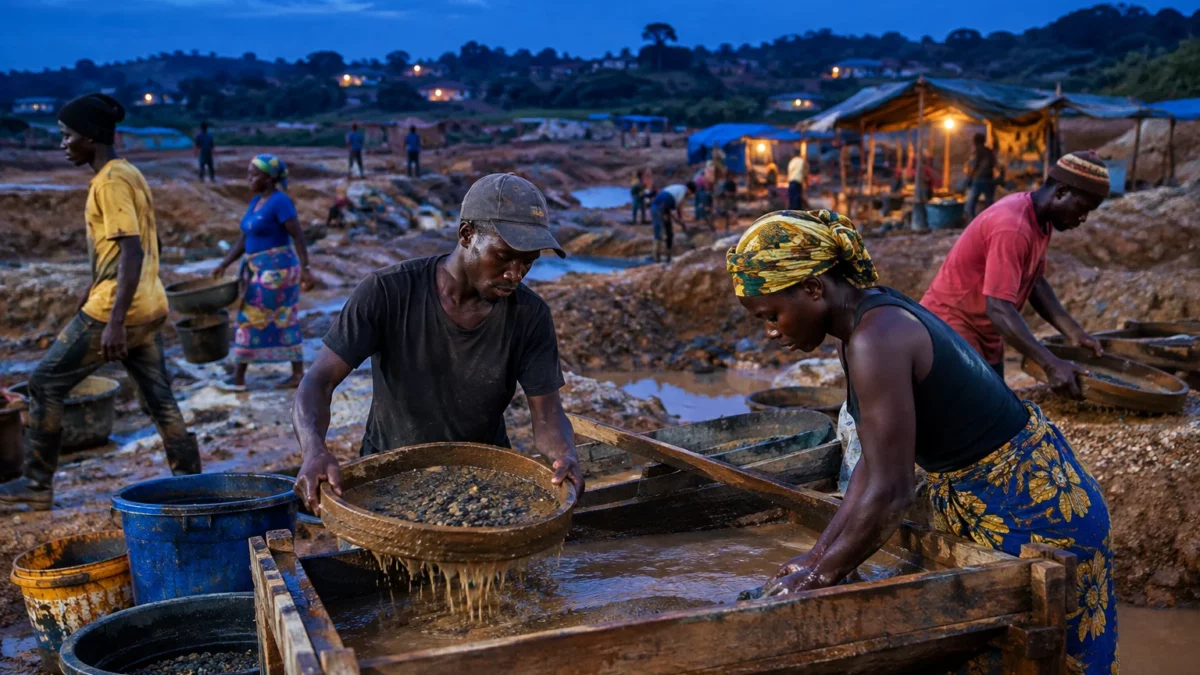
A mining permit opens a path to production, but guarantees neither project funding nor the promised benefits. In Guinea, the green light for Bankan marks an important step; the next decisions will show whether the future mine can meet its deadlines and local economic expectations.
A new gold project in north-eastern Guinea
Guinea is already a major mining player, particularly in bauxite. Industrial gold mining is adding to this activity, while artisanal mining remains an important part of the economy in several areas of the country. At regional level, ECOWAS — the cooperation organisation for West African countries — brings together states facing similar challenges: capturing more value from resources, regulating operators and limiting the social and environmental consequences of extraction.
Bankan is in the Siguiri basin, in north-eastern Guinea. The project is being developed by PDI Gold, which also operates the Kiniéro mine in Guinea and the Nampala mine in Mali. The company describes Bankan as a future pillar of its growth in the region.
This ambition is part of a broader trajectory in which the Guinean authorities are seeking to regulate the mining sector more effectively and increase national benefits. But major projects are judged not only by their production volumes: public revenues, jobs accessible to Guineans, local procurement and effects on communities also matter.
Permit granted, construction still to be prepared
The Guinean government has granted mining permits for Bankan and the Mansounia deposit, located within the Kiniéro area. The presidential decree concerning Bankan dates from 16 November 2026. PDI Gold announced the decision the following day. Bankan’s mining title is valid for an initial period of 15 years.
The permit clears a major regulatory hurdle, but does not mean construction has begun. The company says it wants to accelerate equipment procurement, detailed engineering studies and the compensation processes needed before work starts. It is also preparing an updated schedule, including a new estimate of expenditure and production profile. This is expected to be published in early 2027.
The definitive feasibility study, published in June 2025, forecasts average production of about 250,000 ounces of gold a year for nearly 12 years. It estimates the initial capital requirement at $463m. PDI is targeting production in 2028. This remains a company forecast: it will depend in particular on securing funding, progress on construction and the development of infrastructure.
At full capacity, Bankan could help take the group’s annual production above 400,000 ounces, combining its projects in Guinea and Mali. This is a PDI Gold target and is not a forecast of Guinea’s national production.
Expected benefits and questions on the ground
The company forecasts about 2,000 jobs during construction, followed by nearly 1,000 permanent positions during operations. These figures are company estimates. Their significance will depend on the proportion of jobs given to Guineans, the training provided and working conditions. Construction jobs will be temporary; there will be fewer lasting positions.
The Guinean state is also to hold a 15% stake, in accordance with the applicable mining framework. Taxes and royalties may be added to this. However, the permit alone is not enough to quantify future revenues: these will depend in particular on actual production, gold prices, costs and the tax rules applied.
Communities near the project also have distinct interests. Compensation, access to land, employment opportunities and effects on existing activities will need to be monitored as development proceeds. Environmental and social approval was reported in January 2025; this does not remove the need to monitor commitments made during construction and operations.
The environmental question warrants particular attention. The project is in the north-east of the country, where artisanal and industrial mining coexist with agricultural uses and natural environments. Water quality, tailings management and land rehabilitation will be decisive. The company’s assessments and commitments will need to be weighed against observations from the authorities, communities and independent organisations.
A test for Guinea’s mining strategy
The permit comes as Guinea seeks to increase the national benefits derived from its resources. Mining carries significant weight in the country’s economy, but tangible benefits also depend on contract transparency, monitoring of payments and the role given to local businesses. For Bankan, the next announced milestone — the updated schedule in early 2027 — should clarify the project’s cost and pace.
Across West Africa, the case illustrates a common tension: states want to attract the capital needed for mines while retaining a greater share of the value created. Guinea will therefore have to reconcile the start of production with public oversight requirements and local benefits. For now, the permit opens the door to construction; funding, a precise schedule and delivery on social commitments remain to be established.