Algeria
 Egypt
 Libya
 Morocco
 Sudan
 Tunisia
 Benin
 Burkina Faso
 Cabo Verde
 Côte d'Ivoire
 Ghana
 Guinea-Bissau
 Liberia
 Mali
 Mauritania
 Niger
 Nigeria
 Senegal
 Sierra Leone
 The Gambia
 Togo
 Cameroon
 Central African Republic
 Chad
 DR Congo
 Equatorial Guinea
 Gabon
 Republic of the Congo
 São Tomé and Príncipe
 Burundi
 Comoros
 Djibouti
 Eritrea
 Ethiopia
 Kenya
 Madagascar
 Malawi
 Mauritius
 Mozambique
 Rwanda
 Seychelles
 Somalia
 South Sudan
 Tanzania
 Uganda
 Angola
 Botswana
 Eswatini
 Lesotho
 Namibia
 South Africa
 Zambia
 Zimbabwe
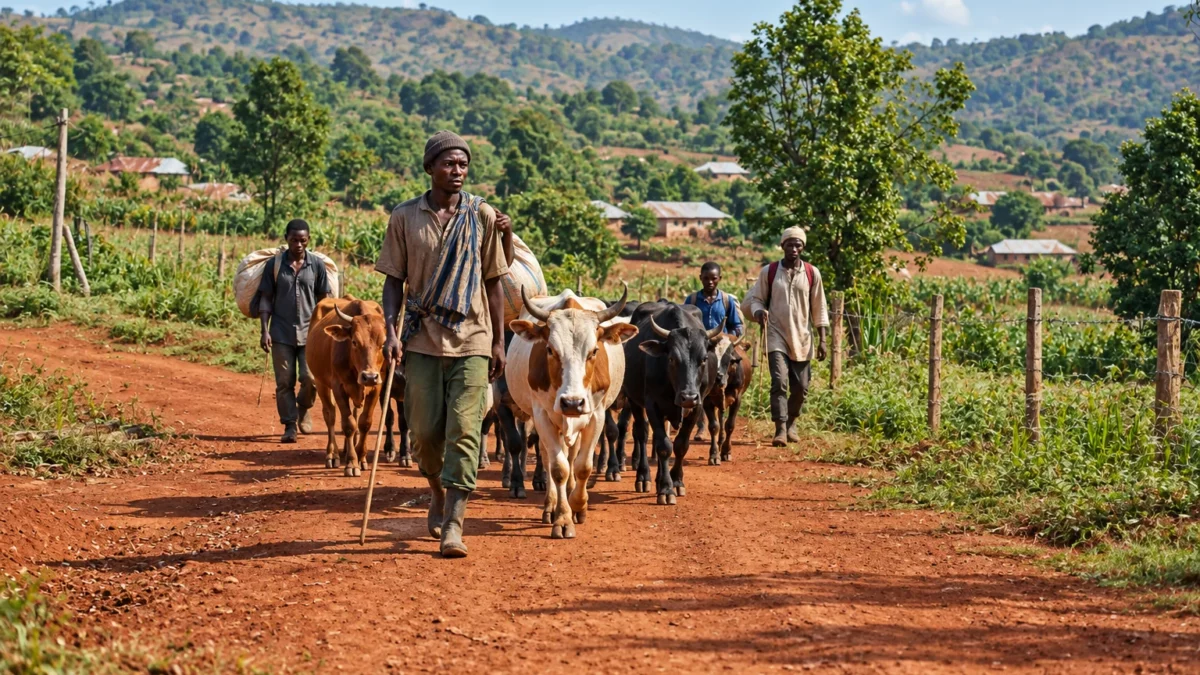
On the border between Mali and Guinea, the same routes serve trade, transhumance and mining. They can also become corridors for armed groups. For Conakry, the challenge is therefore to prevent a foothold without confusing security risks with the daily lives of border communities.
A nearby threat, but no established front in Guinea
The Group for the Support of Islam and Muslims (JNIM), affiliated with Al-Qaeda, has strengthened its presence in south-western Mali. This area borders Upper Guinea, a region of gold mines and commercial crossings. A study published on 25 October 2026 by the Konrad-Adenauer Foundation draws on 68 interviews conducted in June and July in Mali and Upper Guinea. Those consulted included local officials, civil society members, gold miners and people involved in transhumance. The study on border dynamics between Mali and Guinea describes the group’s gradual expansion and the possible use of local networks.
The findings nevertheless call for an essential distinction: the study identifies signs of infiltration and use of some Guinean border areas, but concludes neither that JNIM controls territory in Guinea nor that there is an organised armed front in the country. The organisation of networks, the presence of fighters and control of territory are different realities. Confusing them would turn a risk to be monitored into a situation that is already entrenched.
This caution is consistent with analysis by ACLED, an organisation that tracks conflict and political violence. It describes increased JNIM activity in southern Mali and risks of spillover into Guinea’s mining areas, while noting that the group has not established sustained operations inside Guinea. In March 2026, according to the Institute for Security Studies (ISS), 11 people suspected of belonging to JNIM were charged in gold-mining towns near the border. A charge indicates judicial proceedings, not established guilt.
Gold, mobility and public presence
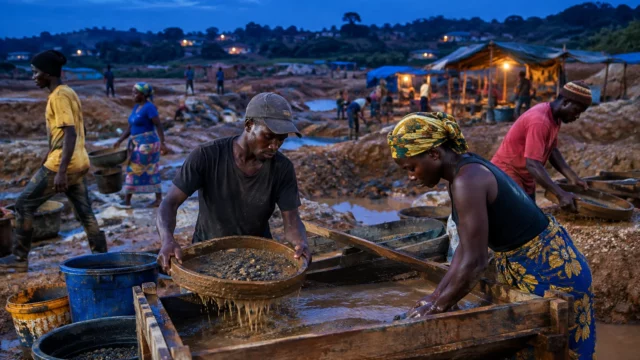
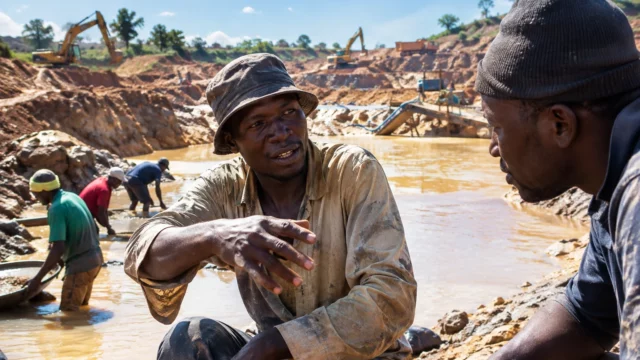
Gold-mining sites, transhumance routes and trade roads connect communities on both sides of the border. They are also spaces through which money, goods and information flow. The Konrad-Adenauer Foundation study says JNIM can exploit land-related tensions, disagreements over access to resources and weak public services. It does not present gold mining or pastoralism as automatic causes of radicalisation.
The distinction matters to residents. Gold miners and herders depend on these activities for their income and mobility. A response limited to checks or bans could make their work harder and fuel local disputes without necessarily drying up clandestine networks. Prevention also requires clear rules, mediation of land and pastoral conflicts, and effective access to justice and public services.
The economic stakes are far from marginal. The ISS reports that in 2025 artisanal gold accounted for 69% of Guinea’s exports, or 49.6 tonnes, according to the data it cites. Border regions are also linked to Mali’s supply routes. The corridor connecting Bamako to Kourémalé and then to the port of Conakry could become more important if routes through Senegal or Côte d’Ivoire remain disrupted. Securing these exchanges therefore matters to traders, mine workers and households, as well as the authorities.
The challenge lies in the reach of the state: its ability to maintain a presence and coordinate security, administration and civilian services in remote localities. Patrols can respond to an immediate threat. On their own, they cannot resolve trafficking, land disputes or a lack of trust in institutions. The ISS recommends, among other measures, coordination between the relevant ministries, better regulation of artisanal mining and stronger cooperation with neighbouring countries.
A response that goes beyond the national border
Guinea belongs to the Economic Community of West African States (ECOWAS), a regional cooperation organisation. Mali, meanwhile, has moved closer to Burkina Faso and Niger within the Alliance of Sahel States (AES), while relations between the two regional groupings have become fragmented. This context makes practical cooperation between neighbouring countries more important: information-sharing, local alerts, coordination at border posts and exchanges between civilian and security services.
The UN report on armed groups in the region describes the expansion of JNIM’s activities in Mali, particularly towards the west and against economic and logistical targets. This development sheds light on the risk to Guinea, but does not prove that the group is waging an armed campaign there. The situation in Guinea should be monitored on the basis of verified facts, without mechanically transposing dynamics observed in Mali or countries on the Gulf of Guinea.
In the short term, the indicators to watch include the evolution of cross-border networks, the security of trade and mining routes, and the ability of Guinean and Malian institutions to exchange reliable information. The protection of residents will also depend on how authorities involve communities, local organisations and economic actors in prevention efforts. The border is a place of life and trade; securing it for the long term means treating it as such, not merely as a line to police.