
 Algeria
 Egypt
 Libya
 Morocco
 Sudan
 Tunisia
 Benin
 Cabo Verde
 Côte d'Ivoire
 Ghana
 Guinea
 Guinea-Bissau
 Liberia
 Mali
 Mauritania
 Niger
 Nigeria
 Senegal
 Sierra Leone
 The Gambia
 Togo
 Cameroon
 Central African Republic
 Chad
 DR Congo
 Equatorial Guinea
 Gabon
 Republic of the Congo
 São Tomé and Príncipe
 Burundi
 Comoros
 Djibouti
 Eritrea
 Ethiopia
 Kenya
 Madagascar
 Malawi
 Mauritius
 Mozambique
 Rwanda
 Seychelles
 Somalia
 South Sudan
 Tanzania
 Uganda
 Angola
 Botswana
 Eswatini
 Lesotho
 Namibia
 South Africa
 Zambia
 Zimbabwe
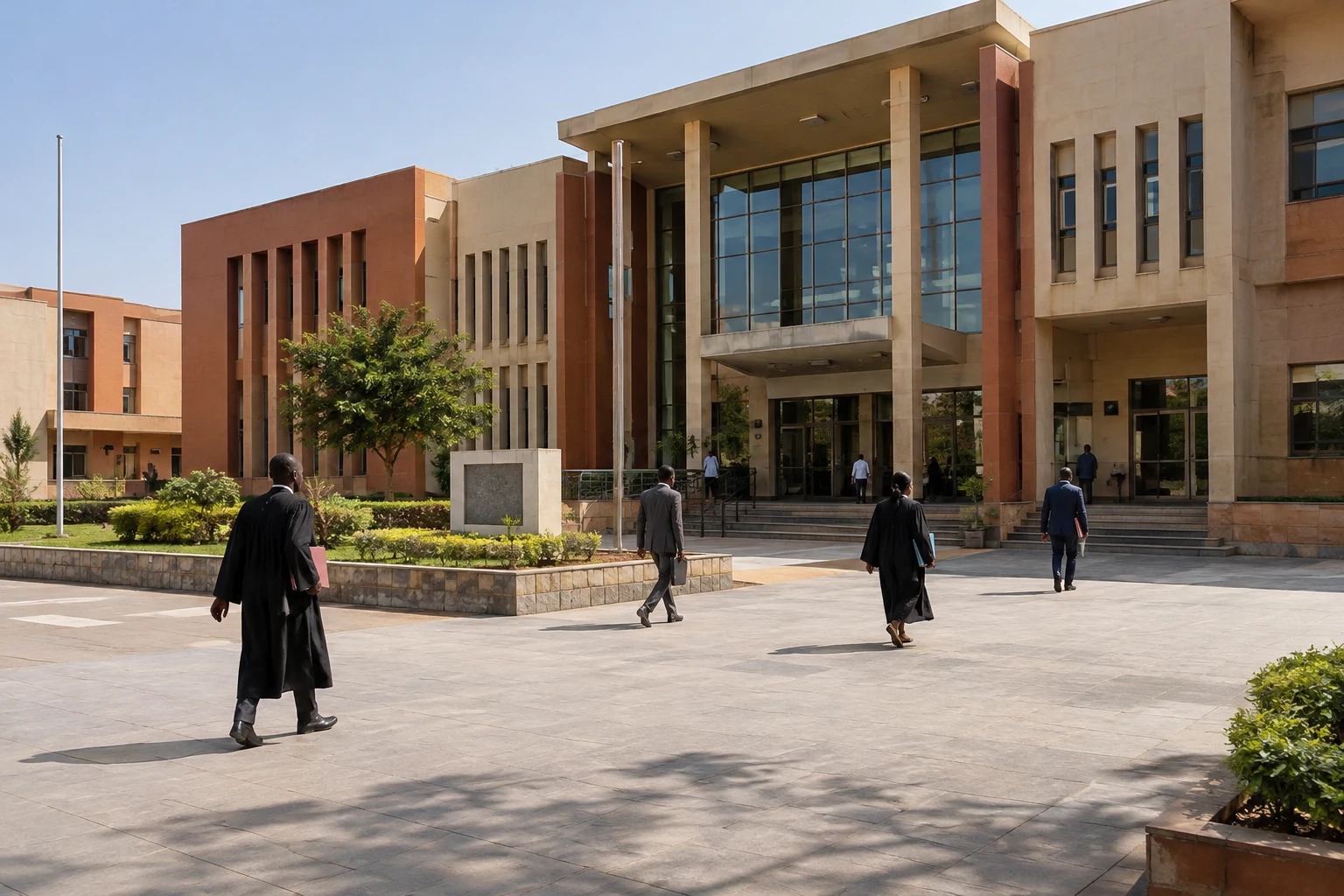
An extradition request is neither an arrest nor a finding of guilt. In Burkina Faso, the announcement of warrants targeting people living abroad marks a new stage in judicial proceedings, but also a test of procedural safeguards and cooperation between states.
A process that crosses borders
On 13 November 2026, Désiré Sawadogo, prosecutor-general at the Ouagadougou Court of Appeal, announced 21 warrants: 14 accompanied by extradition requests and seven others for which no request for surrender was specified. These figures were reported by several media outlets, including the Burkinabè outlet L’Essentiel and Africanews.
Those targeted include journalists, activists, former political officials and former officers living outside the country. Among the names made public are former minister Djibril Bassolé and commentators working for international media outlets. The alleged offences include criminal conspiracy to commit terrorism, financing terrorism, condoning terrorism and incitement to rebellion. These are allegations by the prosecutor’s office, not facts established by a court judgment.
The prosecutor also said that more than six cases involving more than 45 individuals and legal entities were being investigated by the specialist judicial unit responsible for prosecuting acts of terrorism. The Burkinabè authorities say they have sought cooperation from several countries, including Côte d’Ivoire, France and the United States. The announced requests do not mean that those states have agreed to extradition.
One case is being treated separately: Ivorian influencer Camille Makosso is reportedly not subject to an arrest warrant. Instead, Burkina Faso’s justice ministry is said to have asked for proceedings to be considered in his country of residence. The distinction matters: the measures announced are not the same for everyone named.
Security and public debate
Burkina Faso has been experiencing a severe security crisis linked to attacks by armed groups for several years. Since Captain Ibrahim Traoré took power in September 2022, the authorities have placed the fight against terrorism at the centre of their actions. In this context, online publications and statements made from abroad have become an arena for political confrontation.
The prosecutor’s office says some people allegedly provided support to the enemy or disseminated messages that could constitute terrorism-related offences. Not all those concerned have publicly responded to the announcements. It is therefore important to distinguish between the material presented by the prosecution and the evidence that courts will have to examine, as well as political or journalistic criticism, which does not in itself constitute a terrorist offence.
For people facing proceedings abroad, what happens next will depend on several stages: transmission of the requests, examination by the authorities and courts in the country concerned, and then any possible surrender to the Burkinabè authorities. Each state applies its own rules and legal commitments. Proceedings may therefore vary from one country to another and take time.
The case of Paul-Henri Damiba offers a point of reference on this issue without prejudging the current cases. The former head of the transition, who had been living in Togo since his overthrow in 2022, was handed over to Burkina Faso on 17 January 2026 after a favourable decision by the Togolese judiciary. The Togolese government cited guarantees given by Ouagadougou concerning his physical integrity and right to a fair trial. Confirmed by the Togolese and Burkinabè authorities, the extradition shows that judicial cooperation is possible, but depends on a decision by the state receiving the request.
A regional issue and safeguards to watch
The case is unfolding in a West Africa whose political frameworks have changed. Burkina Faso, Mali and Niger left the Economic Community of West African States (ECOWAS), a regional integration organisation, on 29 January 2025. They founded the Alliance of Sahel States (AES). ECOWAS had, however, announced the provisional maintenance of practical arrangements, particularly on movement, while new terms for relations were being sought. ECOWAS’s statement sets out the date of withdrawal and these transitional measures.
Burkina Faso’s requests to countries in the region and further afield will therefore test forms of cooperation that extend beyond political alliances. The authorities in the countries concerned will have to assess the judicial documents, the applicable rules and the safeguards offered. For families, lawyers and those facing proceedings, the immediate issue is practical: whether the proceedings can be challenged, followed and heard under fair conditions.
The next step will therefore be less about announcing warrants than about how each court approached handles them. It will also be important to see whether the charges are substantiated publicly and whether those targeted can respond to the allegations. In a context where national security and freedom of expression intersect, the credibility of the justice system will depend as much on combating violence as on respecting the rights of the defence.



