
 Algeria
 Egypt
 Libya
 Morocco
 Sudan
 Tunisia
 Benin
 Burkina Faso
 Cabo Verde
 Côte d'Ivoire
 Ghana
 Guinea
 Guinea-Bissau
 Liberia
 Mali
 Mauritania
 Niger
 Nigeria
 Senegal
 Sierra Leone
 The Gambia
 Togo
 Cameroon
 Central African Republic
 Chad
 DR Congo
 Equatorial Guinea
 Gabon
 Republic of the Congo
 São Tomé and Príncipe
 Burundi
 Comoros
 Djibouti
 Eritrea
 Ethiopia
 Kenya
 Madagascar
 Malawi
 Mauritius
 Mozambique
 Rwanda
 Seychelles
 Somalia
 South Sudan
 Tanzania
 Uganda
 Angola
 Botswana
 Eswatini
 Lesotho
 Namibia
 Zambia
 Zimbabwe
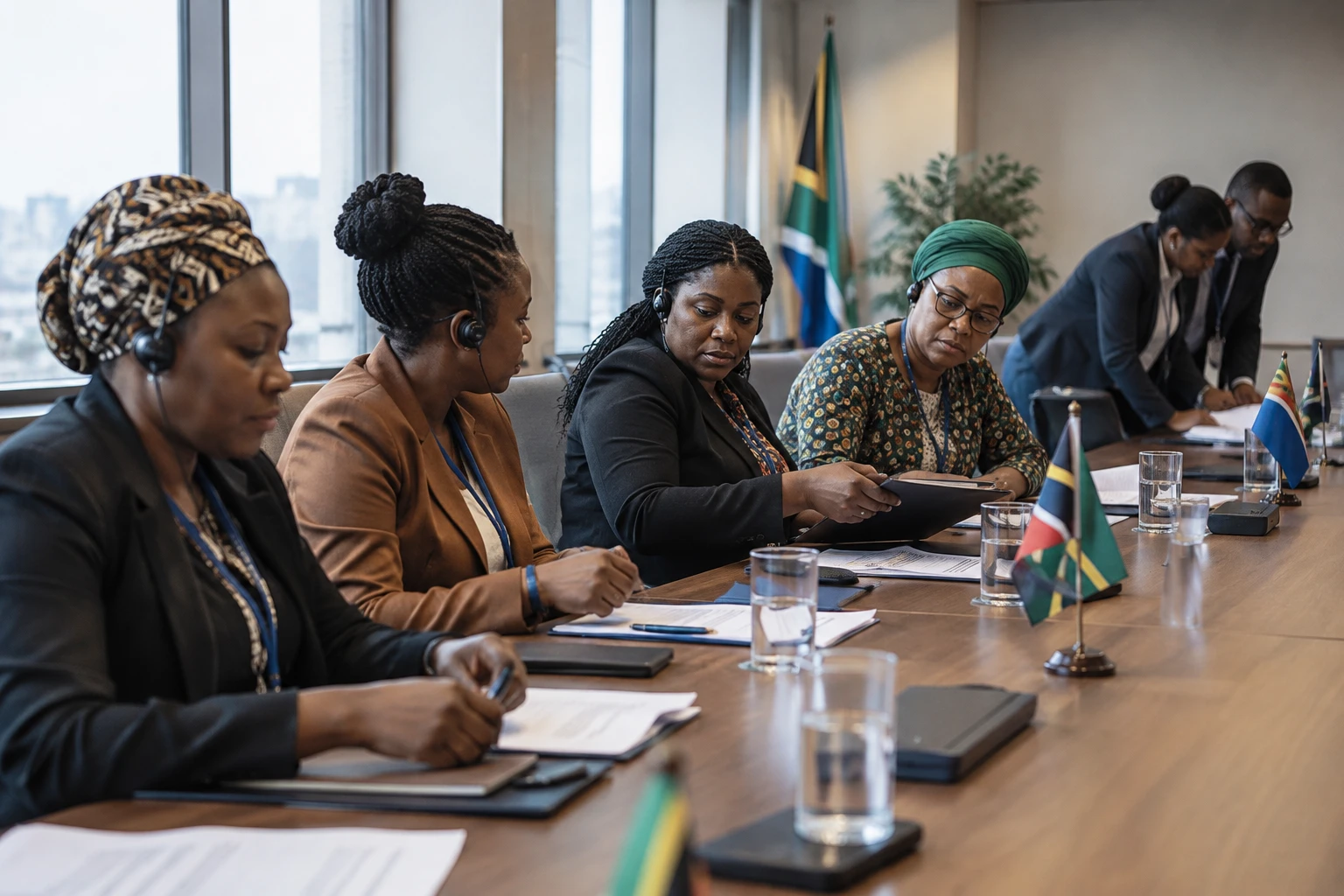
For a contestant selected by her country, missing the first days of an international pageant is more than a mere setback. In Puerto Rico, US visa restrictions have already ruled out African delegations and left other representatives in uncertainty.
A journey to San Juan complicated by US rules
The Miss Universe pageant is being held this year in San Juan, the capital of Puerto Rico, a US territory. The final of its 75th edition is scheduled for 24 November 2026. Contestants began arriving on 8 November for registration, rehearsals and preparatory activities.
This destination puts contestants up against US entry rules. Presidential Proclamation 10998, which took effect on 1 January 2026, restricts the issuing of visitor, student and exchange visas to nationals of several countries. Zimbabwe and Zambia are among those affected. The arrangements differ according to nationality and visa category.
Washington presents these restrictions as security and screening measures. For delegations, they mean uncertainty in practice, while the pageant preparations follow a fixed schedule.
Representatives prevented from travelling or still waiting
Roseanna Hall, who is due to represent Zimbabwe, said in a video posted on social media that she had still not obtained the authorisation needed for her trip. She was in South Africa trying to resolve her situation. The contestant said she hoped to travel to Puerto Rico despite repeated efforts.
Zambia’s situation has changed since the first warnings. The organisers of Miss Universe Zambia have withdrawn their representative, Mubanga Hatyoka, from the competition. In a statement, they linked the decision to US travel restrictions rather than a personal issue or an incomplete individual application. The US news agency Associated Press also reported the withdrawal of the Zambian contestant.
South Sudan’s representative, Adut Deng, was also still facing uncertainty at the time of the latest reports. The situation is not the same for every country: South Sudanese nationals face a broader suspension of visas than Zimbabwean or Zambian nationals. The rules provide for certain exceptions, but these do not guarantee a visa for a contestant.
Beyond the pageant, a question of representation
The immediate consequence is clear: a contestant can be selected and prepared by her national organisation, yet be unable to take part in the event. Teams then have to deal with costs already incurred, travel arrangements and communications around participation that may be cancelled at the last minute. Contestants, meanwhile, see months of preparation depend on an administrative decision outside the pageant’s control.
The significance goes beyond the stage and the titles. Miss Universe gives delegations a platform for international visibility. The absence of a representative does not mean her country is giving up that presence, but it reduces opportunities to showcase its cultural references and projects at a high-profile event.
The fact that Roseanna Hall travelled to South Africa to pursue her application also highlights Pretoria’s practical role, along with that of consular services, in regional mobility. This does not make South Africa the party directly targeted by the restrictions in this case: the reported problem concerns the contestants’ status and the US rules applicable to their nationality.
An issue being followed in the region and beyond
For southern Africa, these situations highlight the obstacles that can affect international travel, including for cultural and media events. They also raise questions for organisers of global competitions: can their schedules allow some leeway for contestants facing longer visa procedures or country-specific restrictions?
The Southern African Development Community (SADC), a political and economic community in southern Africa, is not the authority that issues these visas. But the effects of these decisions are being felt by nationals of the region and their national organisations. Across the continent, the cases of Zimbabwe, Zambia and South Sudan show that the restrictions do not affect all countries in the same way.
The next key date is the final on 24 November in San Juan. Until then, the outcome of Roseanna Hall and Adut Deng’s applications will determine whether their countries are represented on stage. For the Zambian contestant, withdrawal has already been announced. The pageant thus highlights a practical issue: whether a representative selected at home can reach the venue where her participation in an international event will be decided.



