
 Algeria
 Egypt
 Libya
 Morocco
 Sudan
 Tunisia
 Benin
 Burkina Faso
 Cabo Verde
 Côte d'Ivoire
 Ghana
 Guinea
 Guinea-Bissau
 Liberia
 Mali
 Mauritania
 Niger
 Nigeria
 Senegal
 Sierra Leone
 The Gambia
 Togo
 Cameroon
 Central African Republic
 Chad
 Equatorial Guinea
 Gabon
 Republic of the Congo
 São Tomé and Príncipe
 Burundi
 Comoros
 Djibouti
 Eritrea
 Ethiopia
 Kenya
 Madagascar
 Malawi
 Mauritius
 Mozambique
 Rwanda
 Seychelles
 Somalia
 South Sudan
 Tanzania
 Uganda
 Angola
 Botswana
 Eswatini
 Lesotho
 Namibia
 South Africa
 Zambia
 Zimbabwe
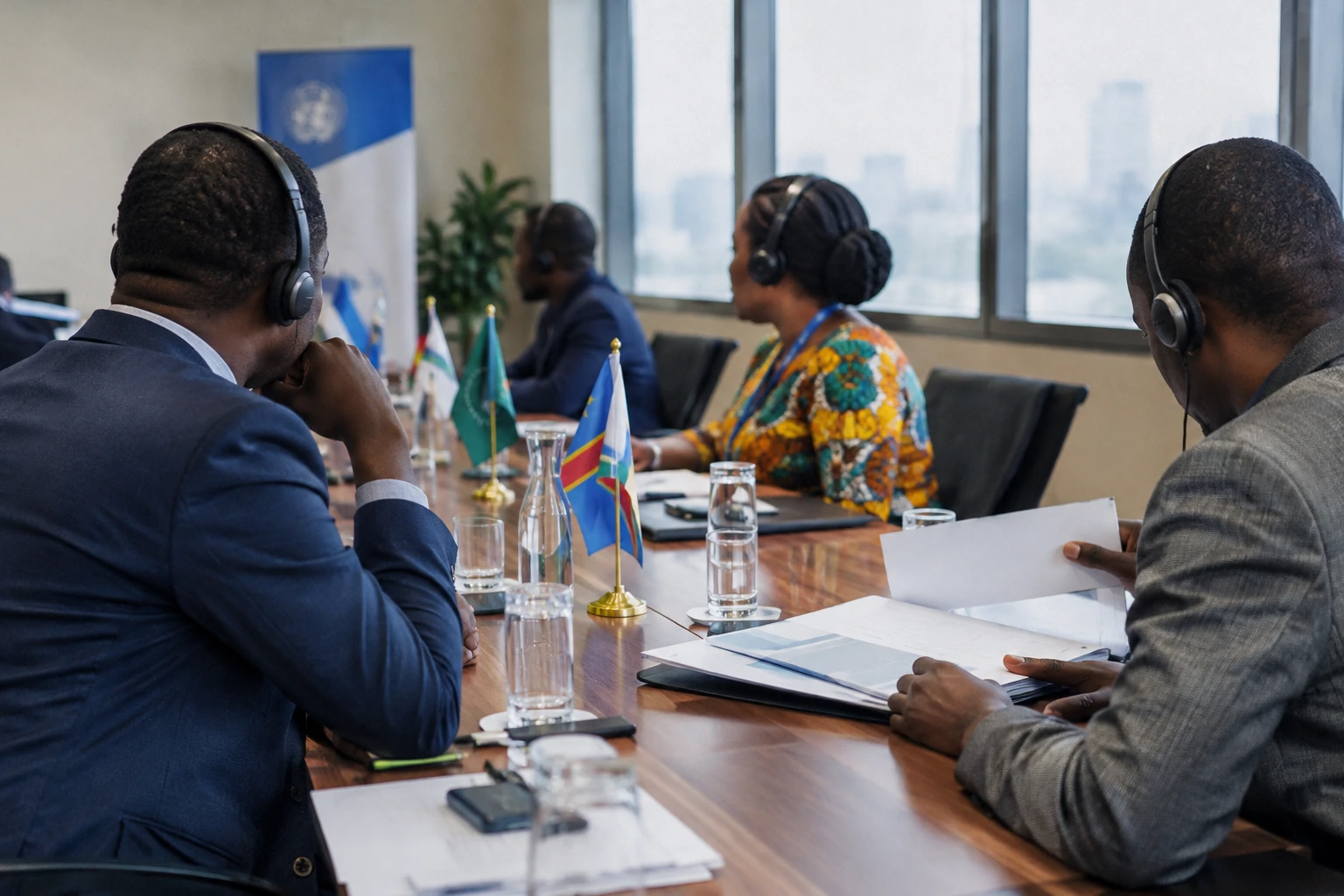
A health response cannot be measured solely by the sums announced. In the Democratic Republic of the Congo, six months after the Ebola outbreak began, the question is now very concrete: do the teams identifying cases, treating patients and alerting communities actually have the resources they were promised?
Funding announced, needs still evident
On 15 May 2026, Congolese authorities declared an outbreak linked to the Bundibugyo virus in Ituri province. Six months later, the national toll exceeds 11,000 cases and 5,000 deaths, according to figures provided by Médecins Sans Frontières (MSF). These figures are evolving and should be read as a reported toll, not a definitive count.
MSF’s concern is less about a lack of funding than about how it is translated into operational capacity. Hundreds of millions of dollars have been mobilised for the response, yet some health workers are reportedly still unpaid or untrained. Ambulances are said to be short of fuel, while some of the surveillance teams announced are reportedly absent from the field.
These findings are reported by MSF and relayed by Congolese media outlet Actualité.cd. In themselves, they do not constitute an independent audit of all the funds mobilised. They do, however, document a gap between the resources announced and the difficulties described by health workers and facilities.
For community health workers, the obstacle can be as simple as an unavailable phone or a lack of internet access. Without a way to send an alert quickly, a suspected infection risks going undetected. For healthcare workers, a shortage of protective equipment or technical support makes it harder to care for suspected patients.
Surveillance and local healthcare at the heart of the response
Epidemiological surveillance involves identifying sick people and their contacts, then tracking chains of transmission. MSF says that among Ebola patients treated by its teams in Ituri, only 9% had previously been identified by the system as contacts of a known case. This figure describes data collected by the organisation at its own facilities; it does not necessarily represent the whole province.
Weak case detection is also reflected in where deaths occur. MSF estimates that nearly two-thirds of the Ebola-related deaths reported during the month before its warning took place in communities, rather than treatment centres. This may point to delays in detection, difficulties accessing care or distrust of the services offered. The available data do not allow these situations to be attributed to a single cause.
Healthcare facilities themselves can become sites of transmission if they lack prevention resources. In Beni health zone, in North Kivu, MSF says nearly three-quarters of the patients concerned are thought to have contracted the disease in a medical facility. The organisation cites needs including sterilisation, water, chlorine and triage — the rapid assessment of patients according to urgency and risk of infection.
Private clinics, pharmacies and traditional healers are also part of the equation. Many people consult them first. If these providers receive neither clear guidance nor suitable equipment, efforts concentrated in specialised centres may miss a significant part of people’s care pathways.
Trust matters as much as logistics
Paying staff is not a mere administrative detail. Unpaid workers may become demotivated or go on strike at a time when contact tracing and patient care require a continuous presence. In August, sporadic strikes and salary claims had already been reported in Ituri. The Congolese health minister had then acknowledged irregularities in the lists of paid staff and announced verification measures, according to a report by Le Monde.
These details shed light on a wider problem: funds can be announced or allocated without their path to frontline teams being sufficiently visible. To establish precisely where the blockages lie, it is necessary to distinguish between pledges, sums actually disbursed, spending commitments and payments received. Public traceability and accessible oversight are therefore essential, without assuming that every difficulty involves misappropriation.
People’s trust also depends on the quality of services provided. When a health centre lacks equipment or a field team is unpaid, residents may doubt the response’s ability to protect them. In the east of the country, this relationship is built day by day with local leaders, healthcare workers and families, not simply through funding announcements from Kinshasa or abroad.
The crisis does not mean that nothing has been achieved. MSF notes improved diagnostic capacity, the expansion of isolation and treatment facilities, and community engagement activities. Clinical trials have also been launched. The organisation says it admitted around 1,500 confirmed patients to facilities it supports during the first six months. These advances coexist with significant gaps; recognising both helps to make sense of the response.
An outbreak that crosses DR Congo’s borders
The outbreak is affecting Ituri, North Kivu and Haut-Uele in particular, but population movements and regional trade make health cooperation essential. The World Health Organization declared a public health emergency of international concern on 17 May; the Africa Centres for Disease Control and Prevention, for their part, classified the situation as a continental public health emergency the following day.
The 2018–2020 outbreak in North Kivu and Ituri is a reminder of the challenges of responding in areas where insecurity complicates access to communities and continuity of care. The current situation calls for coordination between the Congolese authorities, the African Union and neighbouring countries, while keeping priorities defined on the ground in view.
The next measure of the response will therefore not be only the amount announced to fight the outbreak. It will be necessary to see whether workers are actually paid, whether local facilities receive equipment, whether contacts are traced and whether less well-covered areas are reached. For people in eastern DR Congo and communities in neighbouring countries alike, it is at this practical level that the ability to stop transmission will be tested.



