Algeria
 Egypt
 Libya
 Morocco
 Sudan
 Tunisia
 Benin
 Burkina Faso
 Cabo Verde
 Côte d'Ivoire
 Ghana
 Guinea
 Guinea-Bissau
 Liberia
 Mali
 Mauritania
 Niger
 Nigeria
 Senegal
 Sierra Leone
 The Gambia
 Togo
 Cameroon
 Central African Republic
 Chad
 DR Congo
 Equatorial Guinea
 Gabon
 Republic of the Congo
 São Tomé and Príncipe
 Burundi
 Comoros
 Djibouti
 Eritrea
 Ethiopia
 Kenya
 Malawi
 Mauritius
 Mozambique
 Rwanda
 Seychelles
 Somalia
 South Sudan
 Tanzania
 Uganda
 Angola
 Botswana
 Eswatini
 Lesotho
 Namibia
 South Africa
 Zambia
 Zimbabwe
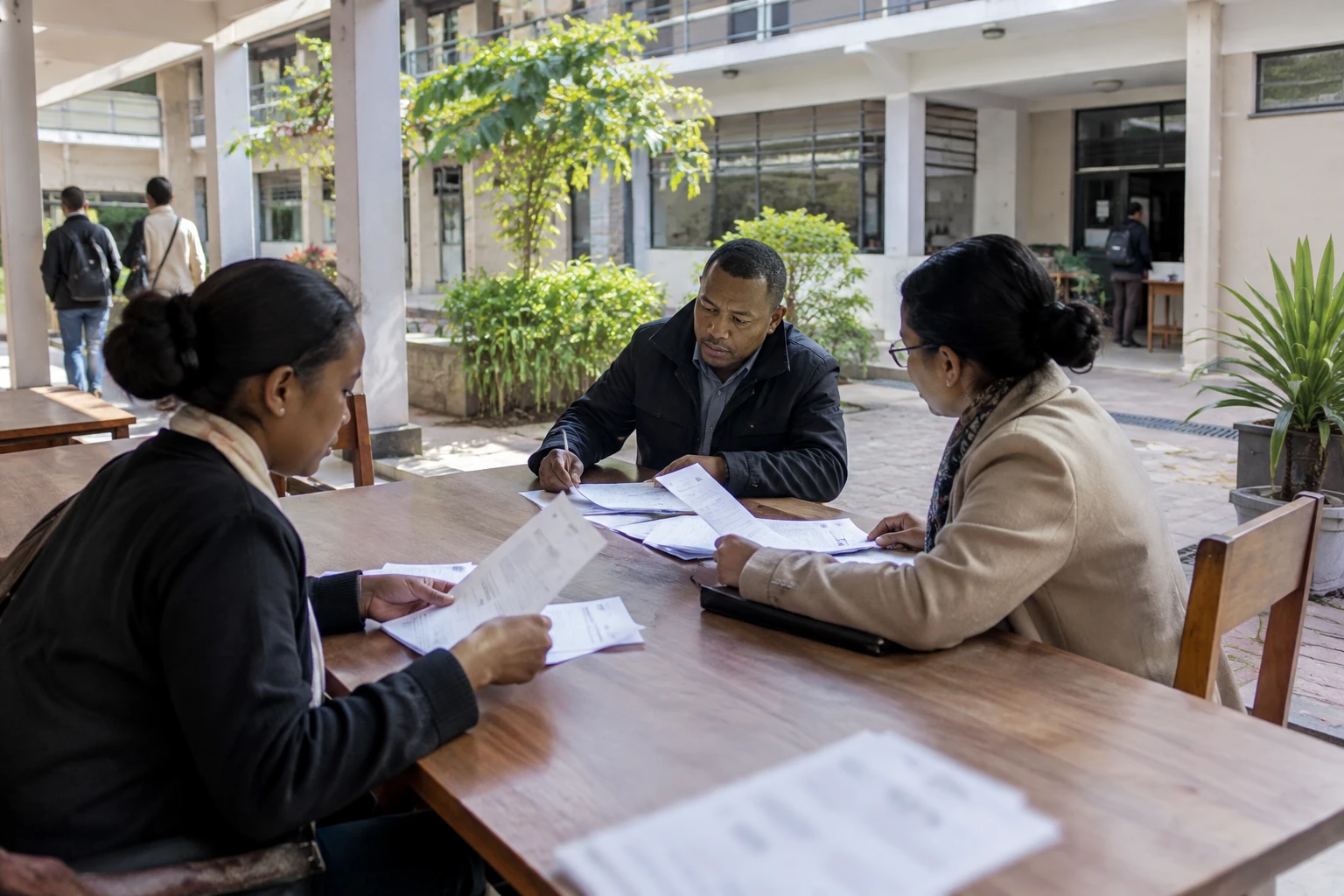
In Madagascar, a measure designed to remedy an omission from the electoral roll has become a source of distrust. Ahead of the constitutional referendum planned for 2027, political and civil society actors are proposing a review of the use of court orders that allow citizens missing from the rolls to vote.
An exception becomes a matter of trust
The debate centres on a practical question: how can the right to vote be guaranteed without opening the door to disputed registrations? In a country where the organisation of elections and the reliability of the electoral register are regularly debated, striking a balance between inclusion and oversight is crucial.
Madagascar is going through a period of political refoundation under the authority of President of the Refoundation Michaël Randrianirina. The announced milestones for 2027 include a constitutional referendum, ahead of other elections. The High Constitutional Court has ruled that, in principle, a referendum may precede the presidential election, while recalling that the conditions for a free and credible vote must be met.
The Big Island is a member of SADC, the Southern African Development Community, which brings together states in the region and has common principles on elections and democratic governance. Preparations for the referendum will therefore be followed at both national and regional level.
What the consultations proposed
On 9 and 10 November 2026, political leaders and civil society representatives met in Ivato, near Antananarivo, as part of preparatory consultations. Their proposals include abolishing voting orders for the referendum. The resolutions still need to be translated into legislation and considered by the relevant institutions: at this stage, they do not constitute a change in the law.
The mechanism is set out in Madagascar’s 2018 organic law on elections. A citizen who believes they have been omitted from the roll may apply to the courts and, if an order is issued, be added to the electoral register. The remedy therefore protects voters deprived of their right by an error or incomplete registration. Abolishing it without a replacement could penalise people who have genuinely been left off the rolls.
The municipal elections of 11 December 2024 gave the controversy particular prominence. The Independent National Electoral Commission (CENI) says that 60,650 voters were registered by court order for that election. A CENI report also refers to tens of thousands of applications filed with the courts. The figures differ depending on whether they count applications, rulings issued or voters actually registered.
In Antananarivo, nearly 35,000 new voters are said to have been affected, according to figures reported by Malagasy media. The CENI had said that some fokontany chiefs — of administrative neighbourhoods or villages — could draw up lists of unregistered people and request the necessary certificates on their behalf. This procedure fuelled suspicions of manipulation, particularly in the capital, where the opposition challenged the municipal election.
Overhauling the rolls without excluding voters
The controversy does not, by itself, prove that voters added by court order determined the result. In a public response after the elections, the CENI argued that the share of these voters who cast ballots did not change the outcome. Malagasy election watchdog SAFIDY, for its part, raised concerns about the transparency and inclusiveness of the process, while describing proceedings as generally calm at the polling stations it observed.
These points call for three questions to be distinguished: whether irregularities occurred, their scale and their effect on the results. A political accusation is not enough to establish fraud. But a procedure that is difficult to verify can undermine trust, even if there is no evidence that it changed the winner.
The government presents the overhaul of the electoral roll as a structural response. Michaël Randrianirina has said it should be completed by April 2027. The aim is to enable Malagasy citizens of voting age to register ahead of the announced elections. The timetable, however, leaves little room to verify registrations, handle complaints and correct errors before the referendum.
The stakes vary across the country. In Antananarivo, where the 2024 rolls accounted for a significant share of registrations by court order, public verification and the traceability of additions will be closely scrutinised. In rural areas or places far from administrative services, barriers to access may also prevent citizens from registering in time. A nationwide reform will therefore need to provide accessible procedures that do not rely solely on costly or difficult legal proceedings.
The rules have yet to be written
The November consultations have thus opened up a broader task than simply abolishing court orders. It will be necessary to specify who compiles the register, how citizens can check their registration, what deadlines apply to appeals and which authority oversees corrections. Publishing the rolls and allowing people to report omissions will be crucial to preserving access to the vote.
The next step will be legislative: proposals from the consultations must be turned into applicable rules. The 2027 timetable will also depend on the overhaul of the register and preparations for the referendum. For Madagascar’s institutions, the challenge is to restore trust without turning the fight against irregularities into a new obstacle to the right to vote.
At the level of SADC and the African Union, the issue highlights a tension found in several electoral processes across the continent: protecting the integrity of voter rolls while ensuring meaningful participation. In Madagascar, the referendum’s credibility will depend as much on the constitutional text put to voters as on whether every citizen can verify that they have a place on the register.