
 Algeria
 Egypt
 Libya
 Sudan
 Tunisia
 Benin
 Burkina Faso
 Cabo Verde
 Côte d'Ivoire
 Ghana
 Guinea
 Guinea-Bissau
 Liberia
 Mali
 Mauritania
 Niger
 Nigeria
 Senegal
 Sierra Leone
 The Gambia
 Togo
 Cameroon
 Central African Republic
 Chad
 DR Congo
 Equatorial Guinea
 Gabon
 Republic of the Congo
 São Tomé and Príncipe
 Burundi
 Comoros
 Djibouti
 Eritrea
 Ethiopia
 Kenya
 Madagascar
 Malawi
 Mauritius
 Mozambique
 Rwanda
 Seychelles
 Somalia
 South Sudan
 Tanzania
 Uganda
 Angola
 Botswana
 Eswatini
 Lesotho
 Namibia
 South Africa
 Zambia
 Zimbabwe
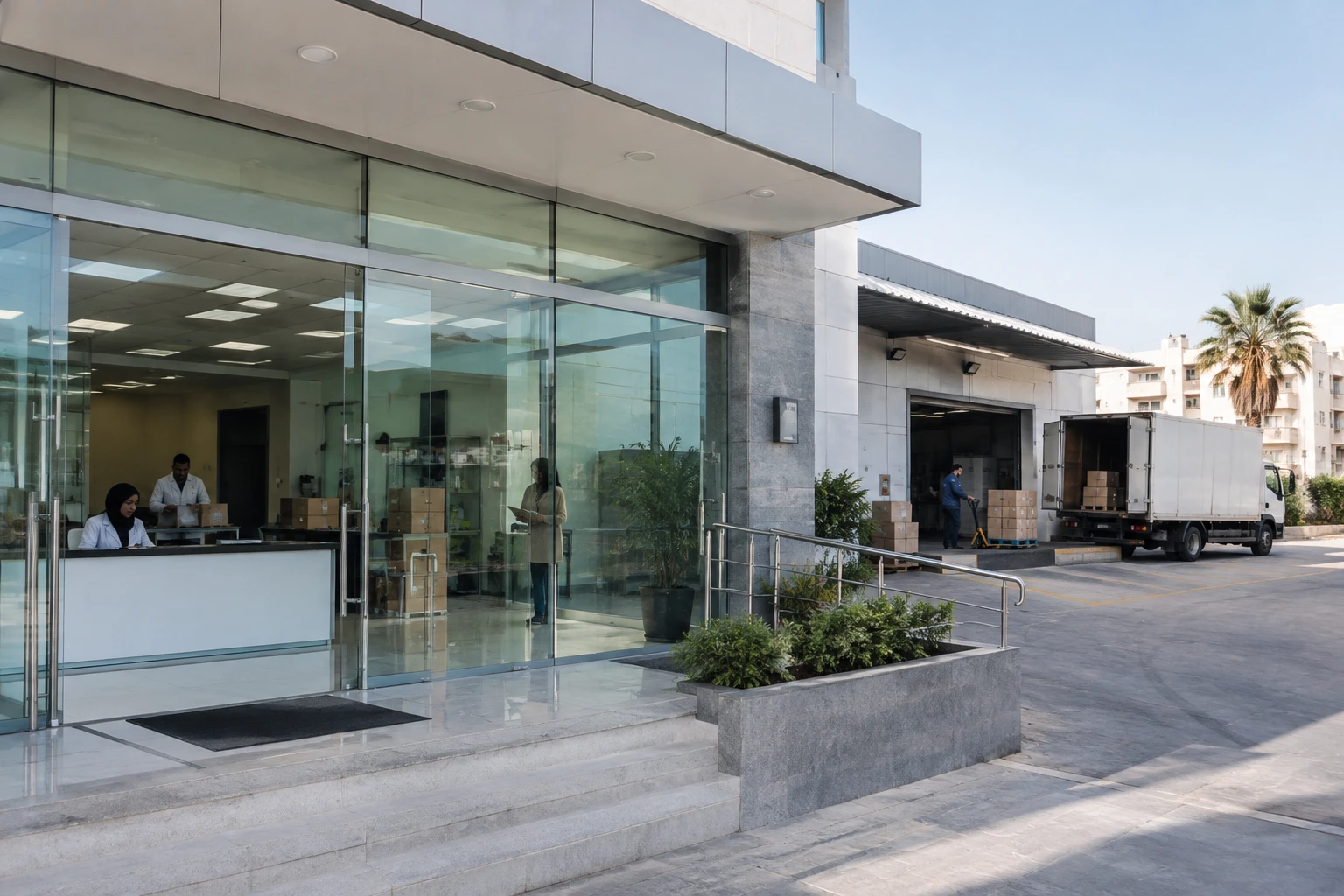
For a foreign pharmaceutical group, entering the Moroccan market need not mean building a factory: an agreement with a local distributor can already open the way to sales. But this commercial strategy alone does not answer the questions of availability, price and local production facing the sector.
First product line reaches Moroccan outlets
In mid-October 2026, Italian group PharmaNutra began marketing SiderAL, its range of iron-based food supplements, in Morocco. The launch is mentioned in its interim report covering the first nine months of the year, published on 9 November. The document does not specify expected sales volumes in the kingdom or the outlets involved.
The launch gives effect to an agreement concluded in September 2024 with Alcantara Pharmaceuticals, a company based in Casablanca. The partnership, made public on 9 April 2025, provided for the distribution of three product lines: SiderAL, SiderAL Drops and Apportal. Registration procedures were under way at the time. So far, only the marketing of SiderAL has been confirmed; no public information consulted establishes that the other two product lines are also available.
Choosing a Moroccan distributor allows PharmaNutra to rely on a local partner to access the market. It does not mean the group manufactures its products there. The available information makes no mention of any industrial production project in Morocco.
A significant market, but production to be strengthened
The move comes as the sector is developing. Morocco’s Competition Council estimates that the market for medicines for human use generated revenue of 25.9 billion dirhams in 2024. Over the same period, imports reached 10.6 billion dirhams, compared with exports of 1.6 billion. These figures indicate the weight of purchases from abroad, but do not in themselves sum up the country’s industrial capacity.
Morocco’s pharmaceutical industry also produces for its domestic market and for export. The Industry and Trade Ministry’s barometer puts its revenue at 30.4 billion dirhams in 2024, its value added at 8.8 billion and its investment at 4.4 billion. These indicators relate to industrial activity and do not measure exactly the same scope as pharmaceutical market sales.
The two realities coexist: an active industrial base and substantial imports. For the Moroccan authorities, the challenge therefore goes beyond the arrival of new brands. It also concerns the ability to strengthen supply chains, develop skills and expand local production. For companies, distributors and pharmacies, market access also depends on regulatory procedures, distribution conditions and patients’ purchasing power.
A food supplement is not a universal treatment
Iron addresses a genuine health need, but anaemia is not always caused by iron deficiency. Morocco’s 2024-2030 national multisectoral nutrition strategy sets targets for reducing anaemia among women of reproductive age and young children. It draws in particular on national data from 2019. Indicators vary according to age group and the definition used; they therefore do not justify treating all anaemia as a need for iron supplementation.
This distinction matters to consumers. A food supplement is not automatically a medicine or an appropriate response to every situation. The commercial launch alone provides no information on medical recommendations, the final price or the level of reimbursement. For households, these factors will have a tangible bearing on access to the product, in cities and in less well-served areas alike.
PharmaNutra’s international growth
For PharmaNutra, SiderAL is a core product line. According to the group’s interim results, it generated nearly €77 million in revenue in the first nine months of 2026, an annual increase of 18.7%. The group also reports that its international sales rose by 33.4% to €44.4 million. Morocco thus joins an expansion strategy based on partnerships and distribution, rather than an announced industrial investment in the country.
The significance of this presence is regional as well as national. Morocco, located in North Africa and a member of the African Union, is seeking to develop its pharmaceutical industry while ensuring supplies for its population. The available figures do not allow one to conclude that products launched in the kingdom will subsequently be distributed elsewhere on the continent. They do, however, show how local partner networks can serve as a gateway for foreign pharmaceutical companies into African markets.
What happens next will depend on details yet to be clarified: whether the agreement is extended to the other two product lines, SiderAL’s actual availability in pharmacies and the Moroccan partner’s distribution choices. Assessing the impact of the launch will require distinguishing the group’s commercial growth from its local effects on access, employment and production.



