Algeria
 Egypt
 Libya
 Sudan
 Tunisia
 Benin
 Burkina Faso
 Cabo Verde
 Côte d'Ivoire
 Ghana
 Guinea
 Guinea-Bissau
 Liberia
 Mali
 Mauritania
 Niger
 Nigeria
 Senegal
 Sierra Leone
 The Gambia
 Togo
 Cameroon
 Central African Republic
 Chad
 DR Congo
 Equatorial Guinea
 Gabon
 Republic of the Congo
 São Tomé and Príncipe
 Burundi
 Comoros
 Djibouti
 Eritrea
 Ethiopia
 Kenya
 Madagascar
 Malawi
 Mauritius
 Mozambique
 Rwanda
 Seychelles
 Somalia
 South Sudan
 Tanzania
 Uganda
 Angola
 Botswana
 Eswatini
 Lesotho
 Namibia
 South Africa
 Zambia
 Zimbabwe
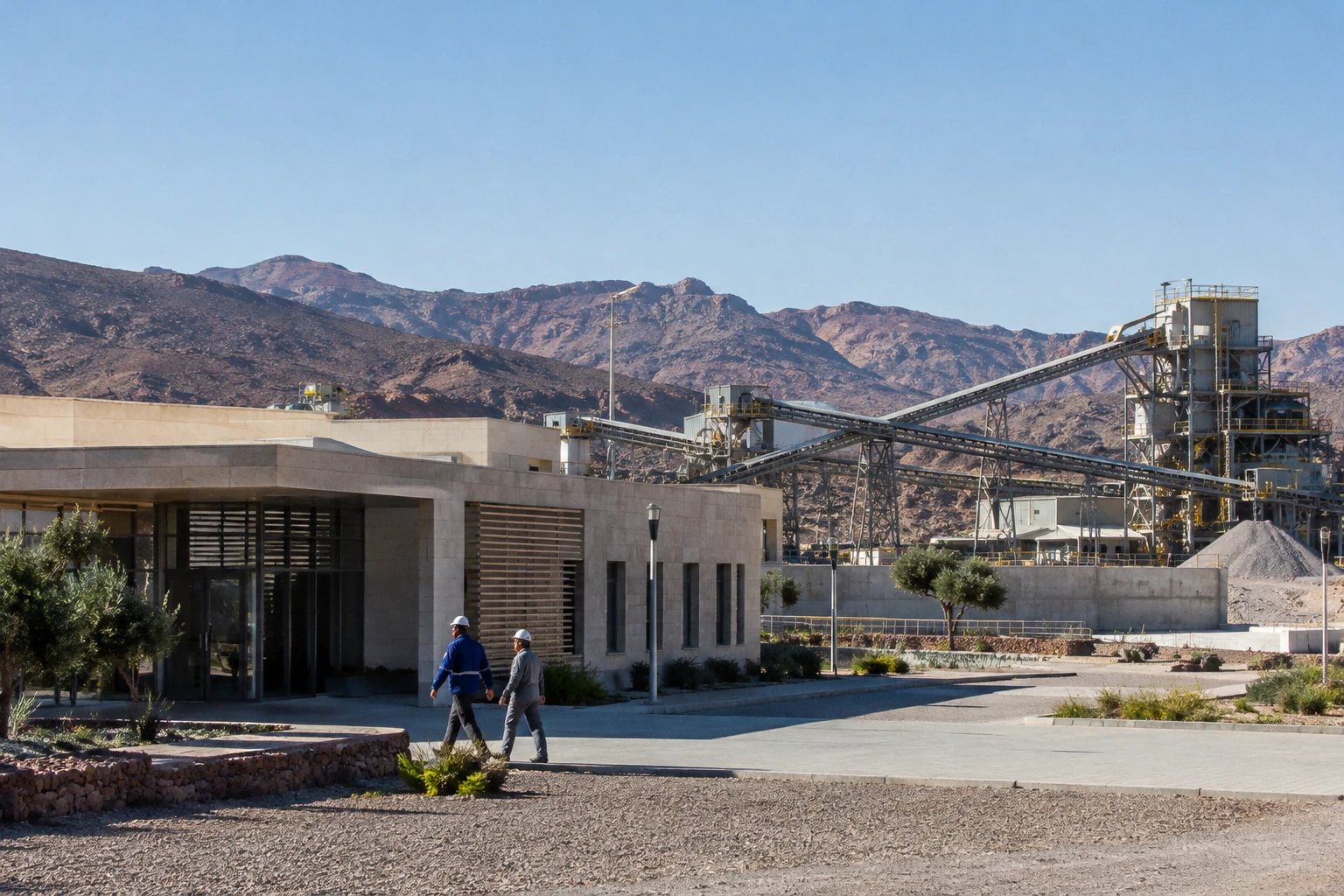
At Zgounder, the tonnes of ore processed now count as much as the metal extracted. For Morocco, the stakes go beyond the performance of a single mine: they concern public revenues, the role of local operators and how mining growth translates into benefits for communities.
A Moroccan mine changing scale
Located in the Anti-Atlas, Zgounder picked up pace after its new plant entered commercial production in late December 2024. Aya Gold & Silver, the Canadian group operating the site, produced 4.83 million ounces of silver in 2025, or nearly 150 tonnes.
The increase in capacity put Zgounder ahead of Imiter, another Moroccan silver mine operated by Société métallurgique d’Imiter, a subsidiary of Managem. This shift in leadership reflects a change in the national mining landscape, rather than simply a ranking between two sites.
In the Maghreb, Morocco is a member of the Arab Maghreb Union, which also brings together Algeria, Libya, Mauritania and Tunisia. Regional co-operation remains limited, but the mining sector already connects the country to global metals markets and investment strategies across the continent.
Annual target raised after strong nine months
On 12 November 2026, Aya tightened its production forecast for Zgounder: the company is now targeting between 5.6 million and 5.8 million ounces of silver for the year. The previous range was 5.2 million to 5.8 million ounces. It is therefore the lower end of the target that has risen, while the upper limit is unchanged.
Figures published for the first nine months indicate the scale of the remaining challenge. Zgounder produced 4.25 million ounces up to 30 September. In the third quarter, production reached nearly 1.50 million ounces, up 11% year on year. The final quarter will need to deliver at least 1.35 million ounces to meet the new annual floor.
Growth is also being supported by heavier use of the plant. In the third quarter, it processed an average of 4,096 tonnes of ore a day, a site record and a 23% increase year on year. The combined recovery rate — the share of silver recovered during processing — was 92%.
This increase remains a company forecast, not production already secured. Fourth-quarter results will show whether the improvement in processing throughput is sustained and whether extracted volumes follow suit. In 2025, annual production had already fallen short of the range the company had announced at the time.
Sales are up, but benefits need to be tracked
Volumes do not tell the whole economic story. In the first nine months of 2026, Zgounder’s silver sales rose by 10% compared with the same period in 2025. In the third quarter, Aya reported an average realised price of $69.32 per ounce of silver sold at the mine. Higher prices can support revenues, but do not in themselves guarantee equivalent benefits for the local economy.
A share of the revenue goes to the Moroccan state through the National Office of Hydrocarbons and Mines (ONHYM). Aya’s financial documents show a 3% royalty on Zgounder’s revenues. In the third quarter of 2026, this amounted to $2.586 million, according to the company. This is public revenue, but it does not show how the benefits are divided between the state, the operator, suppliers and communities near the site.
The published data shed light on production, sales and royalties. However, they are not enough to establish the impact of the ramp-up on local employment, purchases from Moroccan businesses or water resources. These issues matter to residents of mining areas, while revenues and financial results are of greater interest to public authorities and investors.
Transparency remains a challenge for the mining sector
The next immediate milestone is the publication of full-year 2026 results. These will make it possible to compare actual production with the raised target and examine changes in sales and royalties. More broadly, Zgounder’s trajectory brings a central question for Morocco back into focus: how can the country turn mining expansion into lasting domestic value, beyond exported volumes and reported revenues?
Across Africa, the experience is of interest to countries seeking to develop their resources while strengthening national benefits. The Moroccan case is a reminder that increased industrial capacity is only one indicator among many. Transparency over payments, links with local businesses and monitoring of local impacts will help measure what this growth changes in practice.