
 Algeria
 Egypt
 Libya
 Morocco
 Sudan
 Tunisia
 Benin
 Burkina Faso
 Cabo Verde
 Côte d'Ivoire
 Ghana
 Guinea
 Guinea-Bissau
 Liberia
 Mali
 Mauritania
 Niger
 Nigeria
 Senegal
 Sierra Leone
 The Gambia
 Togo
 Cameroon
 Central African Republic
 Chad
 DR Congo
 Equatorial Guinea
 Gabon
 Republic of the Congo
 São Tomé and Príncipe
 Burundi
 Comoros
 Djibouti
 Eritrea
 Ethiopia
 Kenya
 Madagascar
 Malawi
 Mauritius
 Mozambique
 Rwanda
 Seychelles
 Somalia
 South Sudan
 Tanzania
 Uganda
 Angola
 Botswana
 Eswatini
 Lesotho
 Namibia
 Zambia
 Zimbabwe
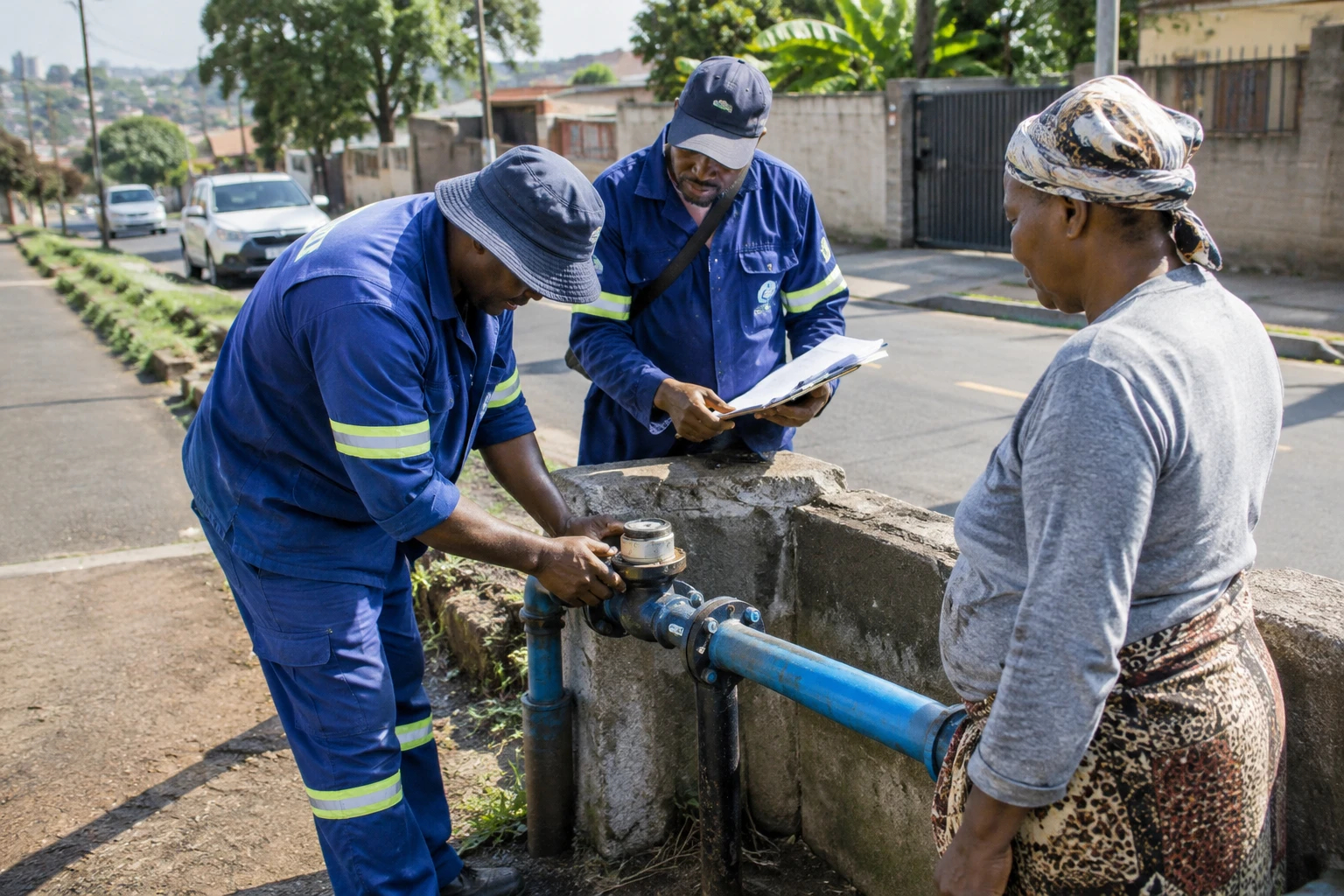
In a city where water does not flow regularly, political debate is not confined to Parliament. It is also measured by municipalities’ ability to meet people’s everyday needs. The local elections on 4 November turned that demand into an electoral warning for the African National Congress (ANC), in power since 1994.
A setback amid a political break
The municipal result follows another turning point. In 2024, the ANC won only about 40% of the vote in the national elections and lost its parliamentary majority for the first time. That defeat led to the formation of a coalition government, ending three decades of the party’s unchallenged dominance.
The current decline extends a longer trend. The ANC won 45.6% of the vote in the 2021 municipal elections. It has since had to contend with increased competition, notably from the Democratic Alliance (DA), the uMkhonto weSizwe (MK) party and the Economic Freedom Fighters (EFF).
South Africa is a parliamentary republic in which municipal elections determine the composition of local councils. These councils play a direct role in water distribution, sanitation, waste collection and other essential services. Their decisions are therefore felt differently across neighbourhoods, cities and rural areas.
The result, and the leadership’s response
Final results announced by the Independent Electoral Commission put the ANC on 30.76% of the vote, or about 31%. The DA came next with 24.64%, while MK won 9.76%. The ANC remains the largest party nationally, but its lead has narrowed sharply.
On 12 November, the National Executive Committee (NEC), the party’s governing body between conferences, met to review the vote and set the ANC’s course. Before the meeting, spokesperson Mahlengi Bhengu-Motsiri dismissed rumours that President Cyril Ramaphosa was about to resign. She said the party was not considering his departure.
The leadership also discussed the formation of municipal executives. In councils where no party has a majority, elected representatives must negotiate coalitions or support agreements. The ANC said its officials would review initial discussions with other parties and set a mandate for the team tasked with negotiations.
There are limits to what can be read into this public show of support. For now, it rules out the possibility of the leadership deciding that Ramaphosa should leave. It does not settle internal debates over responsibility for the setback, or the coalition choices that will shape local government.
Public services at the heart of the vote
The result reflects a more demanding relationship between voters and the party. For many residents, practical concerns include power cuts, water outages, failing sewerage networks, accumulating rubbish and a shortage of housing. These problems do not affect all communities in the same way.
In urban centres, the quality of services and infrastructure management directly affect households and businesses. In informal settlements and some rural areas, access to decent housing, water and public facilities remains a central concern. Anger over these shortcomings does not automatically translate into support for a single party: it can also fuel abstention or fragment the vote.
The ANC has often set its difficulties against the legacy of apartheid and colonialism. That legacy remains essential to understanding South African inequality. But the gap between political promises and the services residents actually receive also leaves local representatives facing demands for immediate results.
Coalitions put to the test in municipalities
The electoral setback does not mean the ANC is leaving power everywhere. The Electoral Commission still places it first in many municipalities, but its results mean more councils will have to negotiate. A coalition can provide a majority; it can also make budgets harder to pass and local policies more difficult to sustain if its partners fall out.
The talks are especially important in major urban centres, where transport, water, electricity and economic investment issues extend beyond neighbourhood boundaries. Municipal agreements will therefore be more than seat-counting exercises: they will determine who controls the local executive and how spending priorities are set.
The result also puts Ramaphosa under pressure on two fronts. He leads the country under a national coalition government, but remains head of an ANC whose electoral support is eroding. The local vote does not decide the national presidency. It does, however, increase political pressure on the party leadership and its ability to address voters’ concerns.
A signal watched across southern Africa
For neighbouring countries, the point is not to mechanically replicate South Africa’s result. It is to observe how long-standing electoral dominance changes as competition grows and voters judge administrations on the services they deliver. This shift matters to the Southern African Development Community (SADC), a regional organisation of which South Africa is a member, although the municipal vote alone does not alter the regional balance.
The next step will be the formation of municipal governments and their ability to function beyond short-term agreements. The NEC, for its part, will have to turn its promised introspection into clear political decisions. For voters, the test will be less about a leader’s survival than about tangible improvements to services. In South Africa, the vote has underlined that historical legacies matter, but do not exempt any party from being held to account for how it manages the present.
Final results are published by the South African Electoral Commission. The ANC has also published its own announcement of an extraordinary meeting of its National Executive Committee. Reactions to the leadership’s position on Ramaphosa were reported by South African media outlet Independent Online.



