Algeria
 Egypt
 Libya
 Morocco
 Sudan
 Tunisia
 Benin
 Burkina Faso
 Cabo Verde
 Côte d'Ivoire
 Ghana
 Guinea-Bissau
 Liberia
 Mali
 Mauritania
 Niger
 Nigeria
 Senegal
 Sierra Leone
 The Gambia
 Togo
 Cameroon
 Central African Republic
 Chad
 DR Congo
 Equatorial Guinea
 Gabon
 Republic of the Congo
 São Tomé and Príncipe
 Burundi
 Comoros
 Djibouti
 Eritrea
 Ethiopia
 Kenya
 Madagascar
 Malawi
 Mauritius
 Mozambique
 Rwanda
 Seychelles
 Somalia
 South Sudan
 Tanzania
 Uganda
 Angola
 Botswana
 Eswatini
 Lesotho
 Namibia
 South Africa
 Zambia
 Zimbabwe
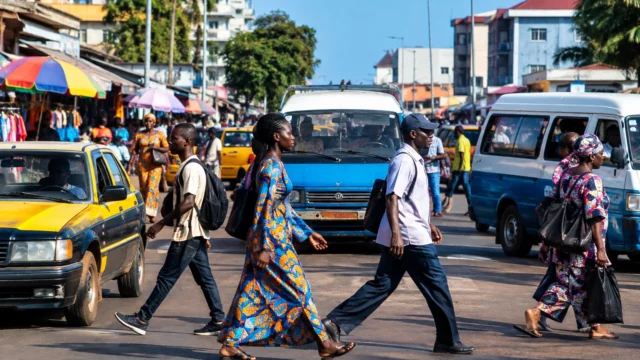
For the people of Conakry, the success of Simandou will not be measured solely by the ore shipped to international markets. It will also depend on roads, public transport and services capable of improving everyday journeys. Guinea is now seeking to attract private capital to prepare some of this infrastructure, but project announcements do not yet amount to secured financing.
A partnership to prepare projects
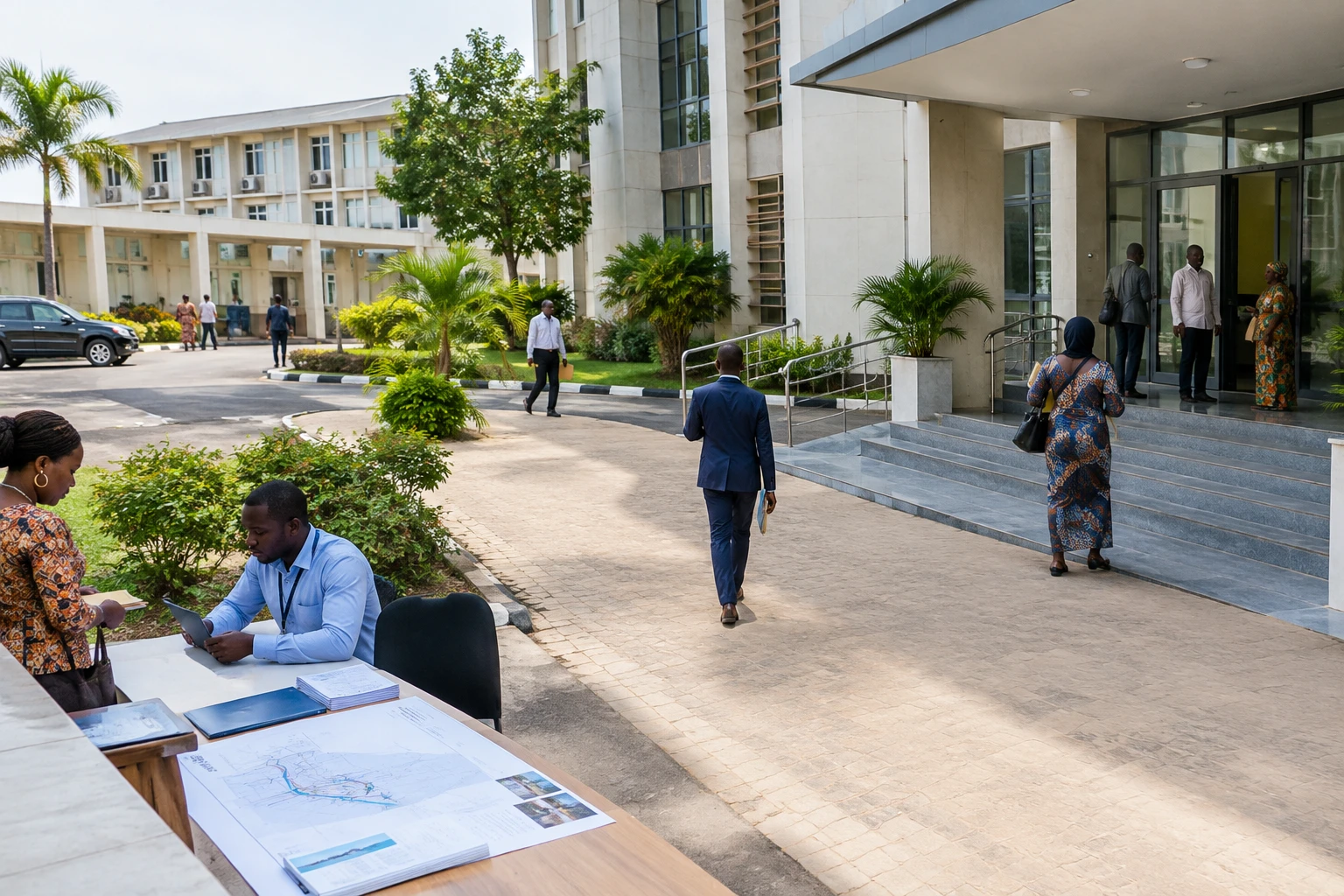
On 10 November 2026, the Guinean government and the International Finance Corporation (IFC), a member of the World Bank Group, signed a cooperation agreement on public-private partnerships, or PPPs. These contracts bring together a public authority and a private company to build or operate an asset under terms defined in advance. The agreement covers energy, infrastructure, transport, telecommunications and sanitation.
The IFC’s stated role is to help the authorities identify projects suited to this model, structure them and build the capacity of Guinean administrations. The cooperation forms part of the Simandou 2040 programme, which links mining development with broader infrastructure and economic transformation goals. However, the agreement is not, in itself, a promise to finance the projects.
The signing took place ahead of the Simandou Mining Summit, held from 11 to 14 November 2026 in Conakry and on Kassa Island. The event brings together authorities, operators and investors to discuss the country’s mining and industrial development. The timing gives Guinea a platform to present projects, but their implementation will depend on subsequent studies, contracts and investment decisions.
Projects announced, costs to be clarified
At the summit, the Guinea Development Board (GDB), Guinea’s development agency, presented five infrastructure and equipment projects valued at a total of $3.802bn, according to information published by Guinean business outlet Ecofinance Guinée. The figure represents a potential portfolio put before investors, not funds already secured.
Among the proposals is the Southern Coastal Road, planned to run 43 kilometres between Coléah and Coyah. Its cost is put at $2.6bn in the portfolio presented to investors. A GDB factsheet reportedly gives a different estimate of $2.48bn. These figures should therefore be read as project estimates, to be clarified as studies and financial structuring progress.
The portfolio also includes two public transport projects for Greater Conakry. The first proposes a 39-kilometre bus rapid transit system, known as BRT, with 51 stations, at an announced cost of $361m. The second, referred to by the acronym HRT in the project presentation, proposes a 35-kilometre urban railway line with 15 stations, at a cost of $693m. These figures and specifications are those communicated for the projects at this stage, and remain to be confirmed by technical documents and final decisions.
In July 2026, Transport Minister Ousmane Gaoual Diallo had outlined several options for modernising urban travel, including BRT and a tramway. Studies were advanced, but no final choice had been made. The inclusion of an urban railway project among the proposals presented is therefore not enough to establish that the option has been definitively selected.
The challenge: sharing risks and benefits
A PPP can reduce the share of upfront financing borne by the state. It does not eliminate public costs. Depending on the contract, the authority may have to pay the operator over time, guarantee certain revenues or assume some of the risks. The quality of studies, transparency in tendering and fiscal sustainability will therefore be crucial. Guinea’s finance ministry has presented rigour, transparency and good governance as principles for implementing the agreement.
The expected benefits will also vary among users. In Conakry, reliable public transport could cut journey times and improve access to jobs and services. But the route, fares and service to less central neighbourhoods will affect its usefulness in practice. For the coastal road, the impact will depend in particular on how it connects with existing routes, economic activity and the journeys of communities living alongside it.
At national level, the Simandou 2040 Vision sets out major road and rail ambitions. The challenge is to connect regions and production hubs, beyond infrastructure serving only the transport of mining output. This distinction matters: an export corridor can support the economy, but its day-to-day impact will depend on links with cities, rural areas, local businesses and ordinary transport networks.
A West African dimension to be realised
Guinea is a member of the Economic Community of West African States (ECOWAS), which aims, among other things, to facilitate regional trade. Better-connected roads and networks can strengthen these exchanges, provided national infrastructure links up with cross-border corridors and neighbouring countries’ policies. For now, the agreement with the IFC covers the preparation of Guinean projects: it guarantees neither their construction nor their regional integration.
The next step will therefore be less spectacular than an announcement of billions: to establish a roadmap, publish robust studies, clarify costs and make the allocation of risks clear. Only then can the projects presented move from a portfolio of opportunities to bankable contracts, and ultimately to services that benefit Guineans.