Algeria
 Egypt
 Libya
 Morocco
 Sudan
 Tunisia
 Benin
 Burkina Faso
 Cabo Verde
 Côte d'Ivoire
 Ghana
 Guinea
 Guinea-Bissau
 Liberia
 Mali
 Mauritania
 Niger
 Nigeria
 Sierra Leone
 The Gambia
 Togo
 Cameroon
 Central African Republic
 Chad
 DR Congo
 Equatorial Guinea
 Gabon
 Republic of the Congo
 São Tomé and Príncipe
 Burundi
 Comoros
 Djibouti
 Eritrea
 Ethiopia
 Kenya
 Madagascar
 Malawi
 Mauritius
 Mozambique
 Rwanda
 Seychelles
 Somalia
 South Sudan
 Tanzania
 Uganda
 Angola
 Botswana
 Eswatini
 Lesotho
 Namibia
 South Africa
 Zambia
 Zimbabwe
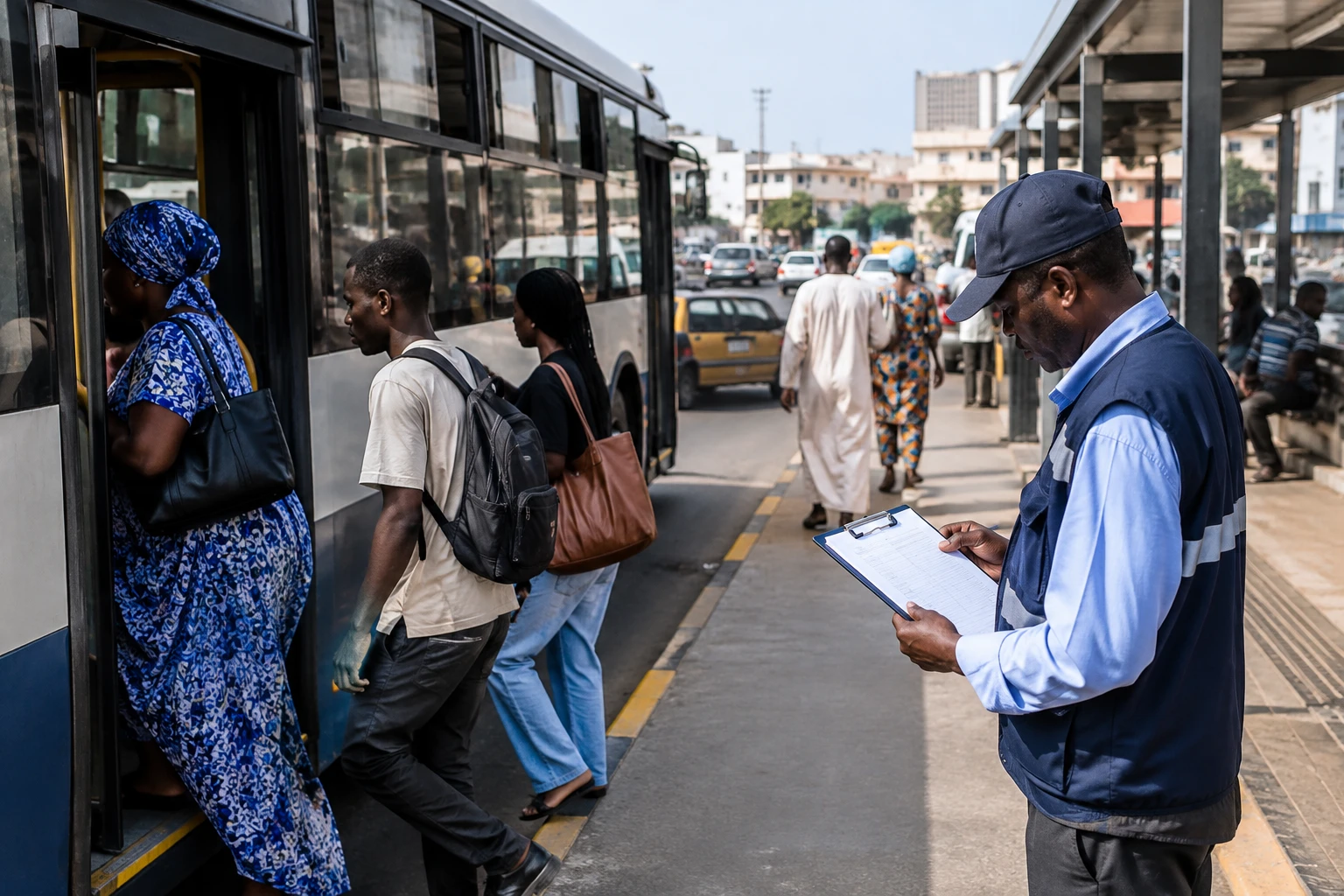
In Dakar, disagreement over the 2027 budget is about more than figures lined up in a document. It raises an immediate question: how can public services and investment be funded if parliament and the government cannot agree on state revenue and spending?
A deadlock spreading from one committee to another
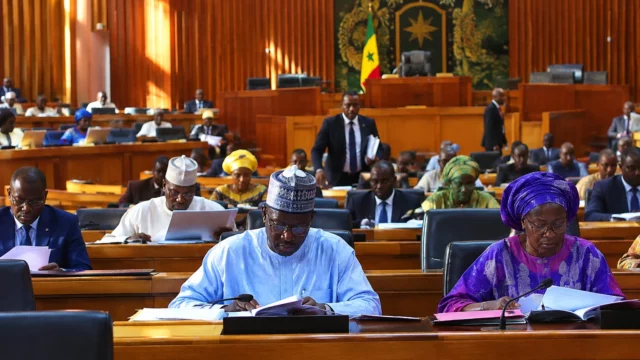
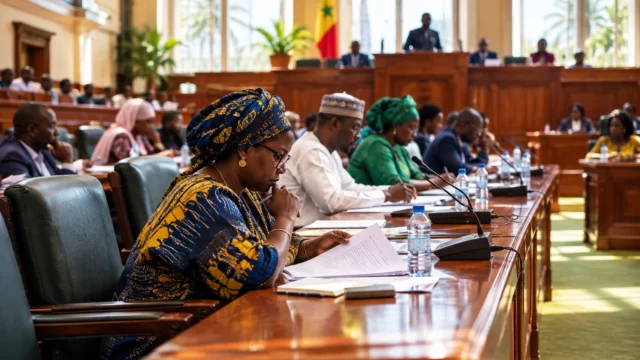
The standoff comes amid acute tensions over Senegal’s public finances. It pits two camps from the same political cycle, which began in 2024, against each other: the executive led by President Bassirou Diomaye Faye and a National Assembly dominated by Pastef, the party of Ousmane Sonko, who has become the institution’s president. The disagreement concerns both the budget assumptions and how to restore the public accounts.
On 3 November 2026, the National Assembly rejected the draft supplementary finance bill for the current year. A week later, on 7 November, its Finance and Budgetary Control Committee rejected the revenue and public debt forecasts for 2027, as well as several institutional budgets. The committee continued its examination ministry by ministry. On 11 November, draft budgets for, among others, Energy and Petroleum, Mines and Geology, and National Education were not adopted in committee. The National Assembly’s statement confirms the first rejection on 7 November. Senegalese media reported the votes on 11 November.
These decisions do not yet amount to a rejection of the budget by the National Assembly in plenary session. They do, however, mark a serious political and procedural conflict: without agreement on revenue, majority MPs say it makes no sense to examine the ministerial spending that depends on it.
Disputed forecasts, concrete spending at stake
Pastef MPs have challenged the draft’s “budgetary integrity”. In particular, they object to the 2027 budget being based on assumptions linked to the 2026 supplementary bill, which was rejected on 3 November. They have also denounced discrepancies in the deficit figures and the late transmission of documents. These are the elected representatives’ grievances; on their own, they do not establish that the forecasts are wrong. The government, for its part, is defending a draft prepared and presented according to the budget timetable.
The disagreement could have effects beyond the chamber. The minister responsible for local authorities has warned that financial transfers to local authorities could be delayed. For municipalities and departments, these resources help fund local services and projects. A prolonged deadlock could therefore affect areas differently, although committee votes do not in themselves mean that payments have already been interrupted.
Energy and mining choices are also central to the decisions. According to figures presented to the committee, the Energy and Petroleum Ministry’s draft represents about CFA francs 217.3bn in commitment authorisations and CFA francs 64.2bn in payment credits. The former set the limit on spending the state may commit to; the latter are the payments planned for the year. In a country that has only recently become a hydrocarbon producer, these allocations affect investment, supply and subsidy choices. They also concern households, particularly electricity and gas consumers, and energy-dependent businesses.
The government also presented the 2027 budget amid an expected slowdown in activity and pressure on public finances. The citizen’s budget document published by the ministry forecasts growth of 2.4% in 2027 and describes pressures linked, among other things, to rising oil and gas prices. These assumptions help explain what is at stake in the vote, but remain forecasts, not settled outcomes.
The IMF is still awaiting a final decision
The parliamentary timetable is being closely watched by the International Monetary Fund. On 1 September 2026, IMF staff and the Senegalese authorities reached a staff-level agreement on a 36-month programme worth about $2.2bn. This is not yet final approval: it must be cleared by the Fund’s management and executive board. The IMF also says that corrective measures and financing assurances are needed before that stage.
The programme aims, among other things, to restore macroeconomic stability, make debt sustainable and strengthen public revenue. But the negotiations are not simply about complying with the demands of an external partner. In Senegal, the debate also concerns transparency in the public accounts, the level of social spending, public investment and how the budgetary burden should be shared. Political agreement in parliament is therefore crucial to the legitimacy of the choices, as well as their implementation.
The deadline for examining the budget has prompted talk of possible implementation by decree if the Assembly does not take a decision in time. This remains an institutional possibility, not an announced decision. It would not resolve the political disagreement and could prolong uncertainty for local authorities, businesses and financial partners over the predictability of state spending.
A test for institutions and the region
The budget crisis is part of wider tensions between the president and his former ally Ousmane Sonko. It follows the rejection of the 2026 supplementary budget and comes as debate over a possible dissolution of the Assembly adds a political dimension to the financial timetable. For Senegalese people, the crucial issue remains practical: the decisions to come will determine the pace of investment, transfers to local authorities and the state’s ability to meet its commitments.
At the West African level, the case is also of interest to the West African Economic and Monetary Union (WAEMU), whose members share, among other things, the CFA franc and a common budgetary surveillance framework. Senegal’s difficulties are not representative of the whole region, but they underscore the importance of national choices to the financial stability of an integrated economic area. The next steps to watch are the bill’s consideration in plenary session, followed by the IMF’s decision on the programme. Until then, the committee votes signal deep disagreement, without yet determining the budget’s final fate.