
 Algeria
 Egypt
 Libya
 Morocco
 Sudan
 Tunisia
 Benin
 Burkina Faso
 Cabo Verde
 Côte d'Ivoire
 Ghana
 Guinea
 Guinea-Bissau
 Liberia
 Mali
 Mauritania
 Nigeria
 Senegal
 Sierra Leone
 The Gambia
 Togo
 Cameroon
 Central African Republic
 Chad
 DR Congo
 Equatorial Guinea
 Gabon
 Republic of the Congo
 São Tomé and Príncipe
 Burundi
 Comoros
 Djibouti
 Eritrea
 Ethiopia
 Kenya
 Madagascar
 Malawi
 Mauritius
 Mozambique
 Rwanda
 Seychelles
 Somalia
 South Sudan
 Tanzania
 Uganda
 Angola
 Botswana
 Eswatini
 Lesotho
 Namibia
 South Africa
 Zambia
 Zimbabwe
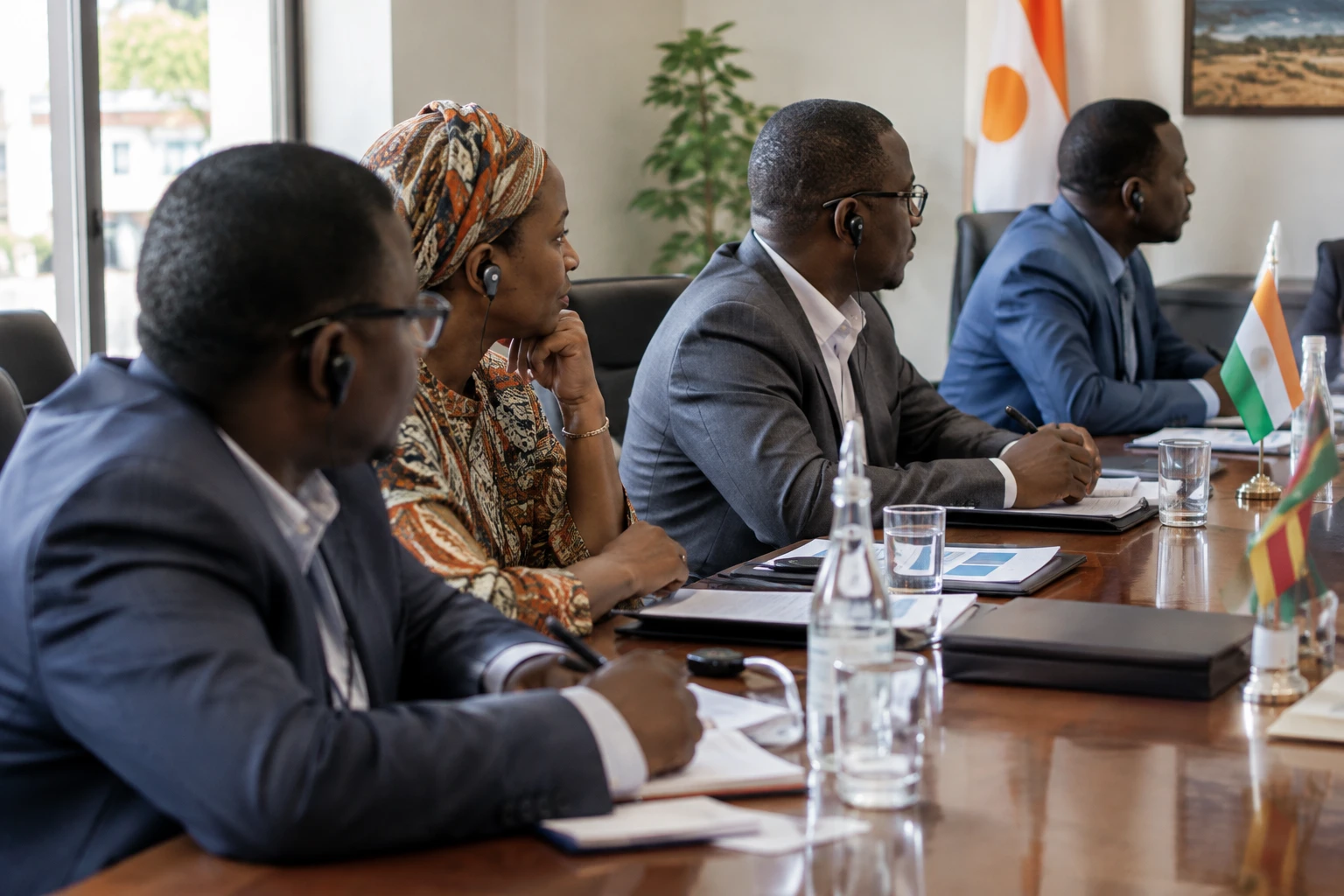
For a trader at Niamey’s Grand Market, the announced rent increase is more than an extra line on the list of expenses. It could reshape the finances of a small shop: should the cost be absorbed, passed on in prices or prompt a temporary halt to business? The dispute thus brings the financing of infrastructure into conflict with traders’ ability to continue operating in the market.
A market at the heart of activity in Niamey
The Grand Market is one of the main commercial centres in Niger’s capital. Its shops support a range of businesses and connect retailers, suppliers and customers. When some close, the effects can extend beyond the businesses directly affected: sellers lose revenue, while residents may have less choice or need to turn to other outlets. The scale of these effects has not been quantified, however.
The issue comes amid regional realignment. Niger, Mali and Burkina Faso left the Economic Community of West African States (ECOWAS), a regional integration organisation, on 29 January 2025. They created the Alliance of Sahel States (AES) as a framework for cooperation between them. This development does not determine the rent dispute, but it is a reminder that trade and the cost of living remain practical concerns for the region’s economic actors.
Revised rate, shops closed
For several days, some traders have been taking part in a strike, with shops remaining closed. The rate charged by the Société de construction et de gestion des marchés (SOCOGEM), which manages the Grand Market, is now set at 5,000 CFA francs per square metre. For an 8 sq m shop, that amounts to 40,000 CFA francs, compared with 6,320 previously, according to figures released on the issue.
The difference is immediate for tenants who have to pay the rent. But what they can actually afford also depends on turnover, the season, other expenses and the circumstances of each business. The available information does not specify how many shops are affected or traders’ income levels. It is therefore important not to generalise about the whole market based only on the rent examples.
SOCOGEM says the previous rates, which had been in effect since 1987, were revised following a final court ruling. It also cites the need to maintain and secure the facilities and modernise the equipment. These are the reasons given by the management company; the court documents and details of how the new rates were calculated have not been made public in the information consulted here.
Dialogue must clarify the terms of implementation
On 10 November, Niger’s Minister of Trade and Industry, Abdoulaye Seydou, brought together representatives of the traders and SOCOGEM’s management. The meeting aims to break the deadlock through consultation. The minister stressed the need to respect court rulings and urged the parties to seek common ground. No figure for a deal or timetable for ending the strike was announced in the official account.
A meeting can restore dialogue, but it does not necessarily resolve the question of how costs should be shared. For traders, the issue is whether they can pay the new rents without jeopardising the continuity of their businesses. For the management company, the challenge is to fund the market’s upkeep and security. Customers, meanwhile, could be affected if some of the costs are reflected in prices, although no price rises attributable to this measure have been documented so far.
The discussion would be clearer if the parties made public the information underpinning the revision: the court ruling, the calculation method, the condition of the facilities and the planned works. A precise explanation would also help distinguish the rate set, the payment terms and any support measures. Without this information, traders and market users have little basis on which to assess the practical consequences of the new rate.
A local management issue with wider implications
The dispute primarily concerns a market in Niamey. It nevertheless raises a question facing many cities: how can shared commercial facilities be maintained without undermining the small businesses that keep them going? The answer depends on local rules, court decisions and the ability of managers and traders to negotiate workable arrangements.
For now, the key issue to watch is what follows the ministerial meeting: a full resumption of business, continuation of the strike or a new agreement between the parties. SOCOGEM presents the court ruling as the basis for the revision, while traders point to the burden of the increase on their economic circumstances. Resolving the crisis will therefore depend as much on the application of the law as on practical solutions that allow the market to function.
Sources consulted: account of the meeting by Niger’s Ministry of Trade, Nigerien press coverage of the rates and SOCOGEM’s position, ECOWAS statement on the effective date of Niger’s withdrawal.



