Algeria
 Egypt
 Libya
 Morocco
 Sudan
 Tunisia
 Benin
 Burkina Faso
 Cabo Verde
 Côte d'Ivoire
 Ghana
 Guinea
 Guinea-Bissau
 Liberia
 Mali
 Mauritania
 Niger
 Nigeria
 Senegal
 Sierra Leone
 The Gambia
 Togo
 Cameroon
 Central African Republic
 Chad
 DR Congo
 Equatorial Guinea
 Gabon
 Republic of the Congo
 São Tomé and Príncipe
 Burundi
 Comoros
 Djibouti
 Eritrea
 Ethiopia
 Kenya
 Madagascar
 Malawi
 Mauritius
 Mozambique
 Rwanda
 Seychelles
 Somalia
 South Sudan
 Tanzania
 Angola
 Botswana
 Eswatini
 Lesotho
 Namibia
 South Africa
 Zambia
 Zimbabwe
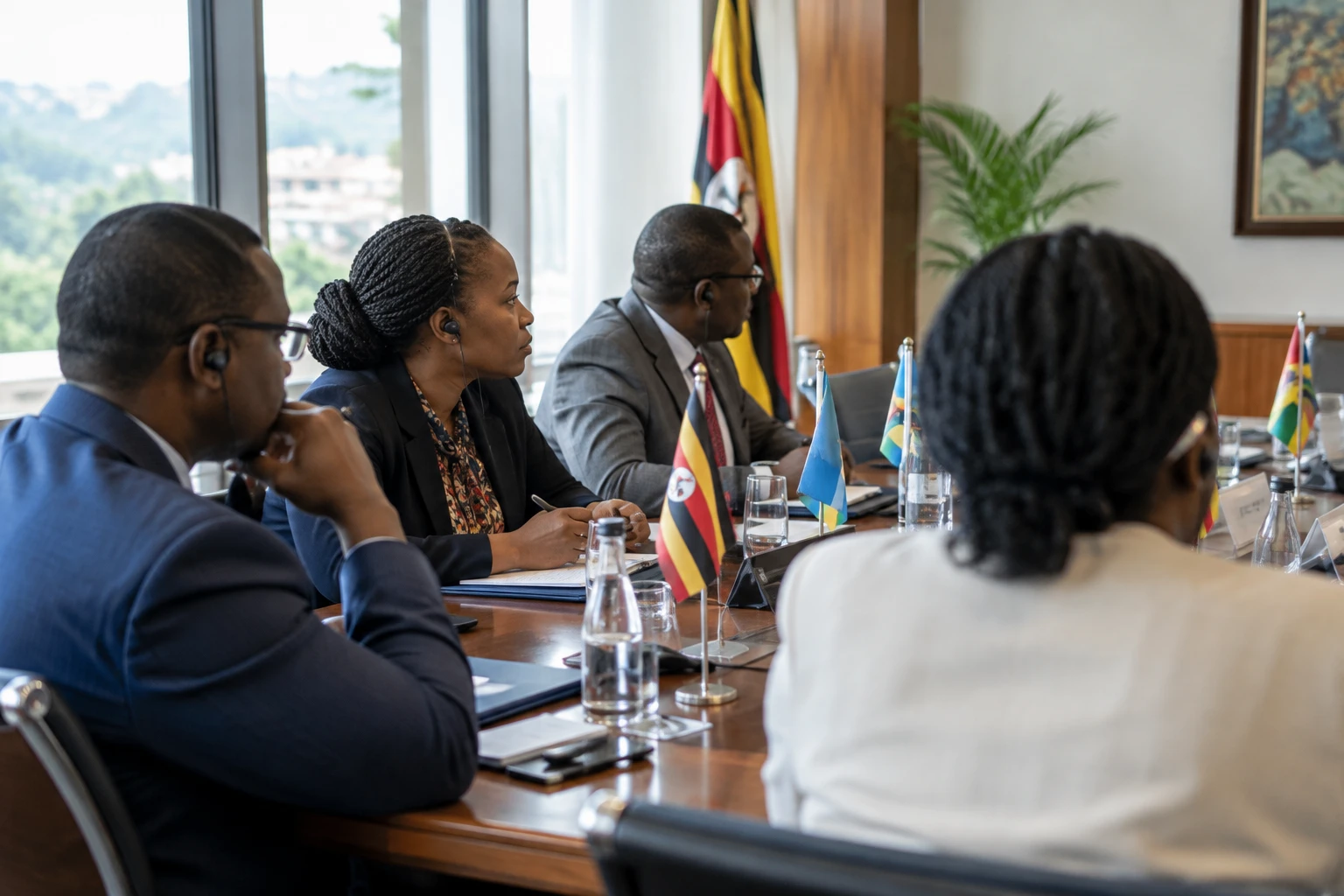
Can a public dispute over a top government post reshape the balance of power in Uganda? The question arose after a series of messages from the army chief targeting Vice-President Jessica Alupo, followed by the disappearance of his account on X.
A political row amid an already closely watched succession
In Kampala, Muhoozi Kainerugaba’s statements are not those of an ordinary military official. The son of President Yoweri Museveni and head of the Uganda People’s Defence Force (UPDF), he occupies a position at the intersection of the state apparatus, the army and debates about the post-Museveni era.
The president, who has been in power since 1986, began a new term after the January 2026 election. Muhoozi, for his part, has made clear his presidential ambitions for 2031, the next scheduled election. This proximity between military command and political prospects fuels questions about succession, although no official heir has been designated.
The issue goes beyond personal rivalries. In Uganda, civilian and military institutions play a central role in the balance of power. In cities and rural districts alike, political tensions can affect public expression, party activity and trust in institutions. Statements by an army chief are therefore watched particularly closely.
What is known about the messages and the account’s disappearance
On Monday 9 November, Muhoozi posted messages targeting Jessica Alupo and telling her to prepare to leave the vice-presidency. He also raised the idea of taking the position himself and said he would run the government using military methods. The account associated with the general was inaccessible on Tuesday 10 November.
The available information does not establish whether Muhoozi deactivated his account or whether X suspended it. The page’s disappearance is therefore not, by itself, proof of a sanction by the platform. The general had already left the social network before returning a few days later, in January 2025. Previous interruptions are a reason not to jump to conclusions.
The established facts are the reported posts and the account’s inaccessibility. The general’s precise motives, like those of the platform, remain uncertain. East African media have also reported on the episode, while Uganda’s Constitution sets out the rules governing the vice-presidency and presidential succession.
A legal clarification is necessary. The Constitution does not provide for the vice-president to succeed automatically to the presidency if the vice-presidency becomes vacant: the president appoints a replacement, subject to parliamentary approval, within a maximum of 14 days. However, if the presidency becomes vacant, the vice-president assumes presidential duties until a new election, which should normally be held within six months. These provisions clearly distinguish the two offices.
Military remarks, a civilian issue
The significance of the messages lies not only in their tone. When the head of the armed forces intervenes publicly in a dispute targeting a civilian official, the boundary between military authority and political competition becomes an institutional issue. This does not mean that a change of office is under way: Jessica Alupo remains vice-president, and the published messages do not replace constitutional procedures.
Livingstone Sewanyana, a Ugandan human rights activist cited in the available reports, believes Muhoozi’s threats should be taken seriously. He notes that earlier statements targeting opposition figures were followed by consequences. This assessment should be attributed to him: it does not, on its own, prove a causal link in every case.
For political leaders, this episode may heighten uncertainty around appointments and succession. For the public, the issue is different: preserving predictable rules, civilian oversight of the armed forces and the ability to challenge decisions without intimidation. The effects may also vary across regions and sectors. Political actors in the capital are at the forefront of this rivalry, while citizens, businesses and informal-economy workers primarily need stable institutions and functioning services.
Regional significance to be watched cautiously
Uganda is a member of the East African Community (EAC), a regional organisation bringing together several neighbouring countries around economic and political co-operation. Tensions between civilian and military institutions therefore resonate beyond national borders, in a region where state stability and predictable transitions matter for co-operation.
The disappearance of the X account settles nothing and does not prove that political change is under way. The next indications will be institutional: an official response, a decision concerning Jessica Alupo’s post or clarification from Muhoozi about his ambitions. Until then, the available facts point to a rivalry played out in public, but do not support claims that a succession or transfer of office is under way.