
 Algeria
 Egypt
 Libya
 Morocco
 Sudan
 Tunisia
 Benin
 Burkina Faso
 Cabo Verde
 Côte d'Ivoire
 Ghana
 Guinea
 Guinea-Bissau
 Liberia
 Mali
 Mauritania
 Niger
 Nigeria
 Senegal
 Sierra Leone
 The Gambia
 Togo
 Cameroon
 Central African Republic
 Chad
 Equatorial Guinea
 Gabon
 Republic of the Congo
 São Tomé and Príncipe
 Burundi
 Comoros
 Djibouti
 Eritrea
 Ethiopia
 Kenya
 Madagascar
 Malawi
 Mauritius
 Mozambique
 Rwanda
 Seychelles
 Somalia
 South Sudan
 Tanzania
 Uganda
 Angola
 Botswana
 Eswatini
 Lesotho
 Namibia
 South Africa
 Zambia
 Zimbabwe
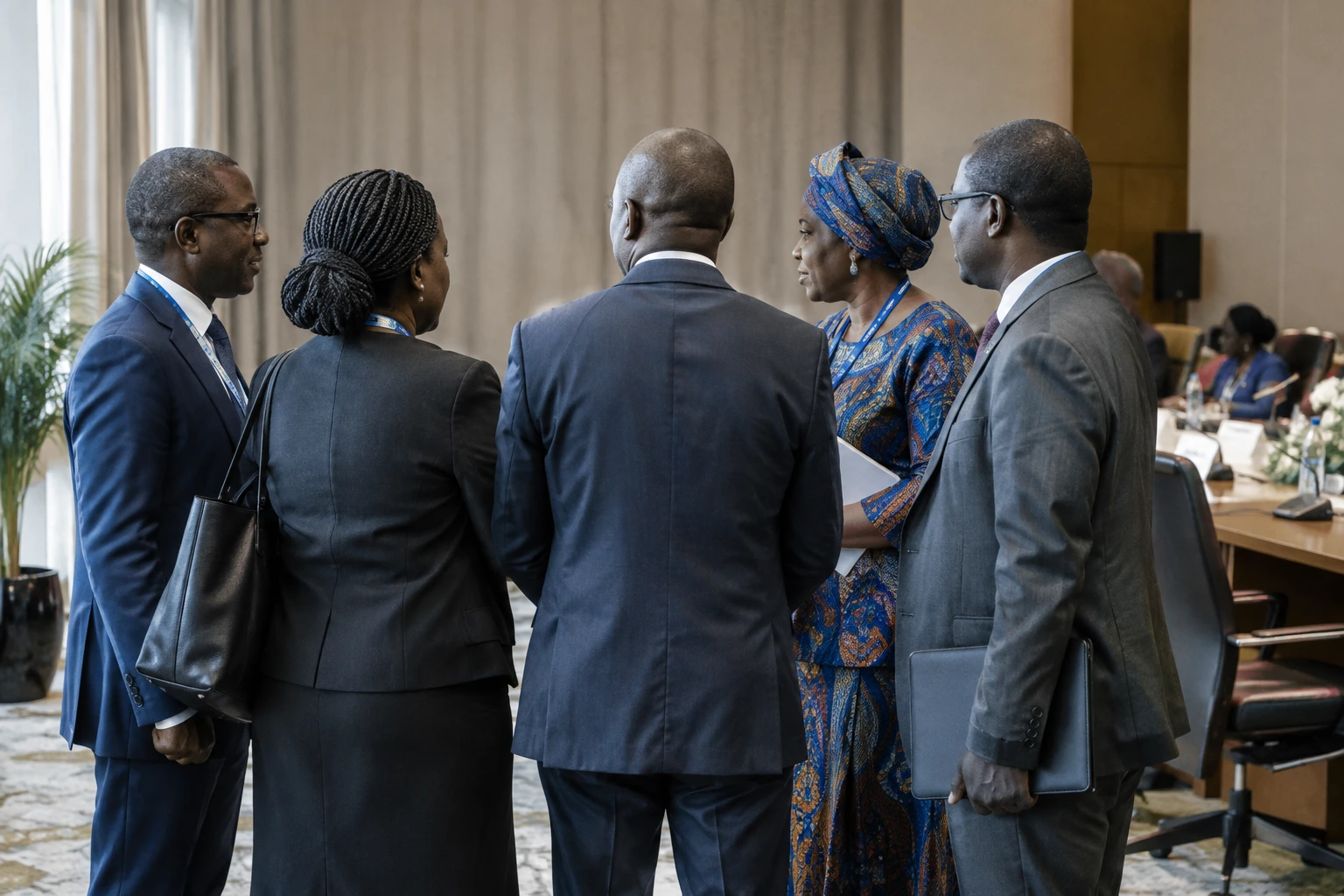
In Phnom Penh on 16 November, member states of the International Organisation of La Francophonie (OIF) will have to choose its leadership as internal divisions become increasingly visible. The decision will shape the organisation’s future, as well as its relations with the Democratic Republic of the Congo and Rwanda, two countries at odds for years over the war in eastern DR Congo.
An unprecedented vote in a diverse organisation
The 20th Francophonie Summit takes place on 15 and 16 November 2026 in the Cambodian capital. The election of the secretary-general for the 2027-2030 term is on the agenda. The OIF brings together 90 states and governments, but only its 53 full members take part in the selection. The distinction matters: the organisation also includes associate members and observers. The summit’s timetable and institutional framework have been confirmed by the OIF.
Until now, leaders have appointed the secretary-general by consensus. Rules adopted in 2022 in Djerba now provide for a simple-majority vote if no agreement is reached. According to AFP, 14 votes could be enough in a deeply divided field. This scenario raises a question of legitimacy: a winner chosen by a fraction of the members could take office without having secured the backing of a broad majority. The rule, however, was approved by the member states themselves.
This institutional change comes as the OIF seeks to maintain its political role and defend programmes ranging from education to governance. At its July session, the organisation discussed, among other things, its work supporting electoral processes and education. But the OIF’s leadership, priorities and ability to mediate are also being challenged by states that expect it to play a greater role in regional crises.
Four candidates, several visions of the Francophonie
Four people are in the running. The incumbent secretary-general, Rwanda’s Louise Mushikiwabo, is seeking a third term. The former Rwandan foreign minister highlights institutional reforms and programmes focused on digital technology, entrepreneurship and youth employment. Her team advocates continuity and the consolidation of initiatives launched since she took the helm of the OIF.
Juliana Amato Lumumba, a Congolese former culture minister in DR Congo, proposes a Francophonie more focused on people and countries in the Global South. The daughter of Patrice Lumumba, a figure of Congolese independence and pan-Africanism, she is standing in a campaign that also resonates against the backdrop of confrontation between Kinshasa and Kigali.
The other two candidates are Mauritanian Coumba Bâ, a doctor and former minister who presents herself as a unifying candidate, and Romanian Dacian Cioloș, a former prime minister and former European commissioner for agriculture. The latter emphasises the economic opportunities linked to the French language. The candidates’ profiles were presented at hearings before the foreign ministers of full members, as reported by Cameroon’s state-owned daily Cameroon Tribune.
Kinshasa links the choice to the war in eastern DR Congo
The campaign is not being fought on programmes alone. DR Congo accuses Rwanda of supporting the M23, an armed group active in the east of its territory. Kigali rejects the accusations against it. In this climate, Kinshasa opposes another term for Louise Mushikiwabo and backs Juliana Lumumba. Several media outlets report that the Congolese authorities are considering leaving the OIF if the incumbent secretary-general is reappointed.
Congolese Communications Minister Patrick Muyaya told RFI on 11 November that Kinshasa would draw the consequences of a choice that did not reflect its values. The wording leaves the door open to a break, without presenting it as an officially announced decision. Congolese outlet Digital Congo has also reported the threat, while describing the diplomatic efforts undertaken by Kinshasa. The OIF therefore cannot treat the matter as a simple contest between candidates: for DR Congo, the vote is taking place against the backdrop of a conflict affecting its security and its relations with its neighbour.
DR Congo’s weight gives the warning particular significance. The country has tens of millions of French speakers and occupies a major place in the OIF’s linguistic community. Its withdrawal would weaken the organisation’s representativeness, as well as its ability to speak on behalf of a Francophone community in which African populations and states make up a decisive part.
Contested record and questions of trust
Louise Mushikiwabo also faces internal criticism. Her detractors accuse her of overly centralised management and argue that the organisation has been insufficiently active on certain issues, notably the war in Ukraine and the withdrawal of Burkina Faso, Mali and Niger from the OIF in March 2025. Others suspect the secretary-general of prioritising issues important to Kigali. Her entourage disputes these accusations, presenting the organisation’s political missions as part of her mandate and defending the reforms undertaken.
These claims do not, in themselves, constitute established facts. They nevertheless reveal a problem of trust within the institution. The choice of diplomatic priorities, relations between the secretariat and member states, and the place given to African countries will shape perceptions of the next term, whatever the outcome of the vote.
Romanian Dacian Cioloș could emerge as a compromise option for delegations reluctant to choose between the Congolese and Rwandan candidates. But his European origins raise another question: how can the OIF’s international character be reconciled with the demographic and political weight of African countries? According to AFP, the continent accounts for 26 of the 53 voting members and a majority of French speakers. No candidate can therefore ignore African expectations, even if the election cannot be reduced to a geographical allocation of the post.
A test for the OIF’s regional voice
The Phnom Penh summit will test the organisation’s ability to preserve collective decision-making despite tensions between states. A vote could clarify the succession rules while leaving some members dissatisfied. Conversely, a negotiated compromise could avert an immediate rift, but would not necessarily answer criticism of the institution’s functioning.
For Kinshasa and Kigali, the election will not resolve the conflict in eastern DR Congo. It could nevertheless affect the OIF’s place in their diplomatic relations and the trust placed in its mediation efforts. For other African members, the question is also whether the organisation can remain a shared space, rather than an extension of rivalries between capitals. The decision expected on 16 November will offer an initial indication; how the next secretariat handles these disagreements will matter just as much.



